Acanthus Rosette Quilt Block Machine Embroidery Design – 3 Sizes
By knowing the speed of your embroidery machine, you can find out how long it will take to embroider a design.
To use the embroidery calculator, click on the number of stitches in the product description.
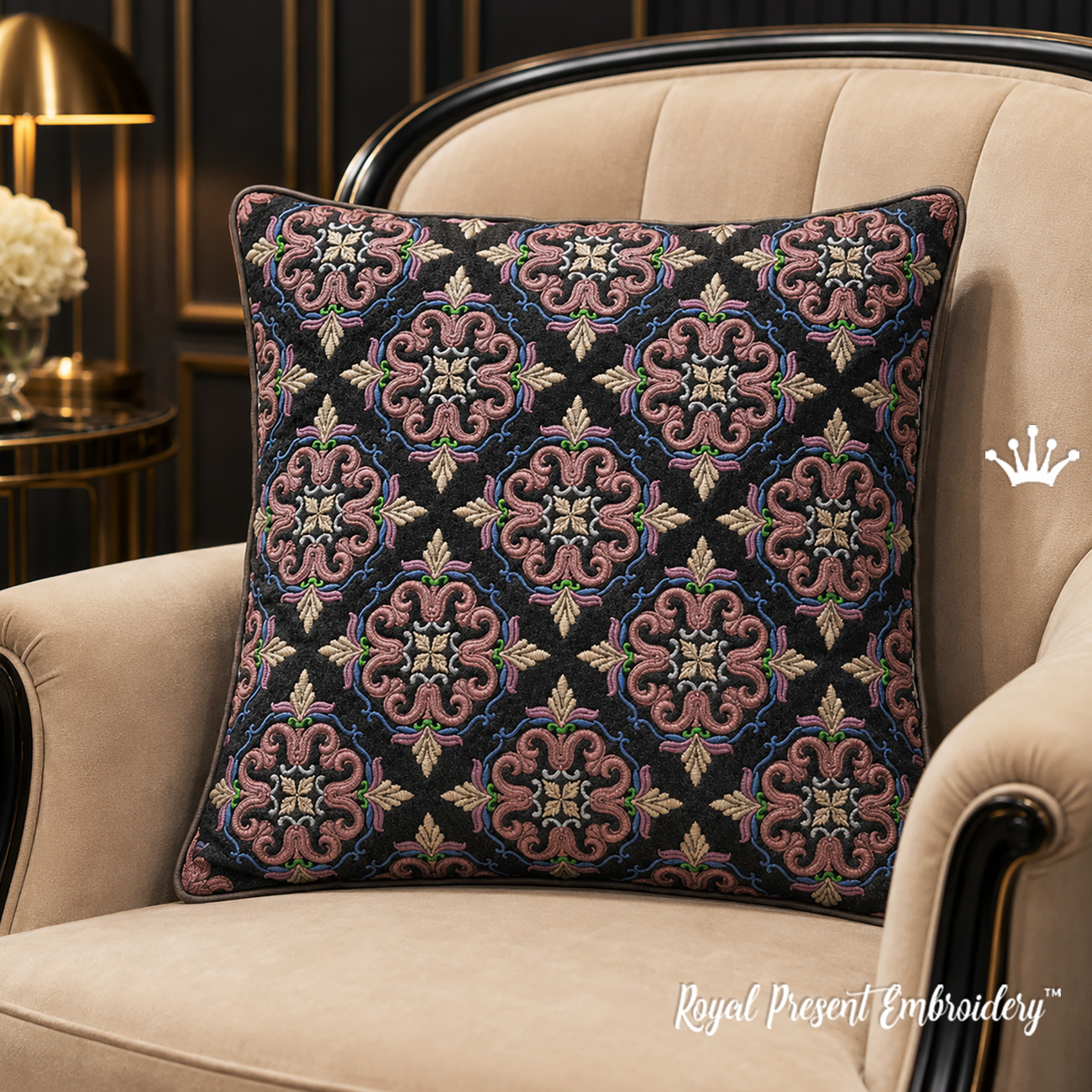
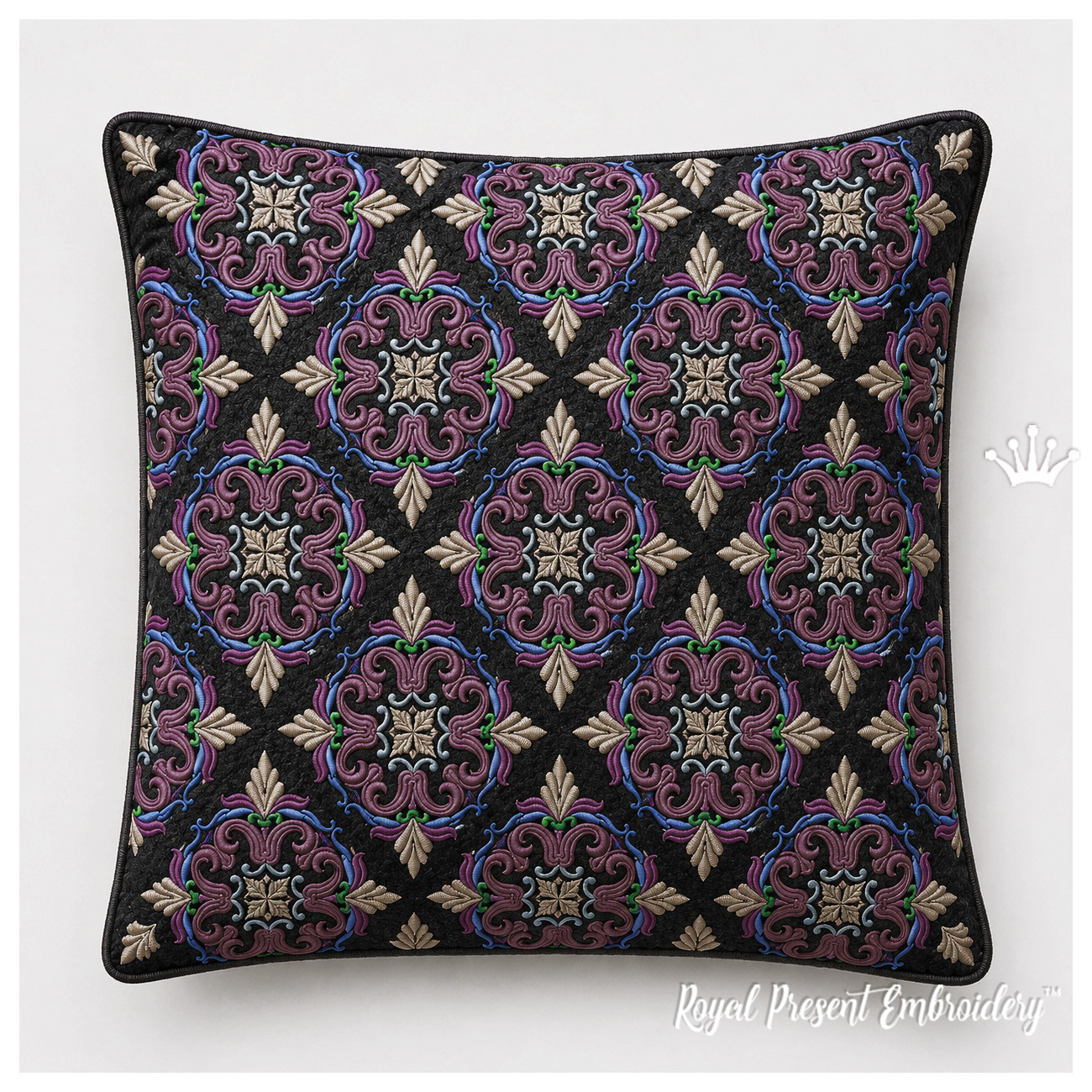
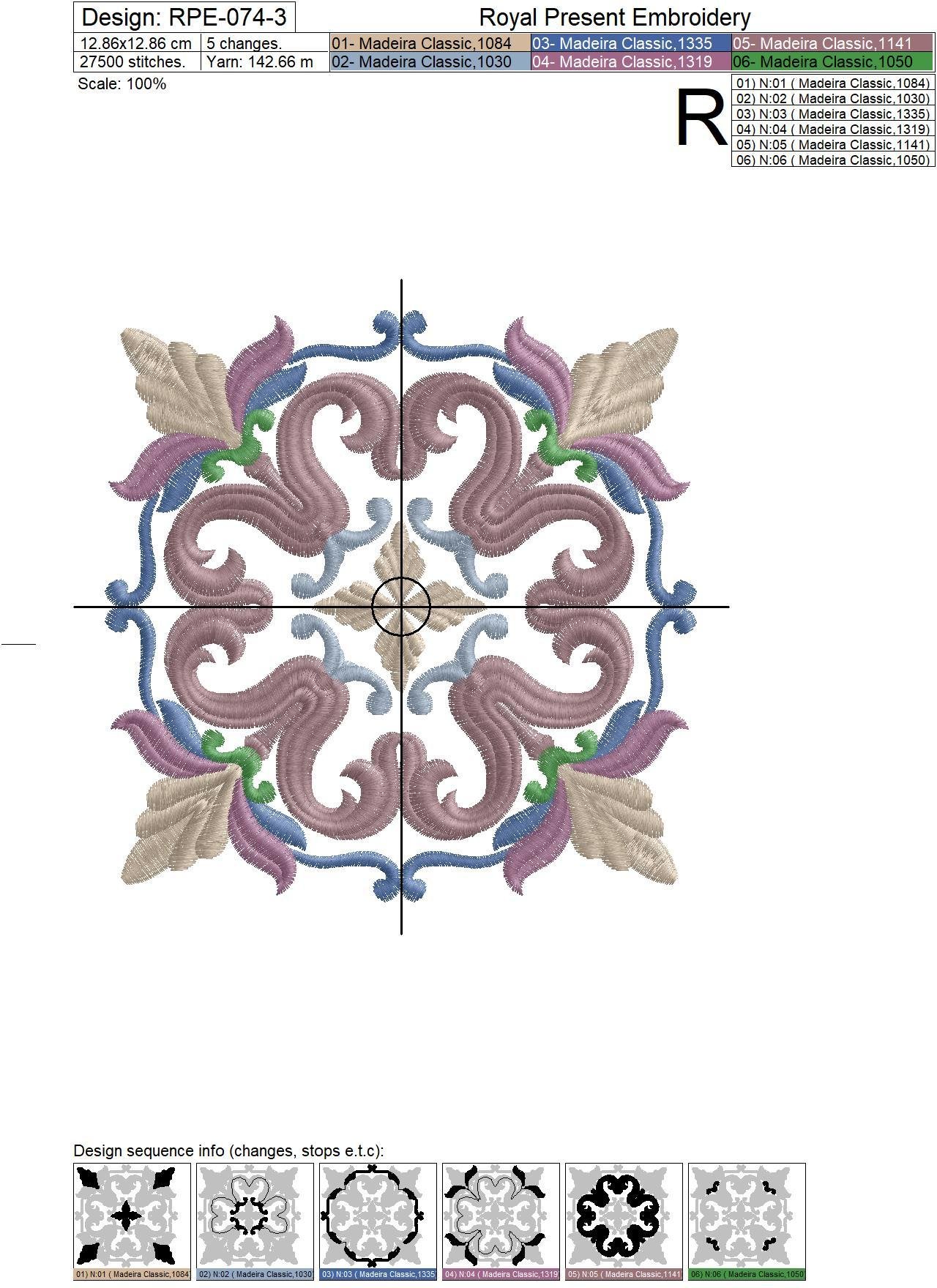
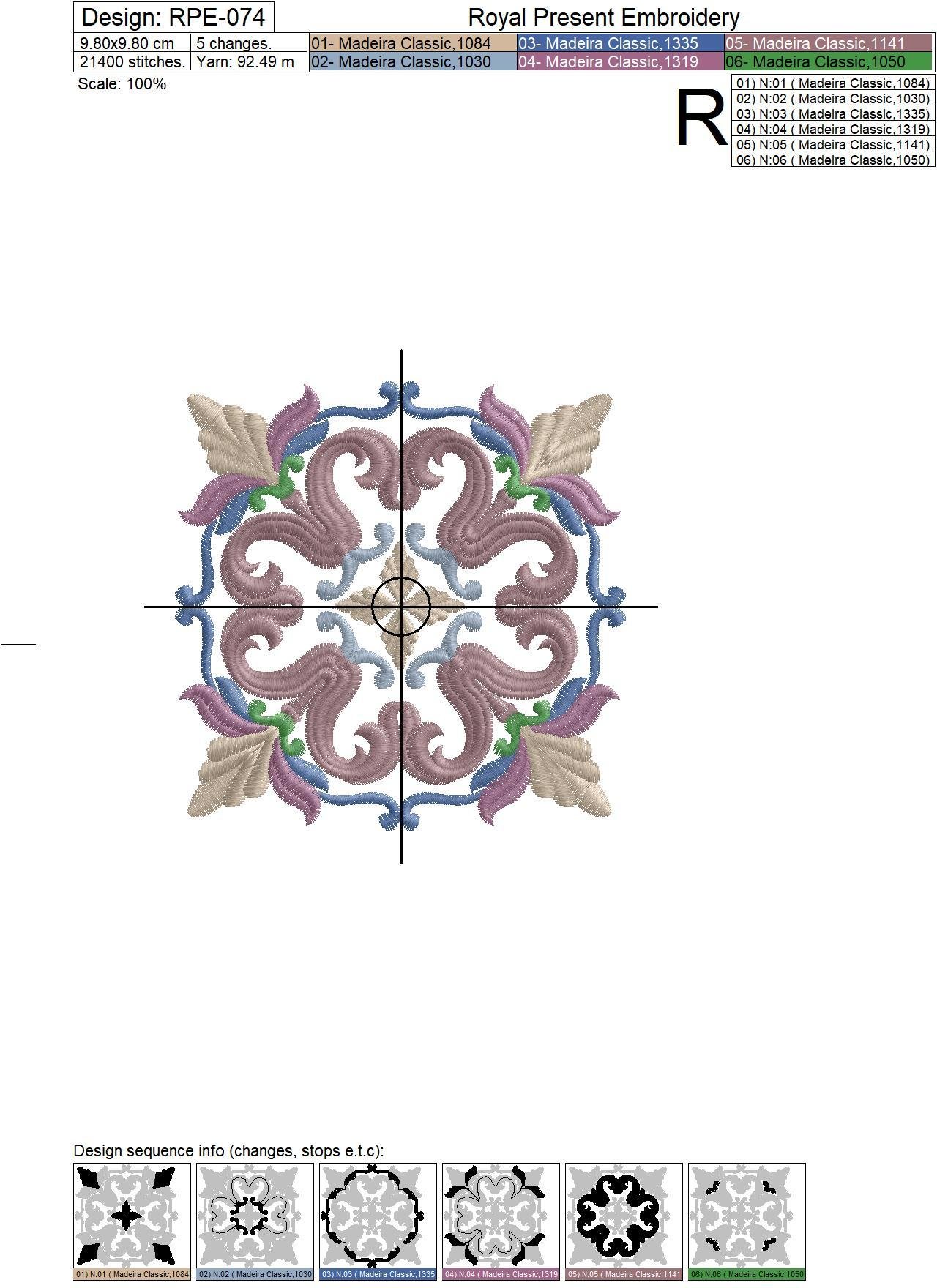
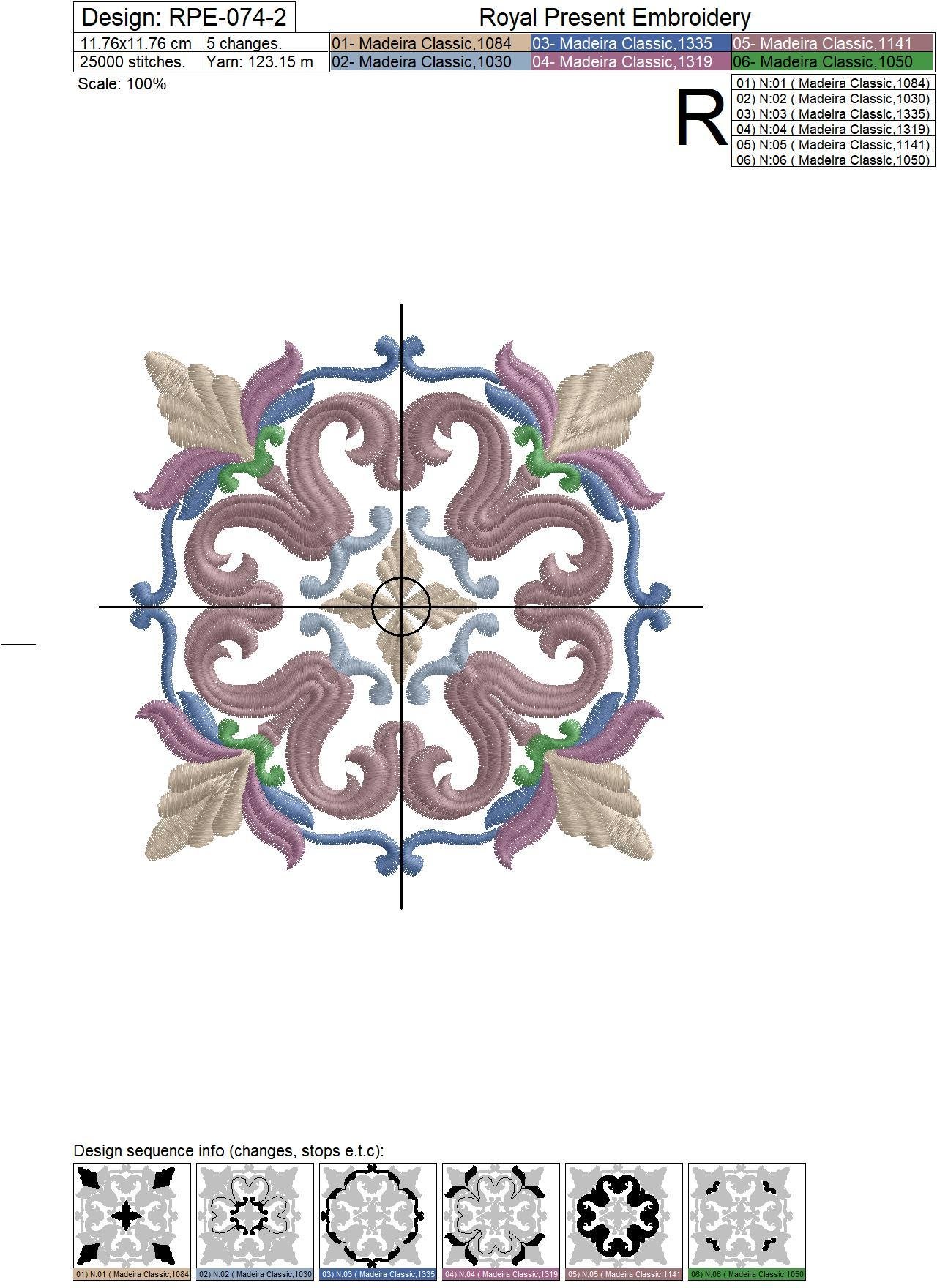
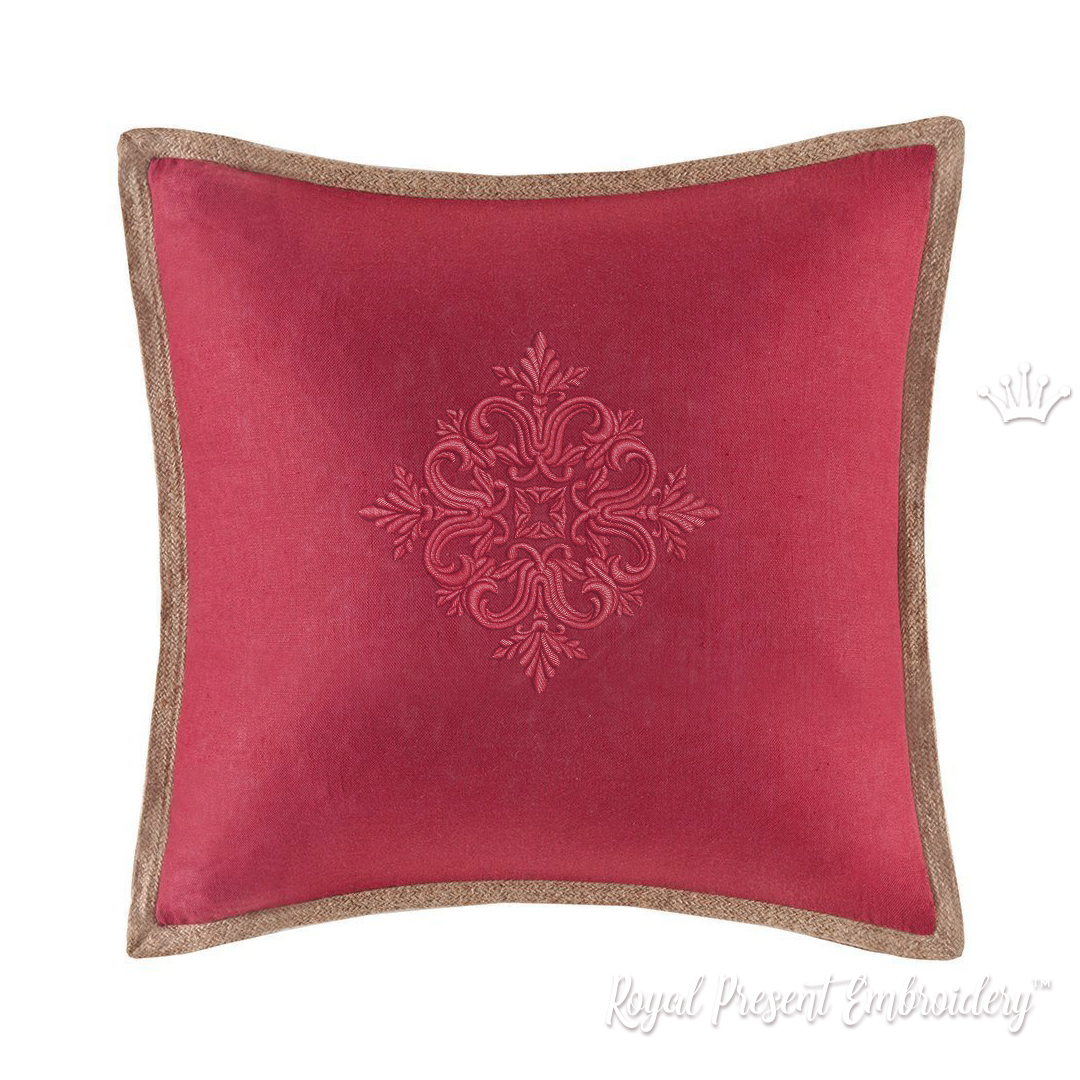
Acanthus Rosette Quilt Block is a multicolor machine embroidery design with a radial botanical composition. Four mirrored groups of stylized acanthus leaves and C-shaped scrolls meet around the center, forming a finished rosette inside a square field.
Use one motif as a decorative medallion or repeat identical blocks for patchwork cushions, quilts and textile wall panels. The motif has its own finished outer contour, so it is a decorative embroidery block rather than an edge-to-edge quilting pattern.
You are purchasing digital files for an embroidery machine. Fabric, thread, stabilizer, a finished quilt and the editable source file are not included.
Size: 98.5x98.5 mm (3.88x3.88 "), Stitches: 30837
Size: 117.5x117.5 mm (4.63x4.63 "), Stitches: 36201
Size: 128.4x128.5 mm (5.06x5.06 "), Stitches: 39417
Formats: dst, jef, pec, vip, hus, pes, sew, exp, dat, vp3, xxx
What Is Included
- one decorative acanthus rosette in three prepared sizes;
- a 98.5 × 98.5 mm / 3.88 × 3.88 inch file for a 4x4 hoop;
- two larger files for a hoop with an embroidery field of at least 130 × 180 mm / 5x7;
- dst, jef, pec, vip, hus, pes, sew, exp, dat, vp3 and xxx machine formats;
- decorative embroidery only, without cutting lines, seam allowances or automatic ITH assembly.
Design Sizes, Stitch Counts and Hoops
| Design size | Stitches | Minimum embroidery field | Practical hoop choice |
|---|---|---|---|
| 98.5 × 98.5 mm 3.88 × 3.88 inches |
30,837 | at least 98.5 × 98.5 mm | 100 × 100 mm / 4x4 |
| 117.5 × 117.5 mm 4.63 × 4.63 inches |
36,201 | at least 117.5 × 117.5 mm | 130 × 180 mm / 5x7 |
| 128.4 × 128.5 mm 5.06 × 5.06 inches |
39,417 | at least 128.4 × 128.5 mm | 130 × 180 mm / 5x7, after tracing the boundary |
The largest file fits a 130 × 180 mm field with only 1.5 mm of total clearance on its taller 128.5 mm side. That is approximately 0.75 mm at each edge when perfectly centered. Load the file, attach the intended hoop and run the machine's boundary trace before stitching.
How to Choose the Best Size
- 98.5 mm: choose this file for 4x4 hoops, compact patchwork squares or a smaller central medallion.
- 117.5 mm: a flexible middle size for cushion fronts and layouts with visible fabric between rosettes.
- 128.4 × 128.5 mm: the strongest visual accent, with more room for the leaves, scrolls and color areas to read clearly.
The embroidery size is not the cutting size of the fabric block. Add space for post-embroidery squaring and seam allowances. For a repeat project, embroider the test block first, measure any directional shrinkage, and only then cut every square with the same template.
Layouts for Cushions and Quilts
| Motif size and layout | Blocks | Embroidered field without gaps | Total stitches |
|---|---|---|---|
| 98.5 mm — 4 × 4 | 16 | 394.0 × 394.0 mm 15.51 × 15.51 inches |
493,392 |
| 117.5 mm — 4 × 4 | 16 | 470.0 × 470.0 mm 18.50 × 18.50 inches |
579,216 |
| 128.4 × 128.5 mm — 3 × 3 | 9 | 385.2 × 385.5 mm 15.17 × 15.18 inches |
354,753 |
These are geometric calculations for the embroidered motifs placed directly beside one another. The finished panel becomes larger when you add fabric gaps, sashing, piping, borders or seam allowances.
Checkerboard Patchwork
Alternate embroidered and plain squares cut to the same finished size. This keeps the rosette visually strong while reducing the number of dense embroidery blocks by half. Repeat one thread color in the plain fabric or piping to connect the palette.
Continuous Rosette Grid
Keep every block in the same orientation for a calm, formal rhythm. Rotating alternating squares by 90 degrees creates more movement, but test the arrangement first: even when the geometry is symmetrical, the direction of the fill stitches changes how rayon or polyester thread reflects light.
Color Planning for the Acanthus Rosette
The original preview combines muted violet scrolls, dark blue linear details, green accents, pale beige-gold outer leaves and a light neutral center. You may replace the colors at the programmed stops without changing the geometry of the design.
- Baroque palette: burgundy, dark plum, antique gold, olive and midnight blue.
- Light interior palette: ivory, dusty rose, sage, blue-grey and champagne.
- Modern contrast: black fabric with emerald, fuchsia, turquoise and pale gold thread.
Choose physical spools from a Madeira Classic or Polyneon thread chart. A screen cannot reproduce the exact hue or sheen. Before stitching a full set, record your thread sequence and use the same dye lots where possible.
Fabric, Stabilizer and Block Accuracy
- Fabric: quilting cotton, firm linen, gabardine or a stable home-decor fabric. Loose weaves need stronger support so narrow contours do not sink between yarns.
- Stabilizer: use a medium cut-away stabilizer for lasting support. As a starting point, choose a stabilizer near one third of the fabric weight and confirm the combination with a test stitch.
- Hooping: hoop fabric and stabilizer together without stretching either layer. Temporary spray adhesive between them helps limit micro-shifting.
- Needle: begin with a new 75/11 embroidery needle and size 40 thread. Test an 80/12 needle on heavier home-decor fabric.
- Speed: start around 500–600 stitches per minute and watch the narrow scroll tips and small contour areas.
For a multi-block project, consistent geometry matters more than the nominal fabric square. Measure the first stitched sample horizontally and vertically after removing it from the hoop. Correct stabilization or tension before producing the remaining blocks.
Related Quilt Blocks and Acanthus Designs
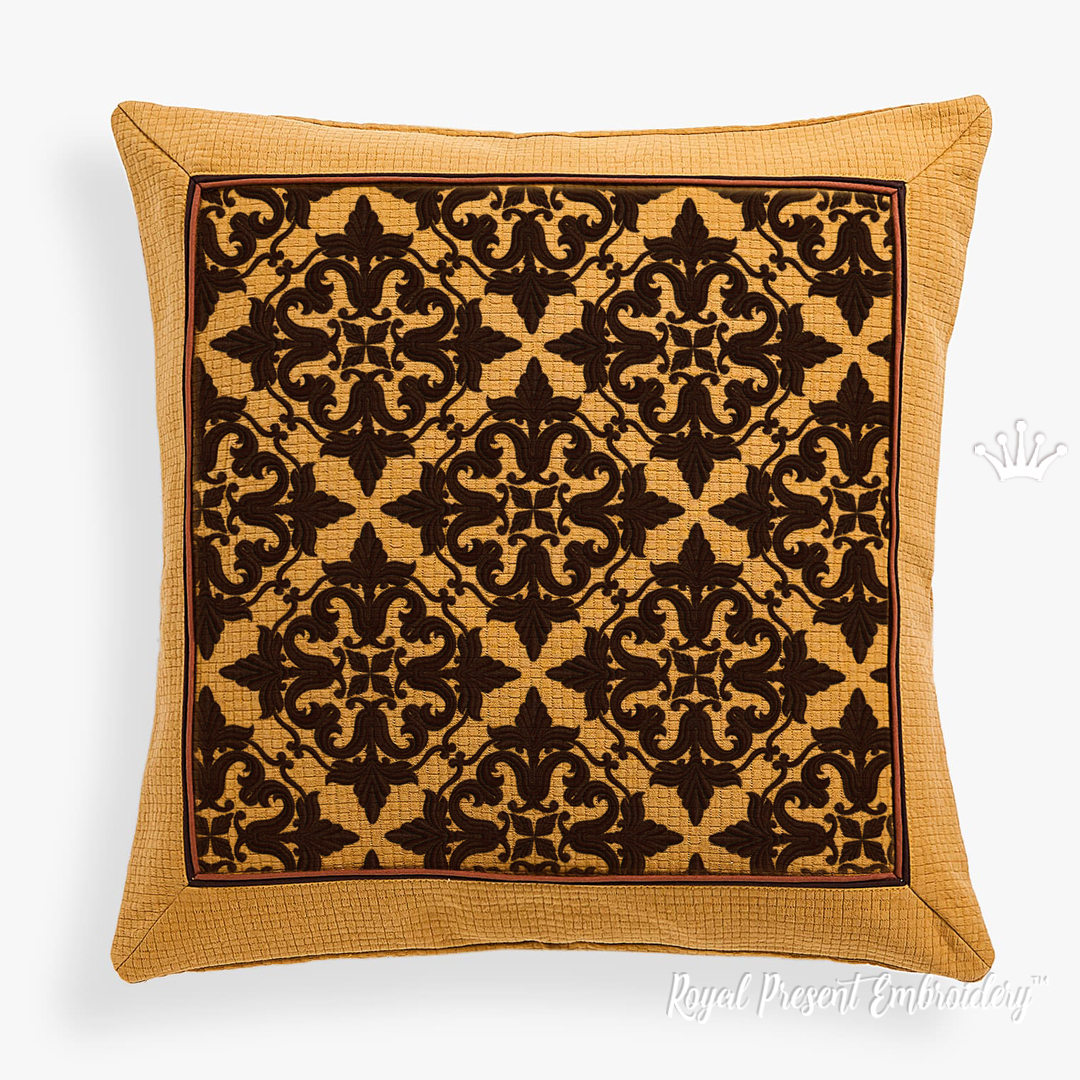
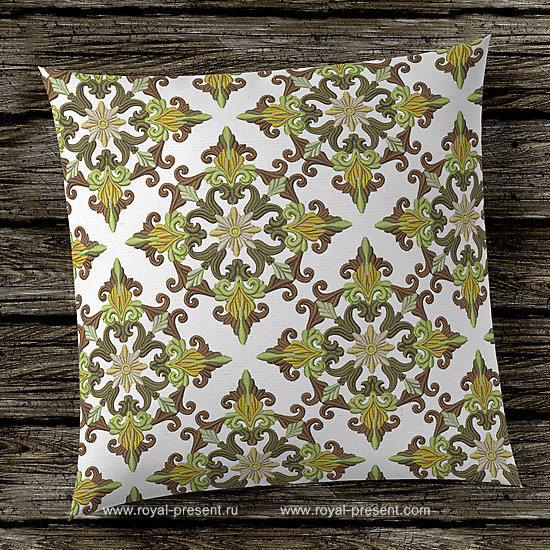
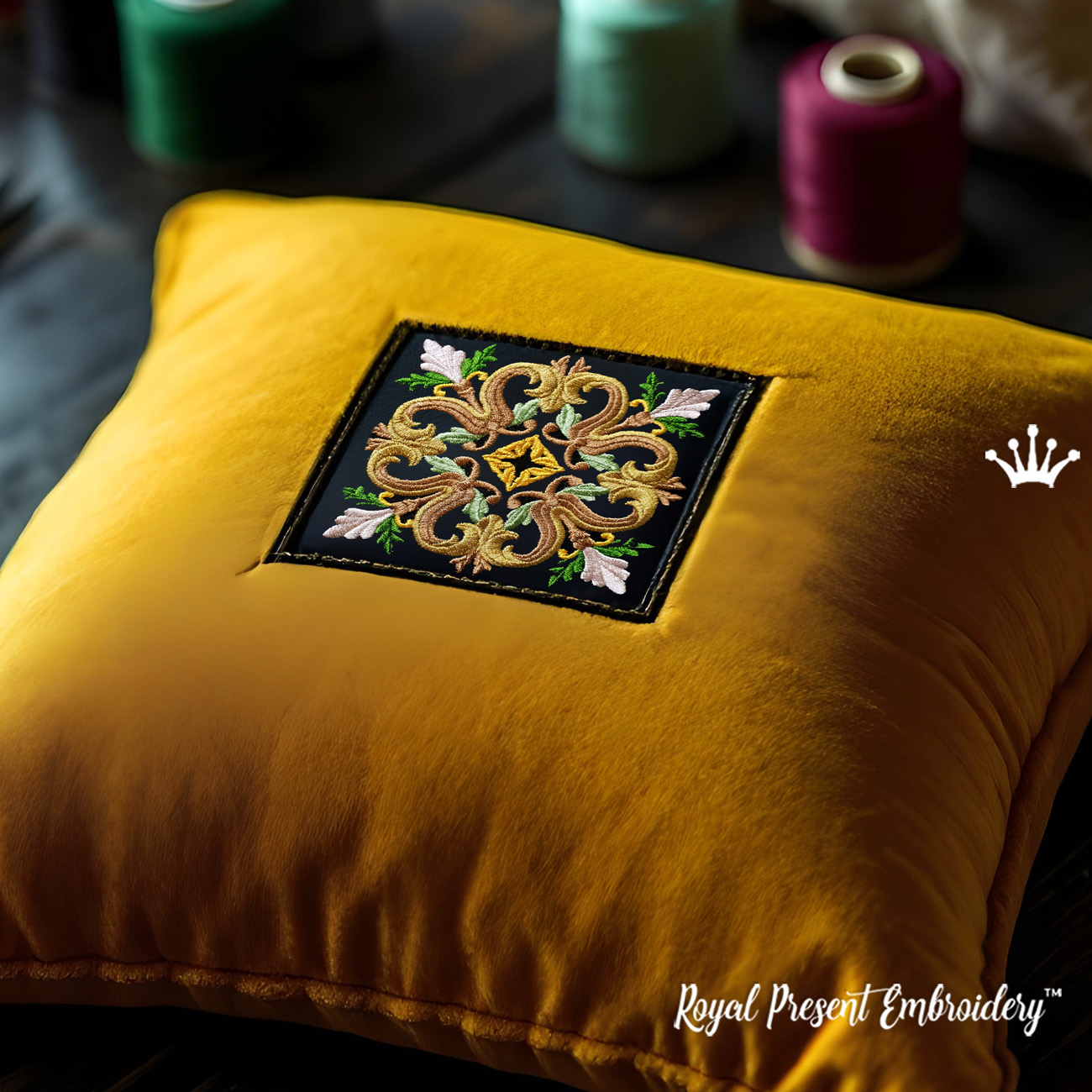
Explore more traditional square motifs in Classic Quilt Style and browse the wider Quilt Blocks machine embroidery collection.
Frequently Asked Questions
Which file fits a 4x4 hoop?
Use the 98.5 × 98.5 mm / 3.88 × 3.88 inch file. It leaves only 1.5 mm of total clearance on each axis inside a true 100 × 100 mm field, so trace the design boundary before stitching.
Do both larger files fit a 5x7 hoop?
Yes, when the machine provides a true 130 × 180 mm embroidery field. The 128.4 × 128.5 mm file is a close fit on the short side, so check it directly on your machine with the intended hoop attached.
Is this a quilting stitch design?
No. It is dense decorative multicolor embroidery with filled areas and contours. It does not replace the structural quilting that holds the quilt top, batting and backing together.
Can I stitch the blocks on one large piece of fabric?
Yes, if you can mark centers accurately and rehoop without cumulative drift. For a domestic embroidery machine, separate oversized fabric squares are usually easier to align, embroider, square and join as patchwork.
Should neighboring rosettes be rotated?
Rotation is optional. Identical orientation creates a formal repeat. Alternating 90-degree turns creates more movement, but the fill-stitch sheen will also rotate, especially with rayon thread.
Can I change the thread colors?
Yes. Keep enough value contrast between the main scrolls, narrow contours and outer leaves so the smaller details do not merge visually.
Can I resize the largest file on my machine?
Simple coordinate scaling may change stitch density and satin-column width. First use one of the three prepared sizes in the ZIP archive. If you need another dimension, read the design resize service instructions.
Is this an ITH fabric block?
No. The files contain the decorative rosette only. Fabric marking, cutting, seam allowances and joining stitches are completed separately.
Digital Product and Usage
After payment, the buyer receives prepared machine embroidery formats. The editable source file remains with the designer and is not included. You may use the design for personal projects and limited small-business production of finished embroidered goods. The digital files may not be copied, shared, traded, published or resold. Mass industrial production is not permitted under the standard license.
Designer: Ludmila Konovalova, Royal Present Embroidery.

 Get Sign-In Link
 Login with Google
 Login with Facebook
 Login with Amazon
 Login with Paypal