By knowing the speed of your embroidery machine, you can find out how long it will take to embroider a design.
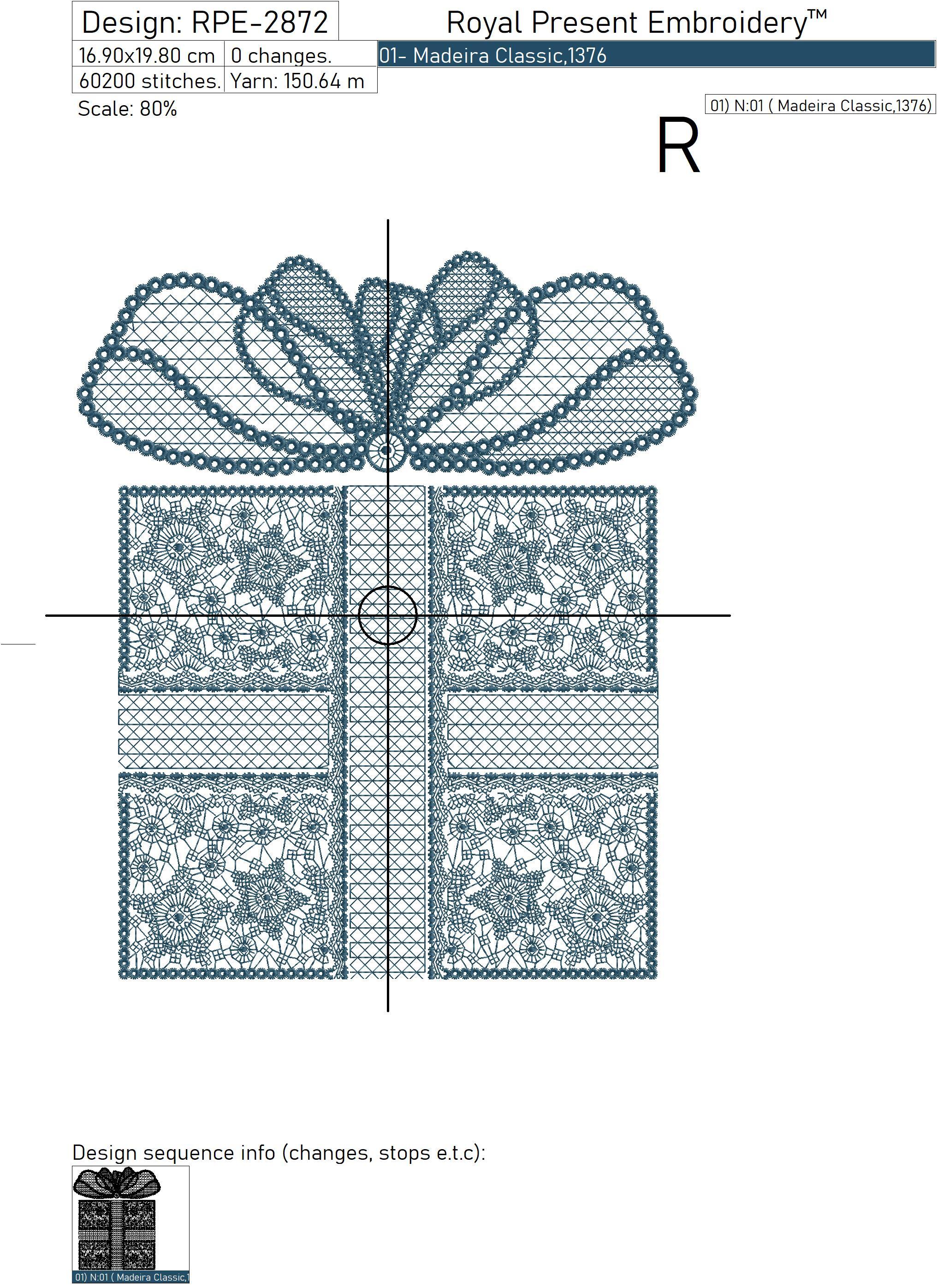
To use the embroidery calculator, click on the number of stitches in the product description.
Choose thin thread for the first two sizes.
Formats: .dst, .jef, .pec, .vip, .hus, .pes, .exp ,. sew, .dat, .vp3, xxx
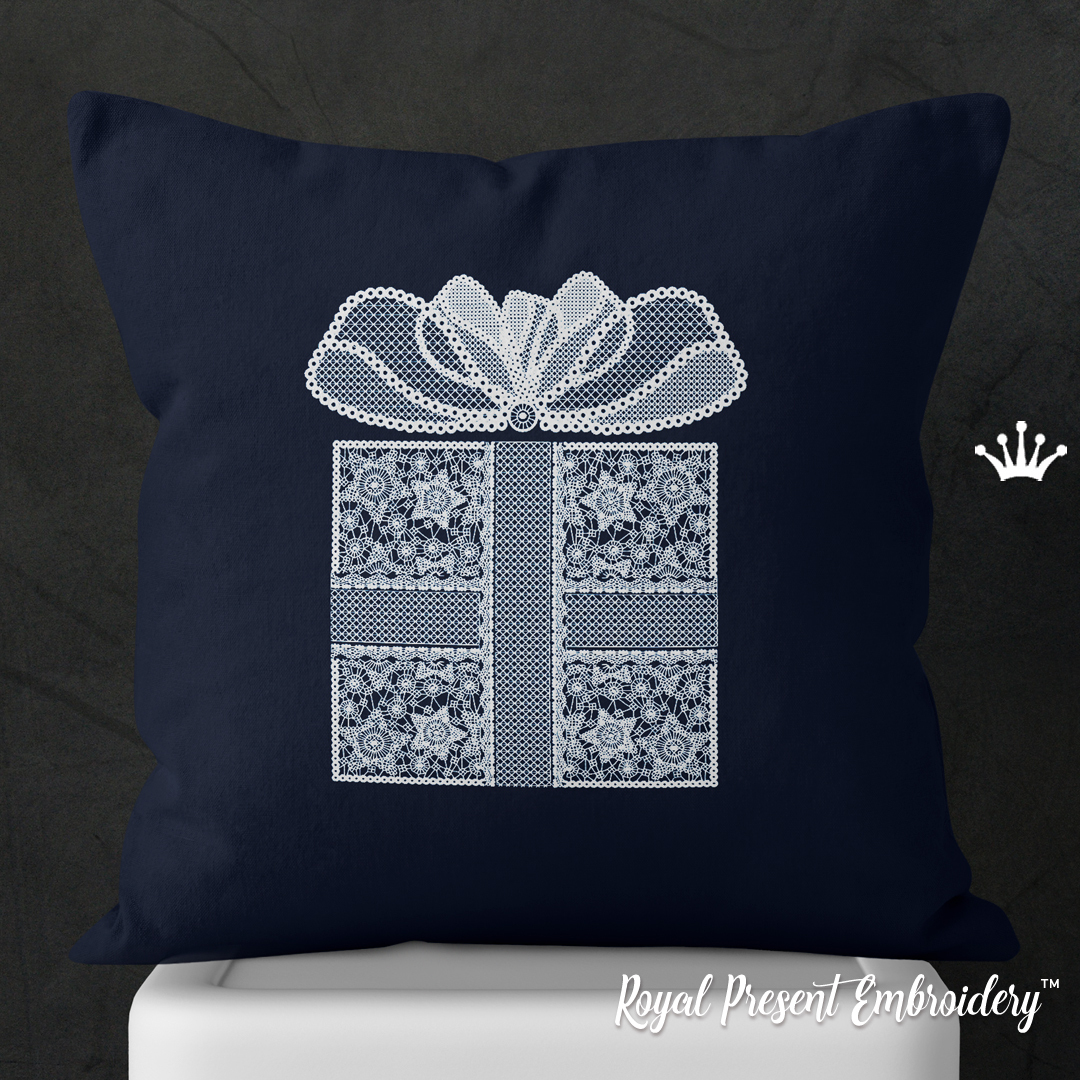
Creating stunning embroidery designs that resemble the delicate beauty of lace is an art form that requires attention to detail and a skilled hand. To achieve this level of sophistication, selecting the right thread is crucial. For the first two sizes, opting for a thin thread is a wise choice, ensuring that each stitch is intricately woven together, creating a stunning pattern. The result is a work of art that exudes an air of refinement and whimsy. It's no wonder that the gift box-like lace machine embroidery design has become a favourite among those who appreciate the elegance and intricacy that goes into creating something extraordinary. With four sizes, you can be sure that every stitch will be a masterpiece.
Can you provide information on the different file formats used in machine embroidery?
Embroidery has been an art form for centuries, and with the introduction of machine embroidery, the possibilities have become limitless. A machine embroidery file holds a wealth of information that may not be apparent to the untrained eye. Delving into the intricacies of these files reveals a symphony of colour, stitch pattern, and density that come together to create a masterpiece. Each thread color is carefully chosen and assigned a specific area to be sewn, with explicit instructions on the stitch pattern, length, and density of each stitch. It's as if the embroidery machine is conducting an orchestra, flawlessly executing each note and change in tempo. It's a true testament to the power of technology and the artistry of embroidery.
It's easy to see the distinction between machine embroidery files and graphic files like JPG, PDF, and SVG, given the vast amount of data stored in an embroidery file - including color dots and stitch patterns. While graphic files lack this information, they can still be helpful as a foundation for creating an embroidery file.
Currently, the prevailing embroidery formats include PES, DST, HUS, VIP, and JEF.
This design has been tested and reviewed to ensure top quality. Test stitch the design, or portions of it, before stitching it onto your final item, as results may vary depending on fabric and stabilizer combination.
Please don't sell or trade the embroidery file.

 Get Sign-In Link
 Login with Google
 Login with Facebook
 Login with Amazon
 Login with Paypal