Creepy Halloween Sleep Mask ITH Machine Embroidery Design - 3 Sizes

By knowing the speed of your embroidery machine, you can find out how long it will take to embroider a design.
To use the embroidery calculator, click on the number of stitches in the product description.
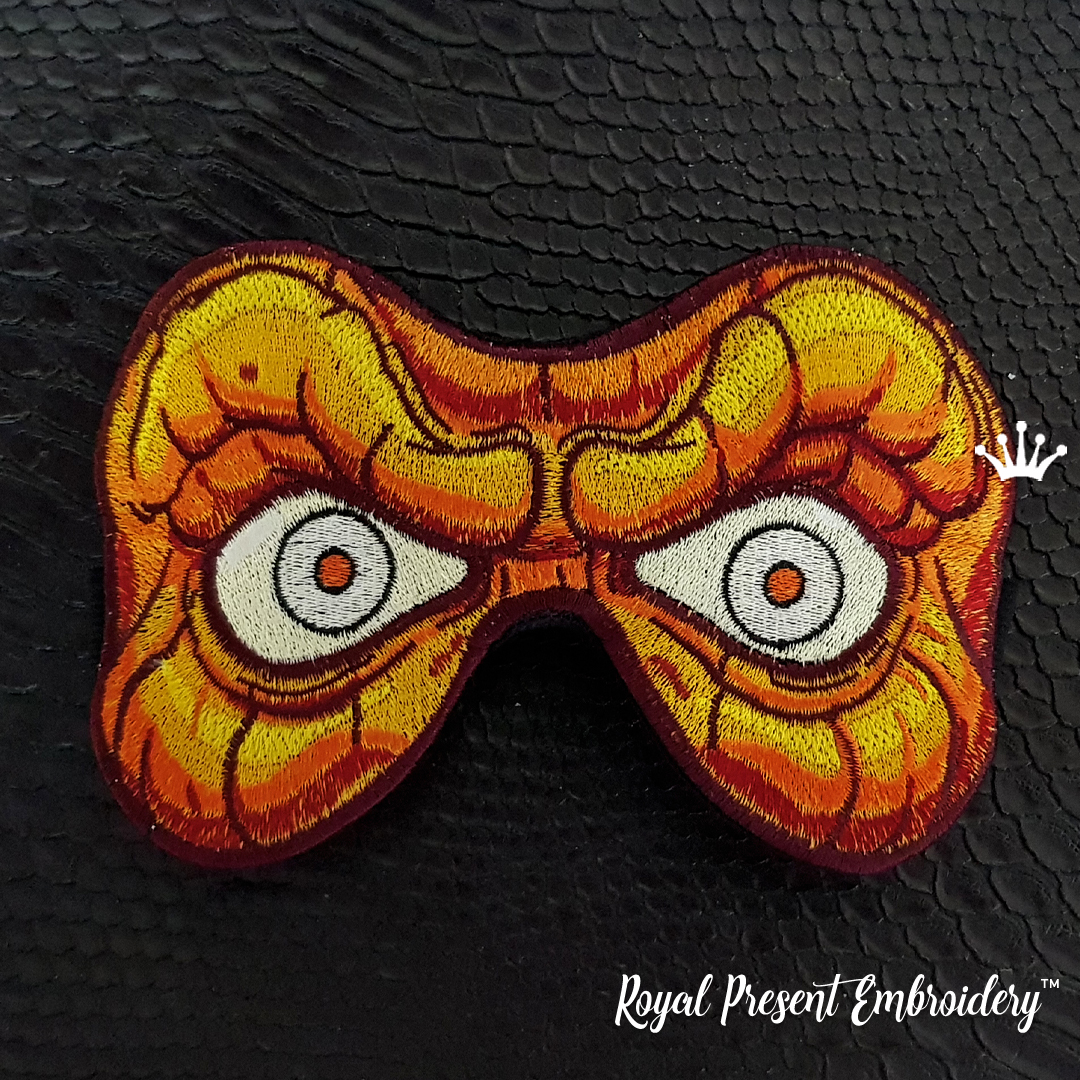
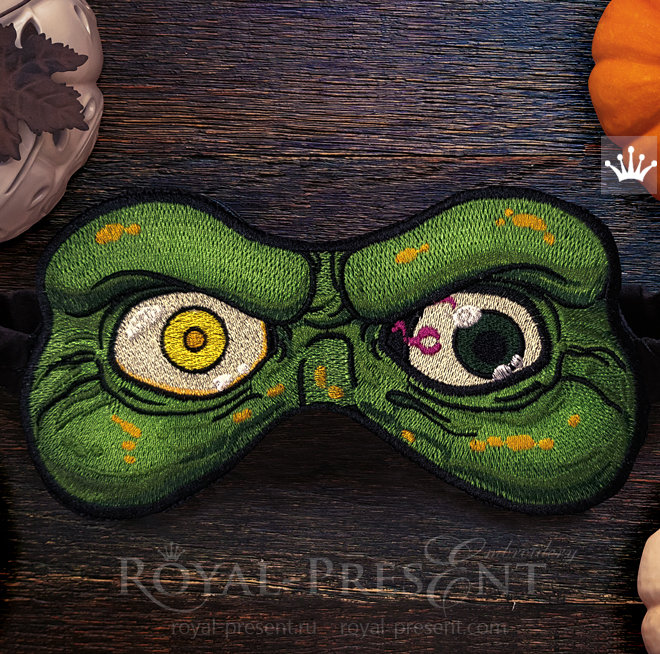
This Creepy Halloween Sleep Mask ITH machine embroidery design creates a fully lined eye mask with an orange-and-yellow wrinkled face, wide round eyes and dark graphic contours. The mask is assembled in the hoop and works well for Halloween sleepovers, costume accessories, travel gifts and spooky party favors. The download includes one design in three sizes; this is a digital machine embroidery design, and no finished mask or physical item is shipped.
Design Details
| Product Type | ITH machine embroidery design |
|---|---|
| Finished Project | Lined Halloween sleep mask / eye mask |
| Technique | In the hoop (ITH), with a small turning opening closed by hand |
| Designs Included | 1 Halloween sleep mask design |
| Sizes Included | 3 |
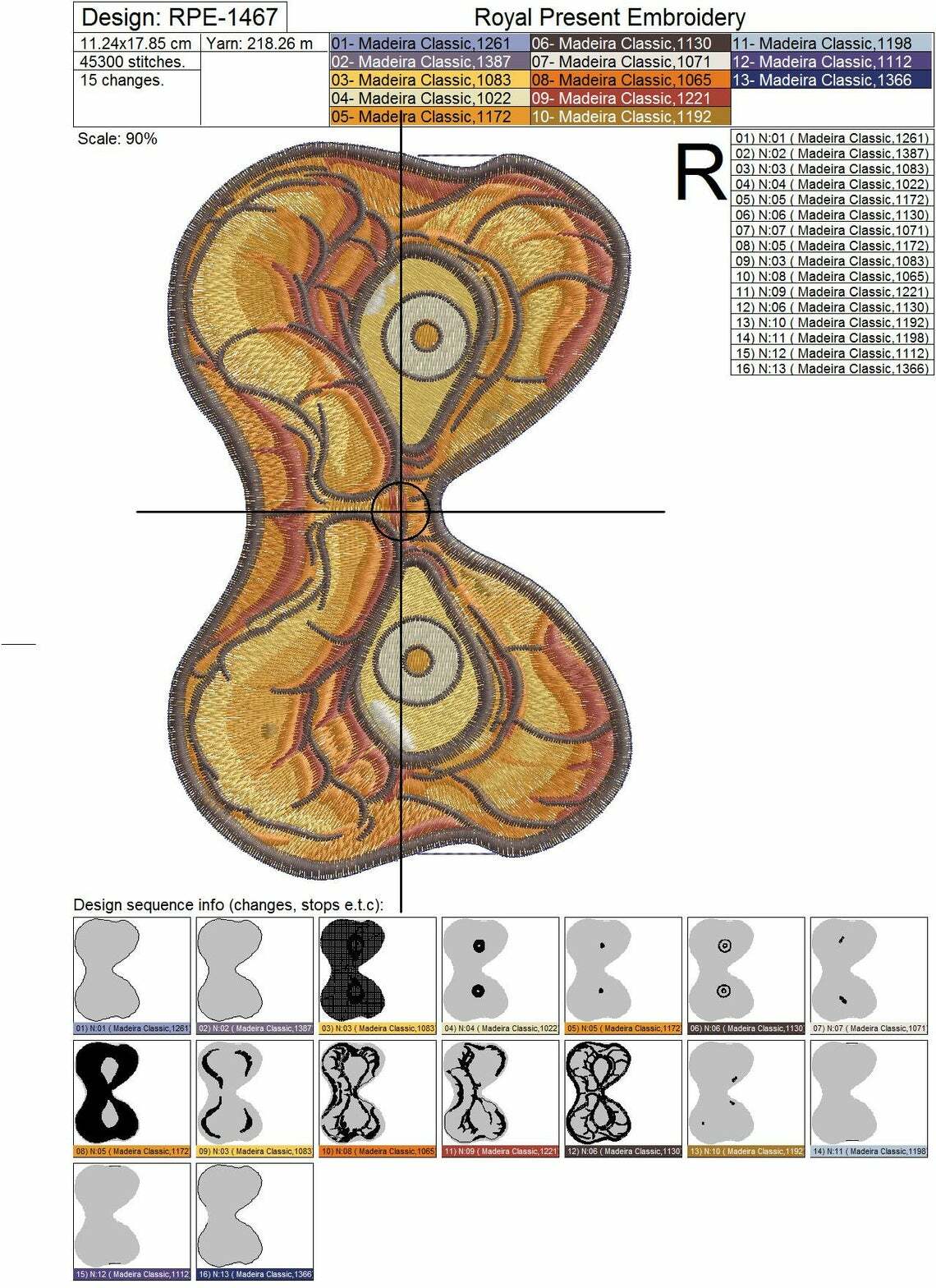
| Color Plan | Madeira Classic 40: 13 colors, 15 changes and 16 stitching blocks |
| Delivery | Instant digital download; all listed sizes and formats are included in one ZIP archive |
Sizes and Minimum Hoop Fields
| Exact Design Size and Stitches | Minimum Embroidery Field |
|---|---|
| Size: 112.4x178.5 mm (4.43x7.03"). Stitches: 45287 | at least 130x180 mm (5x7") |
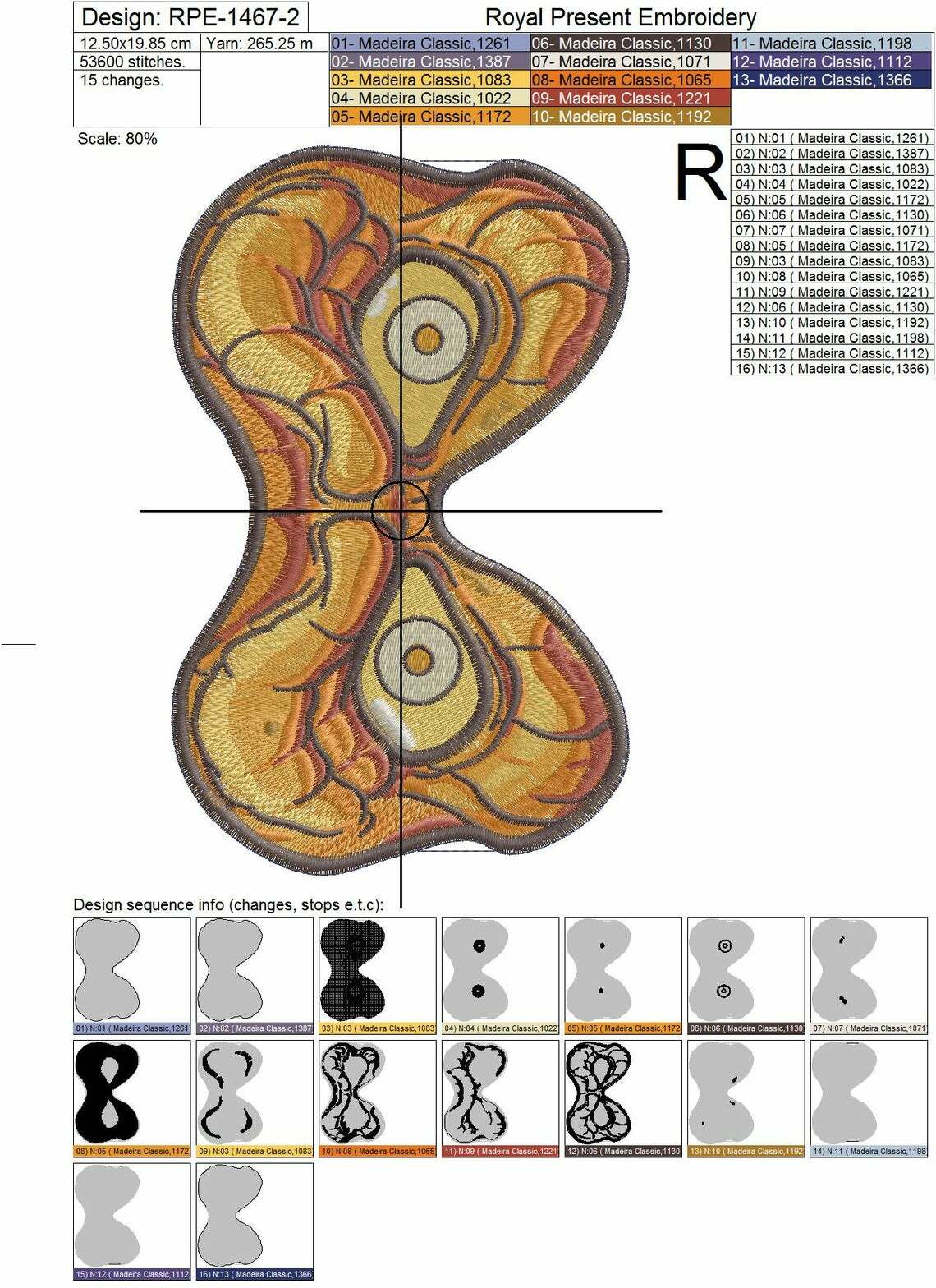
| Size: 125.0x198.5 mm (4.92x7.81"). Stitches: 53591 | at least 140x200 mm (5.5x8") |
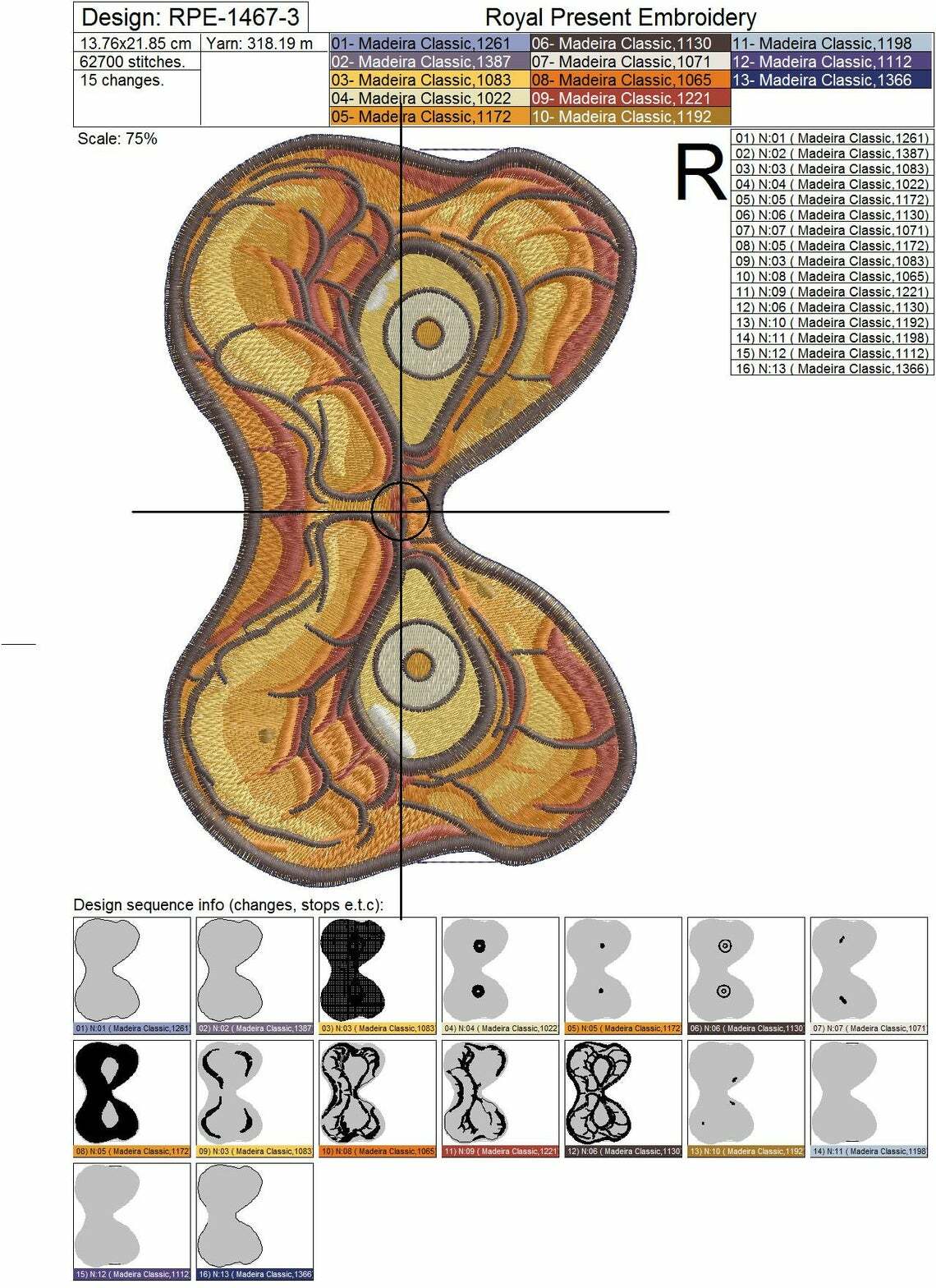
| Size: 137.6x218.5 mm (5.42x8.60"). Stitches: 62739 | at least 150x240 mm (6x10") |
Formats: .dst, .jef, .pec, .vip, .hus, .pes, .sew, .exp, .dat, .vp3, .xxx
Check the actual stitching field, not only the commercial hoop name. The 178.5 mm file leaves just 1.5 mm of total clearance along the 180 mm direction of a 130x180 mm field. Load the file, print its template at 100% scale and run the machine’s Trace function before placing the fabric, ties or backing.
How the ITH Halloween Sleep Mask Is Assembled
- Hoop black front fabric together with a soft cut-away stabilizer. Temporary spray adhesive can keep the layers from shifting, but apply it lightly to the stabilizer rather than directly beside the needle path.
- Stitch the orange-and-yellow face, eyes, wrinkles, shading and contours in the supplied order. Do not use automatic color sorting because several colors return later to complete overlaps and facial details.
- Before the final contour, position textile tape or ribbon approximately 30 mm (1.18") wide at the side placement marks. Keep the loose lengths folded inside the mask area and secure them away from the closing seam.
- Place the backing fabric over the embroidered front with right sides together. The final contour joins the layers and leaves a small opening for turning.
- Remove the project from the hoop, trim the seam allowance to approximately 3–4 mm (1/8–5/32"), clip the curves without cutting the seam, turn the mask right side out, press gently and close the opening with a ladder stitch.
For the original construction sequence and project photographs, open the Halloween Sleep Mask project guide. Browse coordinated ready-to-assemble projects in In-the-Hoop Sleep Masks.
Madeira Classic 40 Thread Chart
All three sizes use the same color order, so one thread chart applies to the complete download. The original chart specifies 13 Madeira Classic 40 colors, 15 color changes and 16 stitching blocks.
| Color | Madeira Classic 40 | Use in This Design | |
|---|---|---|---|
|
|
1261 | initial full-mask foundation and construction block | |
|
|
1387 | second full-mask foundation and coverage block | |
|
|
1083 | dark facial underlay and returning internal details | |
|
|
1022 | first pale eye detail | |
|
|
1172 | eye accents and returning main facial areas | |
|
|
1130 | eye rings and returning facial contour details | |
|
|
1071 | small eye highlights | |
|
|
1065 | inner face shading | |
|
|
1221 | structural facial lines and wrinkles | |
|
|
1192 | small warm accent details | |
|
|
1198 | late cool highlight layer | |
|
|
1112 | late shadow and shading layer | |
|
|
1366 | final outer contour and closing seam |
Color-block sequence: 1261 → 1387 → 1083 → 1022 → 1172 → 1130 → 1071 → 1172 → 1083 → 1065 → 1221 → 1130 → 1192 → 1198 → 1112 → 1366.
The screen swatches are visual guides; the Madeira number is the authoritative reference. Keep the repeated 1172, 1083 and 1130 blocks in their original positions because their later returns complete details after neighboring areas have stitched. For another thread brand, use the thread color converter as a nearest-shade guide, then compare physical thread cards and test-stitch before the final project.
More In-the-Hoop Sleep Masks
Fabric and Stabilizer Recommendations
Embroidered front: use black tightly woven cotton, cotton twill or another stable fabric around 150–220 g/m² (4.4–6.5 oz/yd²). Pair it with one layer of soft cut-away stabilizer around 60–80 g/m² (1.8–2.4 oz/yd²), such as Madeira Super Strong or Sulky Soft ’n Sheer Extra. Black cut-away is less visible inside a dark mask.
Fabric against the face: choose smooth cotton, cotton sateen or washable satin around 90–140 g/m² (2.7–4.1 oz/yd²). The backing encloses the stabilizer after turning, so no rough stabilizer edge should touch the skin.
Do not over-stabilize: a dense front fabric plus several heavy stabilizer layers makes the narrow curves difficult to turn and can strain the needle during the final construction contour. If the fabric is light, add a removable light tear-away for the decorative stitching and take it away before assembly.
Useful Questions and ITH Tips
How do I choose stabilizer weight for this mask?
As a practical starting point, use cut-away weighing roughly one-third of the embroidered front fabric: about 60 g/m² (1.8 oz/yd²) under 180 g/m² (5.3 oz/yd²) cotton, or about 70 g/m² (2.1 oz/yd²) under 210 g/m² (6.2 oz/yd²) twill. Test the full layer stack because weave stability matters as much as weight.
Can I replace some orange or yellow details with metallic thread?
Yes, but use metallic only for selected decorative shading or highlights, never for the final construction contour. Madeira Metallic, Sulky Metallic or Gütermann Metallic can be tested with an Organ or Schmetz Metallic 80/12 needle; use 90/14 if the thread and fabric require it. Slow the machine to about 450–550 stitches per minute, reduce upper tension slightly, feed from a vertical stand and use a thread net if the spool unwinds unevenly.
How do I stop the ribbon ties from shifting into the final seam?
Use textile tape or ribbon approximately 30 mm (1.18") wide and place at least 30–40 mm (1.18–1.57") of each end inside the seam. Hold the loose lengths inside the mask with low-tack tape positioned away from the stitch path. Run Trace before the final block to confirm that the needle crosses only the intended tie ends.
How can I get smooth edges after turning the mask?
Trim the seam allowance evenly to about 3–4 mm (1/8–5/32"), clip concave curves and notch bulky convex curves without touching the stitches. Turn through the opening, shape the edge with a blunt point turner and press from the backing side through a cloth before closing the opening with a ladder stitch.
Test-stitch tip
Make the first sample with the same front fabric, backing, stabilizer, ribbon and thread planned for the final mask. A thread-only sample cannot reveal seam bulk, turning difficulty, tie placement or how the completed mask feels against the face.

 Get Sign-In Link
 Login with Google
 Login with Facebook
 Login with Amazon
 Login with Paypal