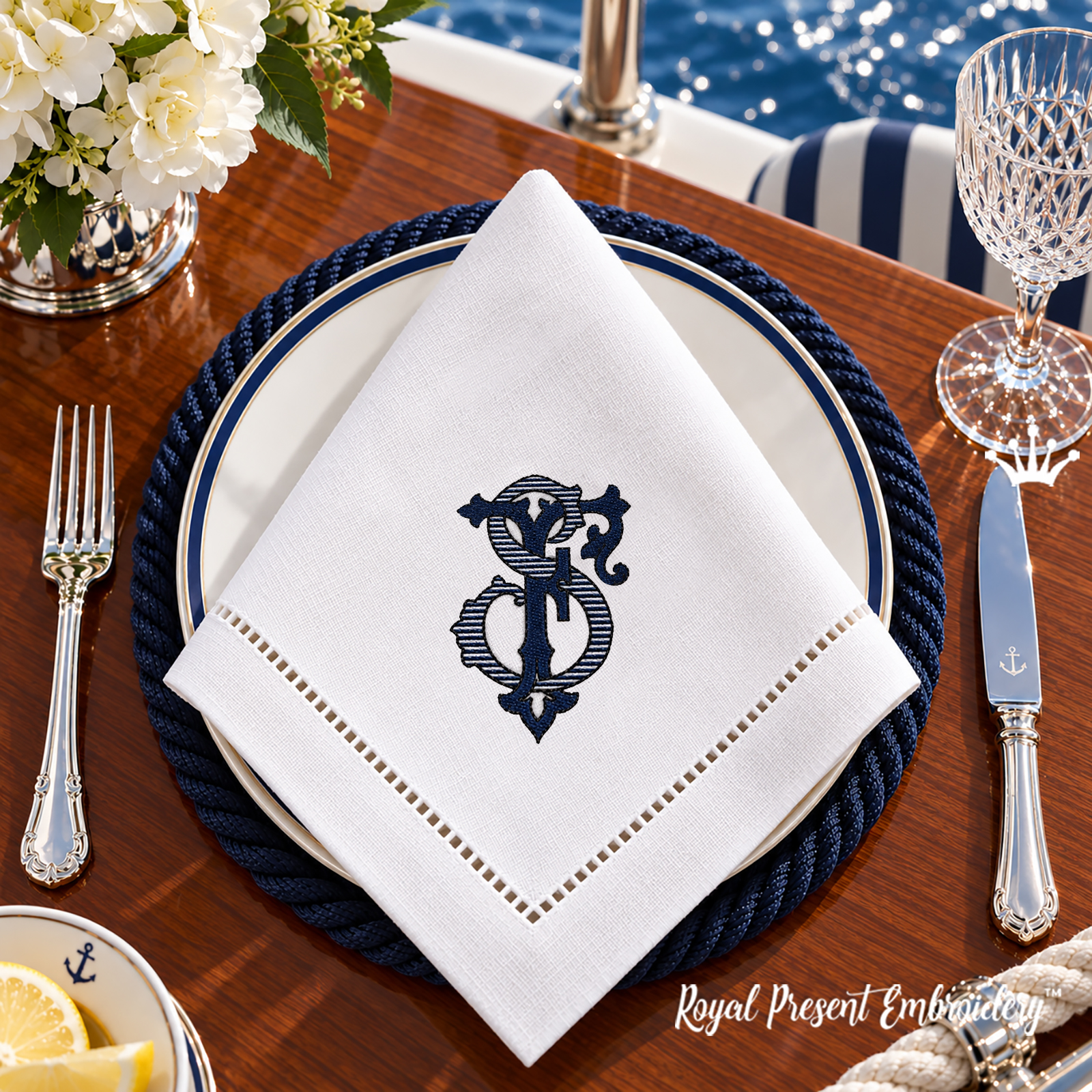
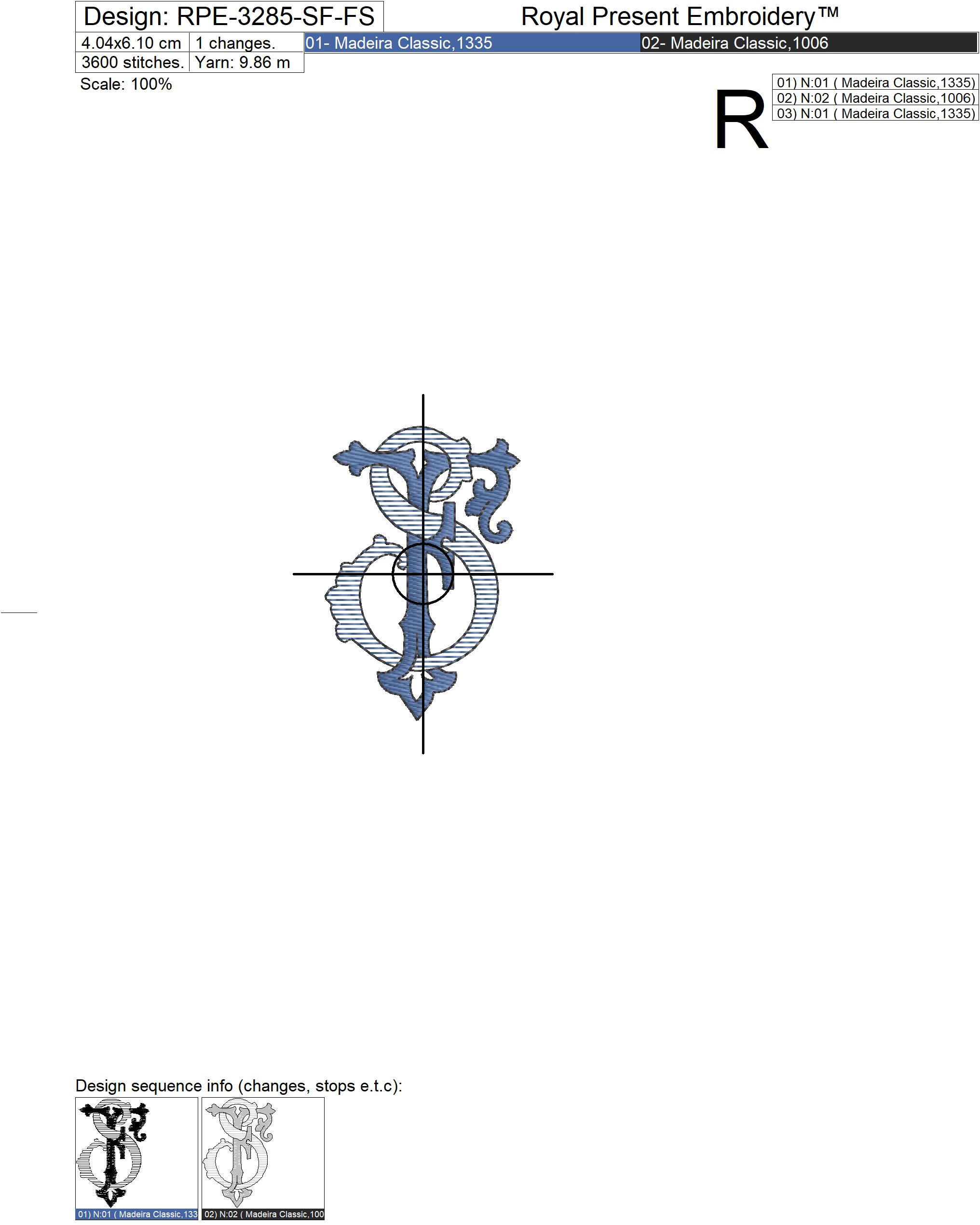
The SF-FS duogram is a digital machine embroidery design with intertwined S and F initials. Striped fill, a dark outline and scrollwork create a vertical motif with a nautical character. The download includes 3 ready-to-stitch sizes; each fits a minimum 80x80 mm (3x3") hoop. Use it to personalize linen napkins, towels, handkerchiefs, shirt pockets, cosmetic bags and textiles for a couple or family. No finished physical product is supplied.
Design Details
| Product Type | Digital Machine Embroidery Design |
| Subject | SF / FS duogram: intertwined S and F initials, striped fill, outline and nautical ornament |
| Minimum Hoop | 80x80 mm / 8x8 cm / 3x3" |
| Number of Sizes | 3 |
| Colors | 2 |
| Color Order | Madeira 1335 blue, then Madeira 1006 black |
| Delivery | Instant digital download after purchase |
Sizes, Stitches and Hoops
| Exact Design Size and Stitches | Minimum Compatible Hoop |
|---|---|
| Size: 40.4x61.0 mm (1.59x2.40 "), Stitches: 3600 | 80x80 mm / 8x8 cm / 3x3" |
| Size: 44.4x67.0 mm (1.75x2.64 "), Stitches: 3900 | 80x80 mm / 8x8 cm / 3x3" |
| Size: 48.8x73.8 mm (1.92x2.91 "), Stitches: 4300 | 80x80 mm / 8x8 cm / 3x3" |
Formats: .dst, .jef, .pec, .vip, .hus, .pes, .exp, .sew, .dat, .vp3, .xxx
The 3x3 hoop label is nominal. Before stitching, compare the exact file dimensions with the usable embroidery field of your machine, run a trace and make sure the whole needle path stays inside the field.
Using the SF-FS Duogram
The initials may be read as SF or FS, making the duogram suitable for a couple, family or shared surname. The open striped sections let the fabric show through, while solid details and the outline separate the overlapping initials. Use contrasting threads for clear legibility, or two close shades for a quieter result.
The smallest size works well on napkins, handkerchiefs and shirt pockets. The largest reads more clearly on towels, cosmetic bags and pillow corners. Before marking a napkin, fold it exactly as it will be displayed and mark the center of the visible area.
Madeira Classic Thread Chart
All three sizes use only two Madeira Classic colors: blue 1335 and black 1006.
| Color | Madeira Classic | What It Stitches | |
|---|---|---|---|
|
|
1335 | main letter areas and striped fill | |
|
|
1006 | dark outline separating the intertwined initials and scrollwork |
Color order: 1335 → 1006.
Matching Monograms
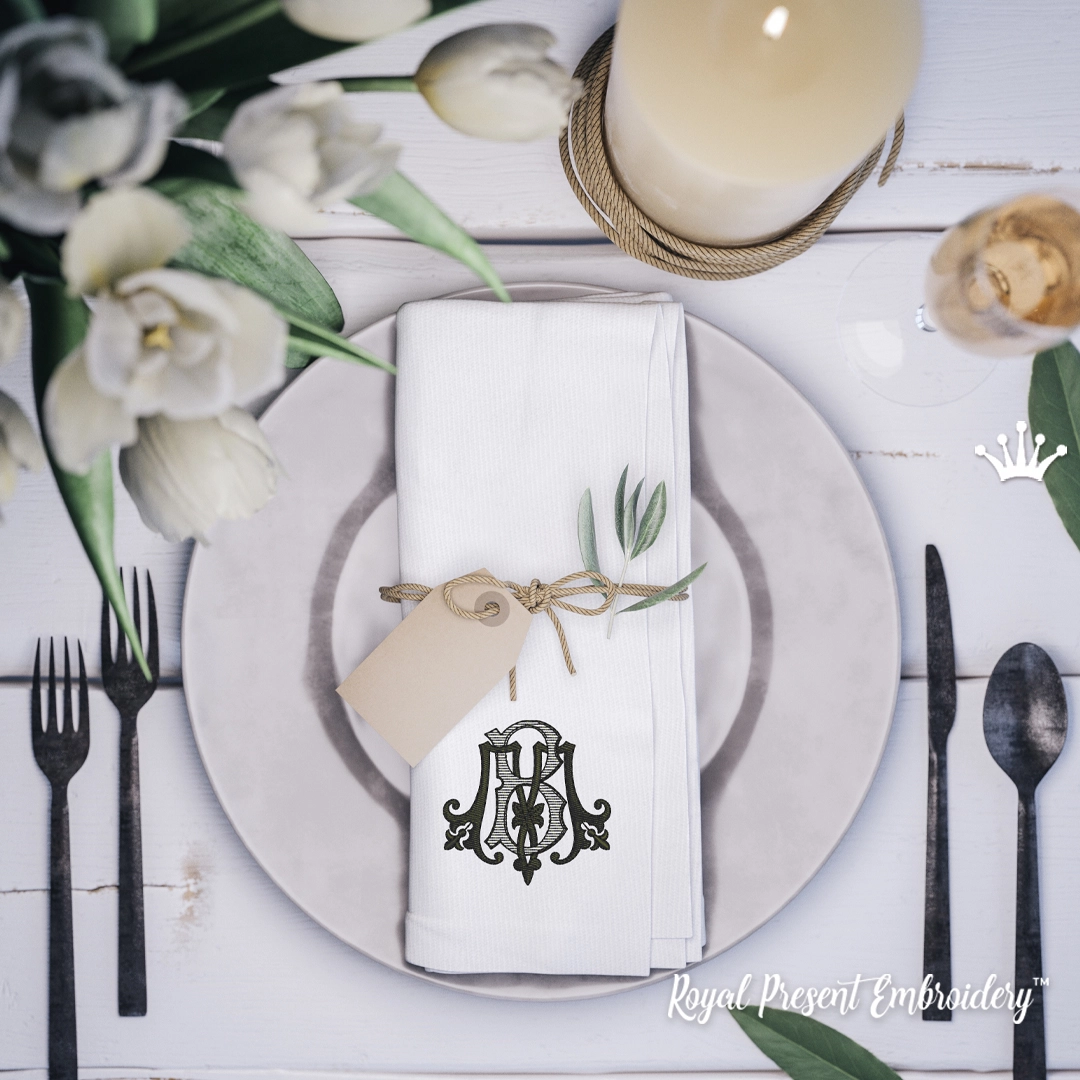
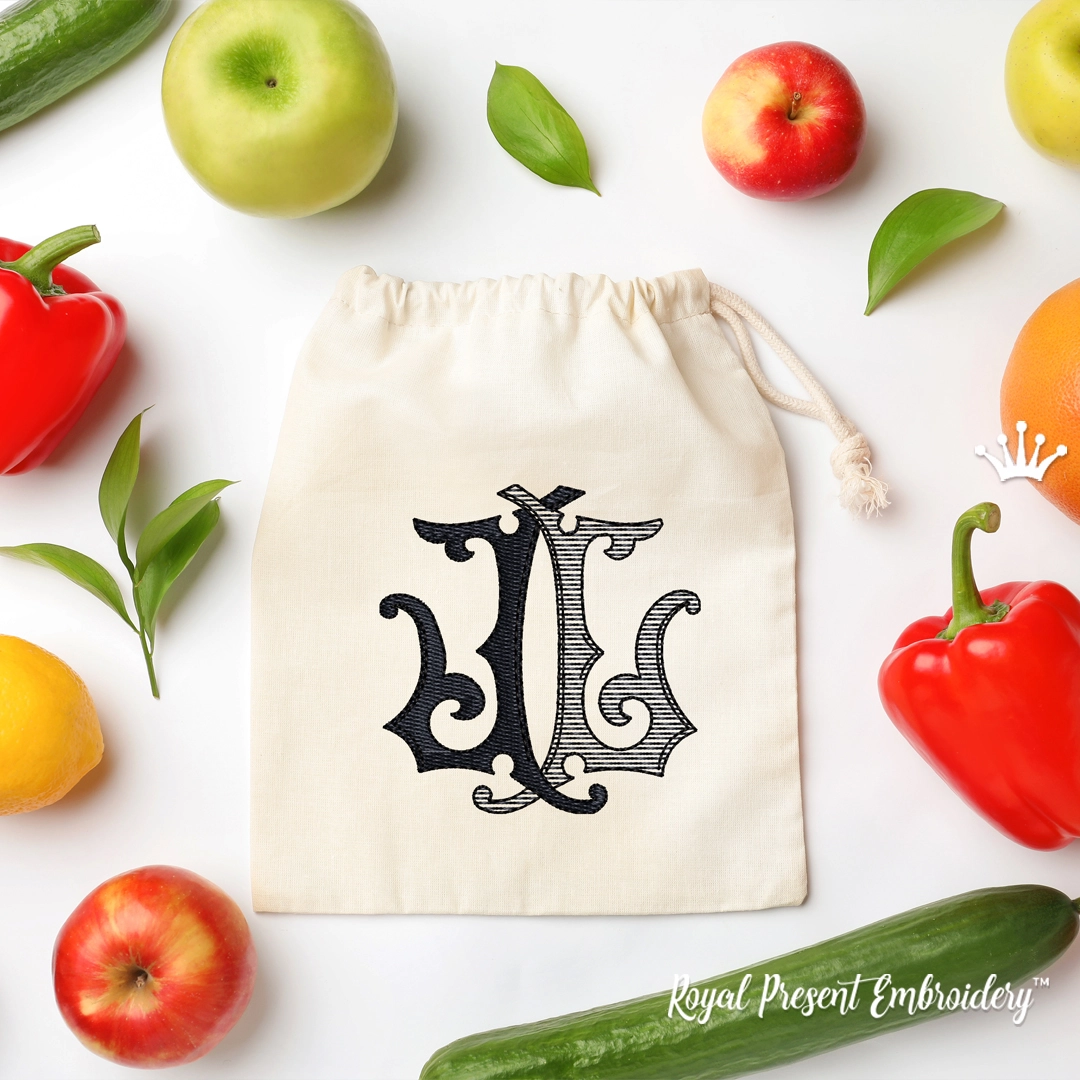
Four designs from the same two-letter monogram series.
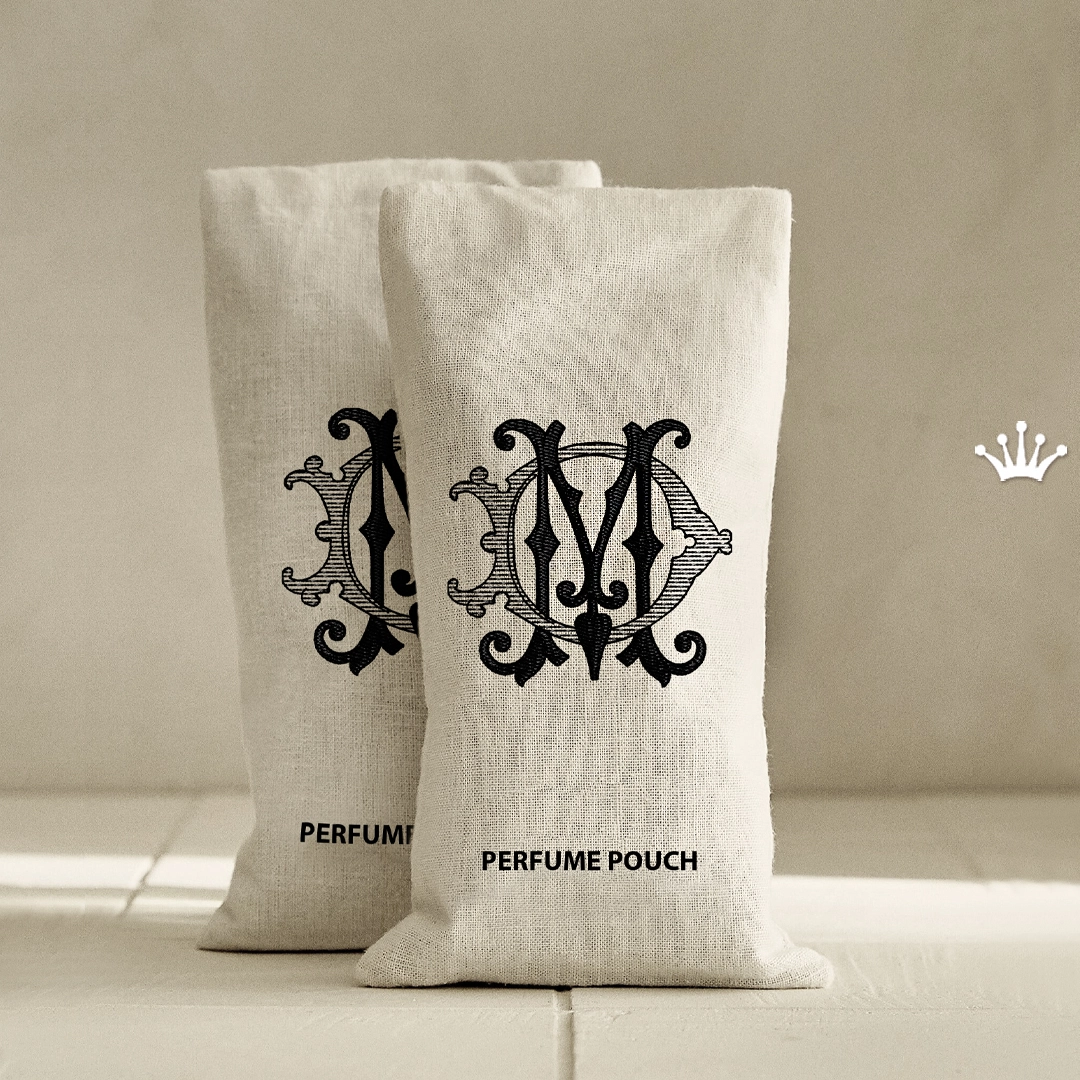
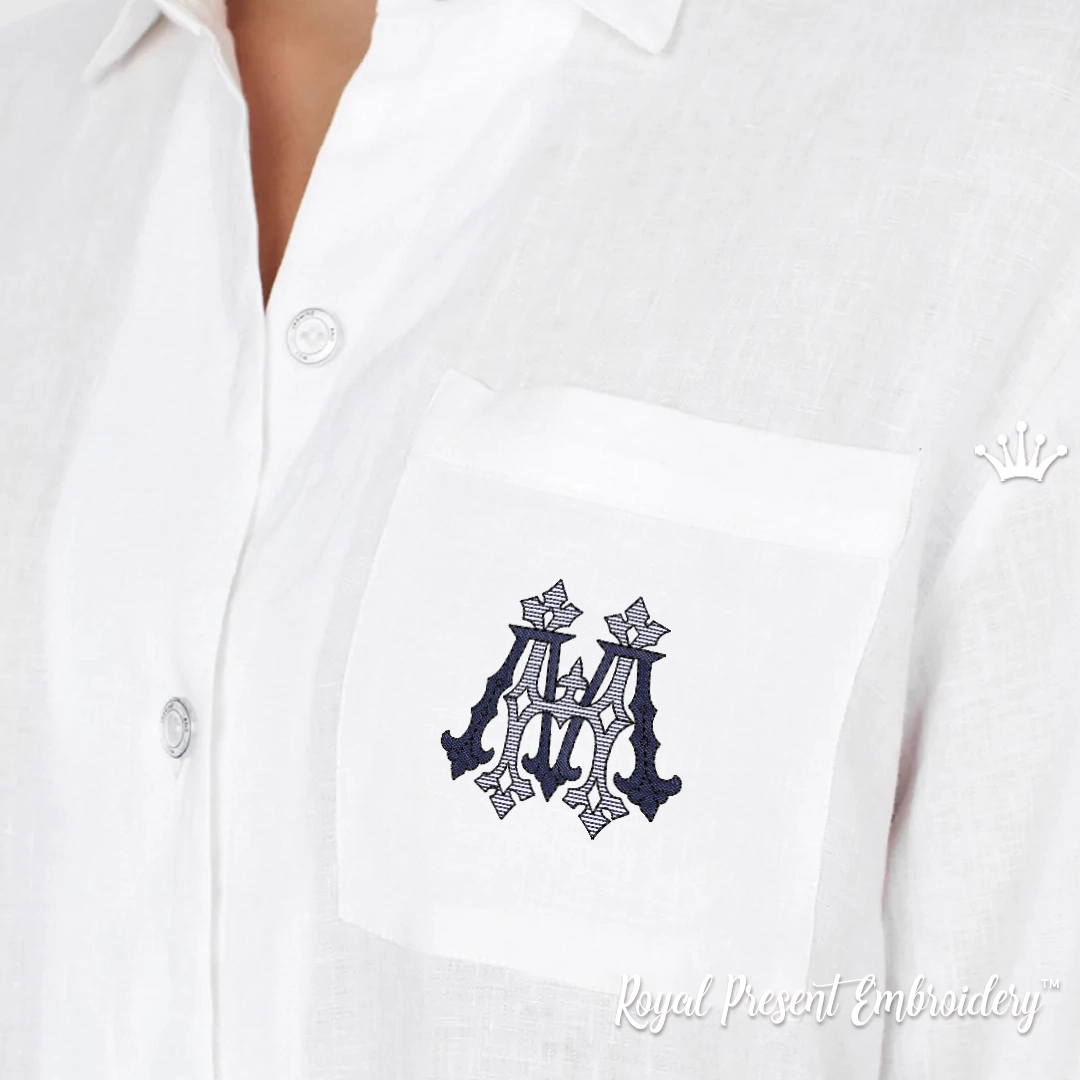
Fabric Preparation and Stabilizing
Stabilizer weight. Divide the fabric weight in g/m² by 3 as a practical starting point. For a 135 g/m² cotton napkin, begin with approximately 45 g/m² tear-away; for 210 g/m² linen, begin with about 70 g/m². With 3600–4300 stitches, excessively heavy backing will make the item stiff.
Stable cotton and linen. Hoop the fabric on grain with Madeira Cotton Soft 9436 or Sulky Tear-Easy. Do not stretch the fabric: distortion is especially obvious in the open stripes.
Loosely woven linen. First apply lightweight fusible support to the wrong side, then add tear-away stabilizer. This holds the outline and crosswise stripes between the linen threads.
Finished napkins, pockets and cosmetic bags. Use Madeira Cotton Fix 9439 self-adhesive tear-away: hoop the stabilizer, expose the adhesive area and position the item without stretching it. Trace the entire design before stitching.
Terry towels. Use Madeira Avalon Film or Sulky Solvy water-soluble topping so the outline and stripes do not sink into the pile. Use tear-away underneath for firm terry, or soft cut-away for loose or stretchy fabric.
Questions and Answers
Can I resize the file?
No. Resizing is prohibited. Do not scale the file up or down in your embroidery machine or editor. Use only the three ready-to-stitch sizes included in the download. Royal Present is not responsible for stitch density, outlines, stripes or the final result after a file has been resized independently.
What is the actual thread order?
There are only two colors: blue Madeira Classic 1335 first, then black Madeira Classic 1006. There is no return to the blue thread after the black block.
Which stabilizer should I use for dense, smooth linen?
For a linen or cotton napkin, begin with tear-away stabilizer such as Madeira Cotton Soft, Sulky Tear-Easy or Gunold Stiffy Tear Away. Divide the fabric weight in g/m² by 3: for 150 g/m² linen, start at approximately 50 g/m². Tear-away keeps a finished napkin softer.
What should I do with loose linen or an open weave?
First support the wrong side with lightweight fusible backing, then hoop with tear-away stabilizer. One overly heavy tear-away layer will make the napkin stiff, while the outline and open stripes may still shift between loose linen threads.
How do I stitch a finished napkin, pocket or cosmetic bag?
Use Madeira Cotton Fix self-adhesive tear-away. Hoop only the stabilizer, expose the adhesive area and attach the item without stretching it. Run a trace before stitching to check the placement of the full duogram.
Can I stitch it on terry, velour or another piled fabric?
Yes, but use Madeira Avalon Film or Sulky Solvy water-soluble topping. It keeps the fine black outline and open blue stripes above the pile. Use tear-away underneath for firm terry or soft cut-away for loose or stretchy fabric.
Which needle and thread help prevent puckering?
For smooth linen, use a new 75/11 embroidery needle and 40 wt thread. Do not over-stretch fabric in the hoop. If the fabric puckers around the stripes, reduce upper-thread tension, add a second light stabilizer layer and test on the same fabric.
Where should I place the duogram on a napkin?
Fold the napkin exactly as it will be displayed. Position the center of the duogram approximately 50–65 mm from both finished edges, use a 100% paper template and adjust the mark so the entire ornament remains visible after folding.

 Get Sign-In Link
 Login with Google
 Login with Facebook
 Login with Amazon
 Login with Paypal