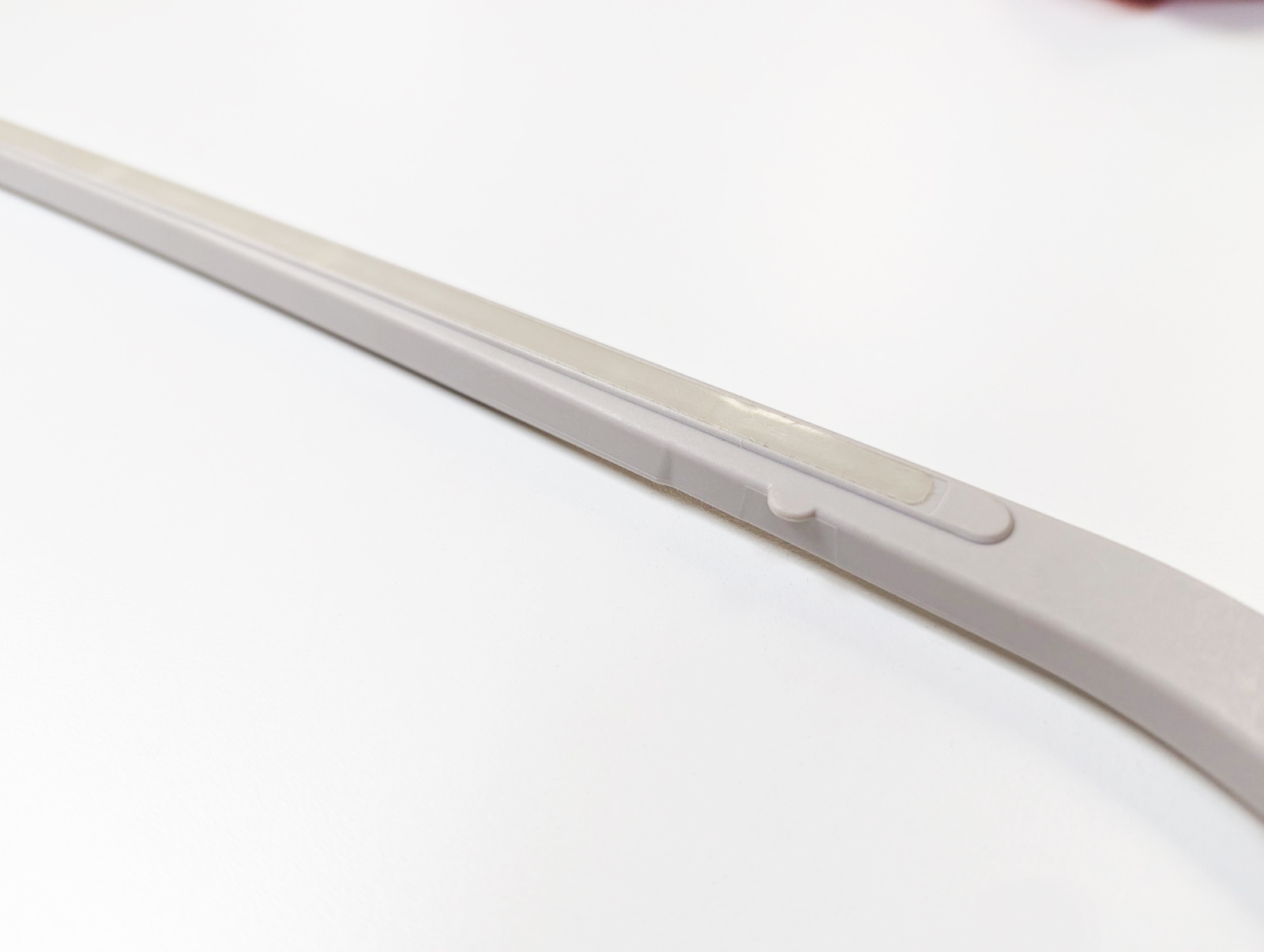
Brother embroidery hoop rubber strips are a simple way to improve fabric grip inside the embroidery hoop. They help reduce fabric slipping, shifting, outline misalignment and distortion during machine embroidery.
If fabric moves in the hoop while the machine is stitching, even a perfectly digitized embroidery design can come out with shifted outlines, gaps between colors, puckering or distorted details. Non-slip rubber strips can help, but they work best together with correct hooping, proper stabilizer and good fabric preparation.
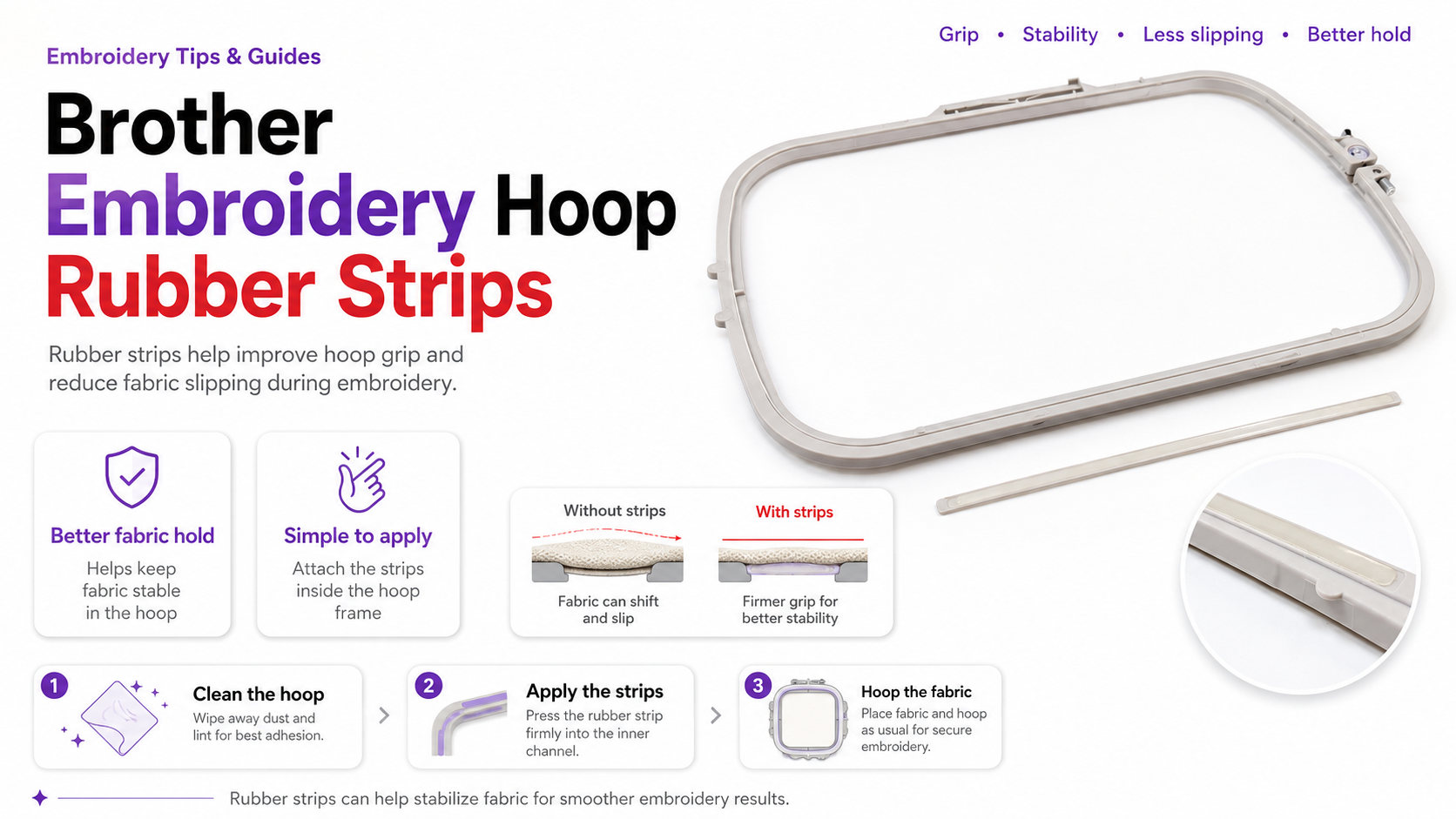
Brother embroidery hoop rubber strips help improve grip inside the hoop
What are Brother embroidery hoop rubber strips?
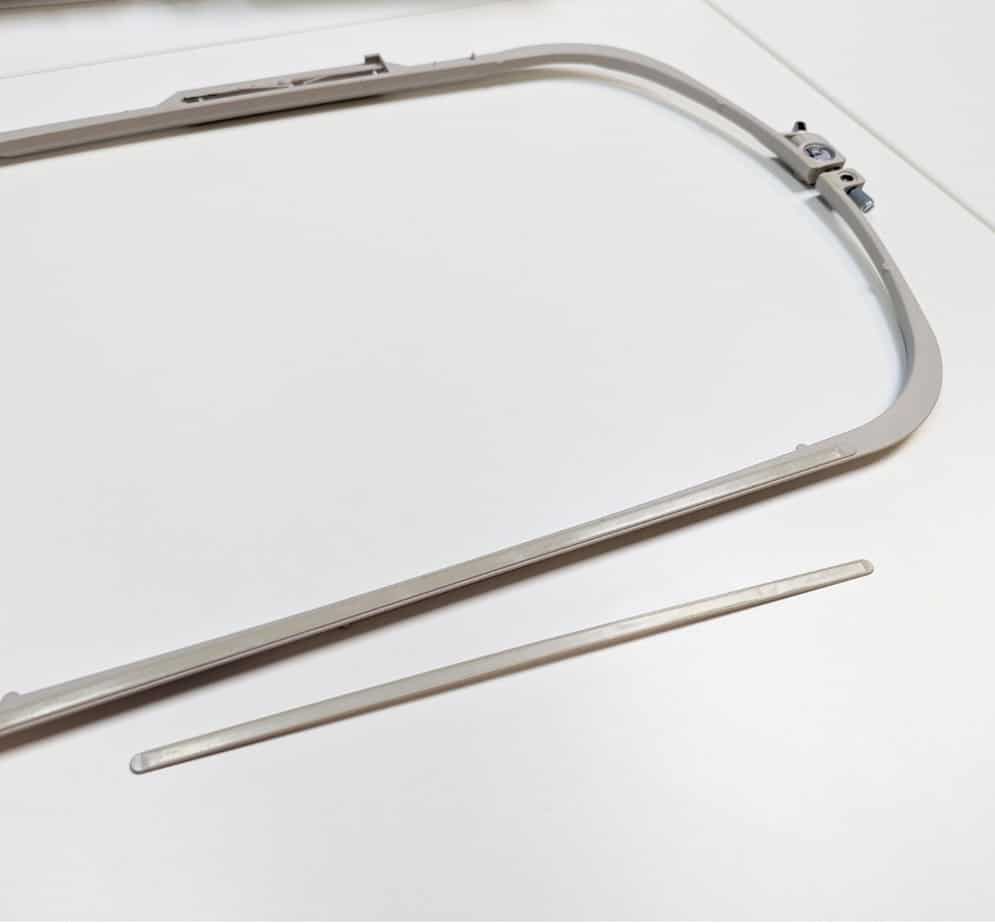
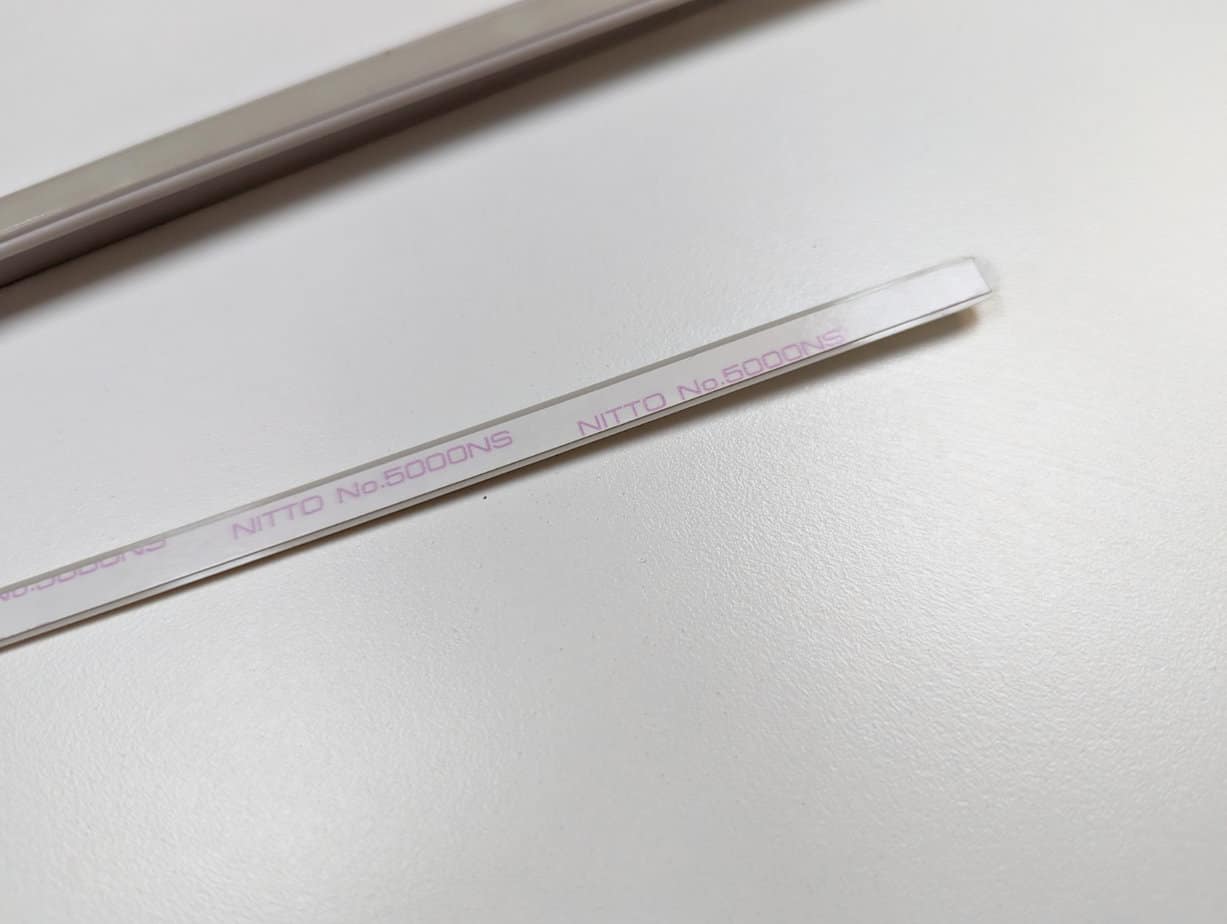
Brother embroidery hoop rubber strips are thin non-slip rubber pieces placed inside the embroidery hoop to increase grip between the hoop, fabric and stabilizer. Their purpose is simple: to help the fabric stay in place during embroidery.
They are especially useful when working with smooth fabric, long stitchouts, dense embroidery designs, borders, monograms and projects where accurate alignment is important.
These strips do not replace stabilizer. Think of them as an extra grip helper. The stabilizer supports the fabric, while the rubber strips help the hoop hold the fabric more securely.
Why fabric slips in an embroidery hoop
Fabric slipping happens when the fabric, stabilizer or both move inside the hoop while the machine is stitching. This movement can be very small, but even a small shift can damage the final embroidery result.
Common reasons for fabric slipping include:
- smooth or slippery fabric;
- loose hooping;
- wrong stabilizer;
- fabric stretched too much during hooping;
- heavy or dense embroidery design;
- long embroidery time;
- old or worn hoop;
- thick fabric that does not sit evenly in the hoop;
- towels or textured fabric without proper topping;
- large designs with many color changes.
Fabric movement in the hoop can cause shifted outlines, gaps and puckering
When non-slip rubber strips are helpful
Non-slip rubber strips are useful when the hoop does not hold the fabric firmly enough. They are especially helpful for projects where the fabric must stay perfectly still from the first stitch to the last.
- Monograms — even small shifting can make lettering look uneven.
- Embroidery borders — long straight lines show mistakes quickly.
- Corner embroidery designs — accurate placement is very important.
- Towel embroidery — thick fabric and pile can make hooping harder.
- Dense designs — many stitches pull the fabric more strongly.
- Large hoop projects — the larger the hoop, the more carefully fabric must be controlled.
- Smooth cotton, satin or linen — these fabrics may slide more easily.
- Long stitchouts — fabric must stay stable for a longer time.
For designs where placement matters, such as border embroidery designs and corner embroidery designs, good hoop grip is especially important.
When rubber strips are not enough
Non-slip rubber strips can improve hoop grip, but they cannot fix every embroidery problem. If the wrong stabilizer is used, if the fabric is stretched, or if the design is too dense for the fabric, rubber strips alone will not save the project.
Rubber strips may not solve the issue if:
- the stabilizer is too light for the design;
- the fabric is stretchy and needs cut-away stabilizer;
- the fabric was stretched during hooping;
- the design is too large or too dense for the fabric;
- the hoop is damaged or does not close evenly;
- the fabric is too thick for the selected hoop;
- the machine speed is too high for the project;
- the design was heavily resized without proper stitch recalculation.
In other words, rubber strips are helpful, but correct embroidery technique still matters.
How to install non-slip rubber strips in an embroidery hoop
Installing embroidery hoop rubber strips is usually simple, but the hoop surface should be clean and dry before application.
- Remove fabric and stabilizer from the hoop.
- Clean the inside surface of the hoop.
- Let the hoop dry completely.
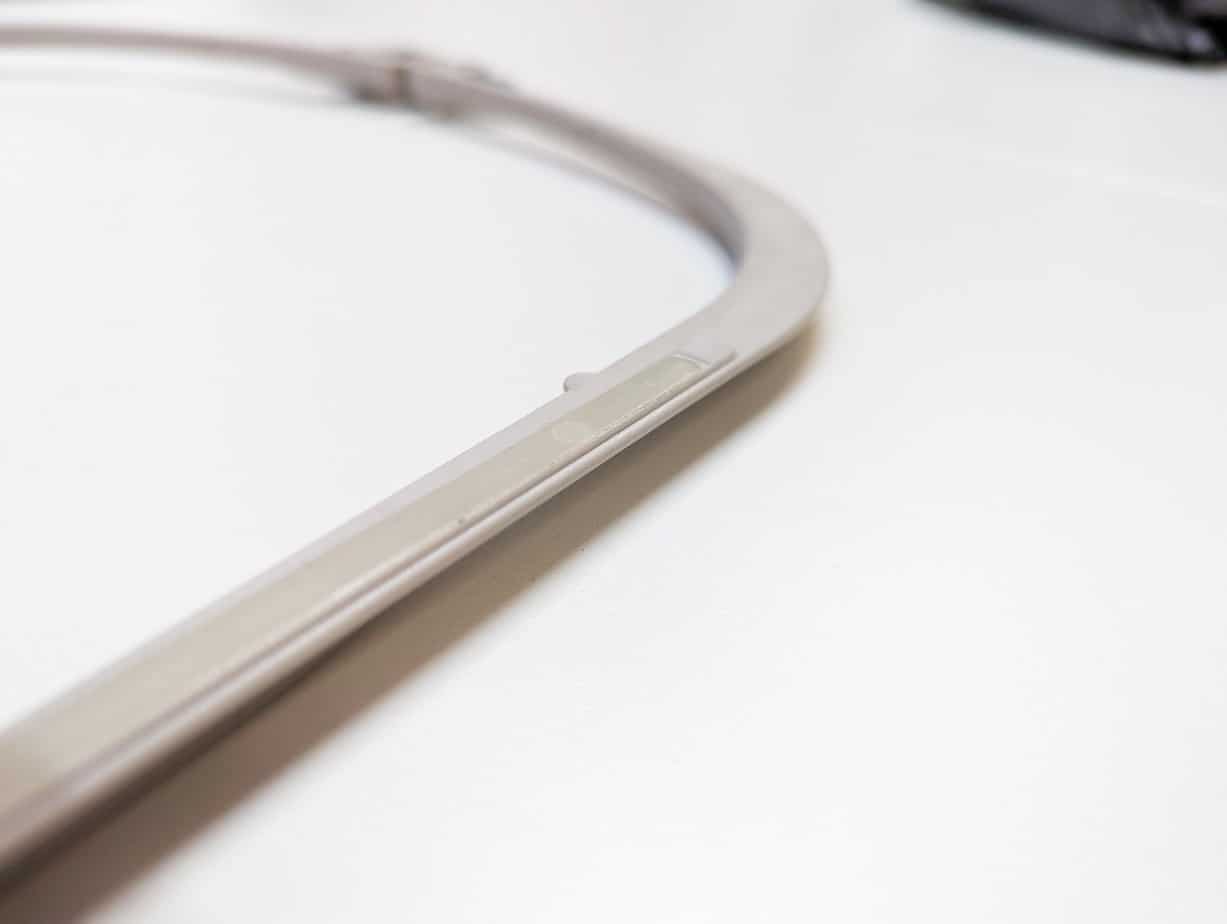
- Place the rubber strips evenly along the inner hoop area.
- Do not block the screw, locking parts or hoop connection areas.
- Press the strips firmly so they attach well.
- Test the hoop on scrap fabric before using it on a final project.
Place rubber strips evenly inside the hoop to improve fabric grip
How to hoop fabric correctly with rubber strips
Correct hooping is still the most important part of the process. Rubber strips can help the hoop grip better, but the fabric must be hooped smoothly and evenly.
- Press the fabric before hooping.
- Choose the correct stabilizer for your fabric.
- Place stabilizer under the fabric.
- Hoop the fabric flat, without wrinkles.
- Do not stretch the fabric like a drum.
- Tighten the hoop enough to hold the fabric, but do not over-tighten.
- Check that the grain of the fabric is straight.
- Gently tap the hooped fabric to check if it feels stable.
The fabric should be smooth and stable, but not stretched. Stretching fabric during hooping is one of the most common reasons for puckering after embroidery.
Correct hooping: fabric flat, stabilizer under the fabric, no stretching
Best stabilizers to prevent fabric slipping
Stabilizer is the main support system for machine embroidery. Rubber strips help with grip, but stabilizer controls how the fabric behaves under the needle.
- Tear-away stabilizer — good for stable woven cotton, linen and some napkin projects.
- Cut-away stabilizer — better for knits, T-shirts, sweatshirts, stretchy fabric and clothing.
- Water-soluble topping — needed for terry towels, fleece, velvet and textured fabrics.
- Adhesive stabilizer — useful for hard-to-hoop items, small pieces and delicate placement.
- Temporary spray adhesive — helps hold fabric and stabilizer together when used lightly.
If you are not sure which stabilizer to use, read: Choosing Stabilizers for Machine Embroidery .
For projects where fabric is difficult to hoop, temporary adhesive spray can also help: Temporary Adhesive Spray for Embroidery .
Stabilizer supports the fabric and helps prevent slipping, puckering and distortion
Projects where hoop grip matters most
Some embroidery projects are more sensitive to fabric movement than others. If the fabric shifts even slightly, the final result may look uneven.
- Monograms — letters need clean alignment and even spacing.
- Embroidery borders — long lines show every shift.
- Corner designs — placement must be accurate.
- Towel embroidery — pile and thickness make hooping more difficult.
- Napkin embroidery — corners must stay square and flat.
- Pillow embroidery — large center designs need stable fabric.
- Large dense designs — stitch pull is stronger and needs better support.
If you are working on home textiles, browse our machine embroidery designs for bedding, towels and decorative pillows .
For table linens, borders and napkins, you may also like: border embroidery designs and corner embroidery designs .
How to test hoop grip before stitching the final item
Before embroidering on an expensive towel, pillow cover, shirt or linen napkin, test the hoop grip on scrap fabric.
- Use fabric similar to your final project.
- Use the same stabilizer you plan to use.
- Hoop the fabric with the rubber strips installed.
- Run a small test design.
- Check if the outline shifted.
- Check the back side for puckering or pulling.
- If the fabric moved, change stabilizer or hooping method before stitching the final item.
Testing is especially important for dense designs, towels, knits, slippery fabrics and large embroidery layouts.
Common hooping mistakes
If your embroidery still shifts after using non-slip rubber strips, check these common mistakes:
- Stretching the fabric in the hoop — this often causes puckering after embroidery.
- Using too light stabilizer — the fabric needs enough support for the stitch density.
- Skipping water-soluble topping on towels — stitches may sink into the pile.
- Over-tightening the hoop screw — this can distort the fabric and hoop tension.
- Using a worn hoop — old hoops may not hold fabric evenly.
- Hooping thick seams or uneven fabric layers — the hoop cannot grip evenly.
- Stitching too fast — dense or delicate projects may need slower speed.
A good stitchout is usually the result of several things working together: correct design size, correct stabilizer, stable hooping, suitable fabric and good machine settings.
Do rubber strips work with hoops from other brands?
Non-slip rubber strips may work with hoops from other embroidery machine brands if the size, shape and hoop surface are compatible. However, not every hoop has the same inner shape, and not every strip will fit every hoop correctly.
Before using rubber strips on a non-Brother hoop, check:
- whether the strip fits inside the hoop;
- whether it blocks the locking or screw area;
- whether the hoop still closes correctly;
- whether the fabric can be hooped flat;
- whether the embroidery arm can move freely.
Always test on scrap fabric first.
Machine embroidery file issues vs hooping issues
Sometimes beginners think the embroidery design file is bad when the real problem is hooping. If the fabric slips, the final embroidery can look distorted even when the design file itself is correct.
A file issue is more likely when the machine cannot read the design at all, the format is wrong, the design is too large for the hoop, or the file was not unzipped correctly. A hooping issue is more likely when the design starts correctly but outlines shift, fabric puckers, or details no longer align during stitching.
For file format help, read: Embroidery Machine File Formats .
If you downloaded a ZIP archive and cannot open it, use our free tool: Online ZIP Unzip Tool .
FAQ about Brother embroidery hoop rubber strips
Do Brother embroidery hoop rubber strips stop fabric slipping?
They can help reduce slipping by improving grip inside the hoop. However, they should be used together with correct stabilizer and proper hooping.
Do I still need stabilizer if I use rubber strips?
Yes. Rubber strips improve hoop grip, but stabilizer supports the fabric during stitching. They solve different problems.
Can rubber strips prevent puckering?
They may help if puckering is caused by fabric movement, but puckering can also be caused by wrong stabilizer, dense design, stretched fabric or incorrect hooping.
Can I use rubber strips for towel embroidery?
Yes, they may help with grip, but towels also need correct stabilizer and water-soluble topping on top of the fabric.
Can I use rubber strips with non-Brother hoops?
Sometimes, if the size and shape are compatible. Test carefully and make sure the hoop still closes correctly.
Are rubber strips enough for stretchy fabric?
Usually no. Stretchy fabric normally needs cut-away stabilizer and careful hooping. Rubber strips may help with grip, but they do not replace stabilization.
Why did my embroidery outline shift even with rubber strips?
Possible reasons include wrong stabilizer, stretched fabric, heavy stitch density, incorrect hooping, old needle, high speed or fabric that moved during embroidery.
Useful links for better embroidery results

Author: Ludmila Konovalova
My name is Ludmila Konovalova, and I lead Royal Present Embroidery. Embroidery for me is more than a profession; it is a legacy of my Ukrainian and Bulgarian heritage, where every woman in my family was a virtuoso in cross-stitch and smooth stitching. This art, passed down through generations, is part of my soul and a symbol of national pride.
Date: 09.10.2025

 Get Sign-In Link
 Login with Google
 Login with Facebook
 Login with Amazon
 Login with Paypal