Christmas Towel Borders Machine Embroidery Design Set - 3 Designs, 2 Sizes
By knowing the speed of your embroidery machine, you can find out how long it will take to embroider a design.
To use the embroidery calculator, click on the number of stitches in the product description.
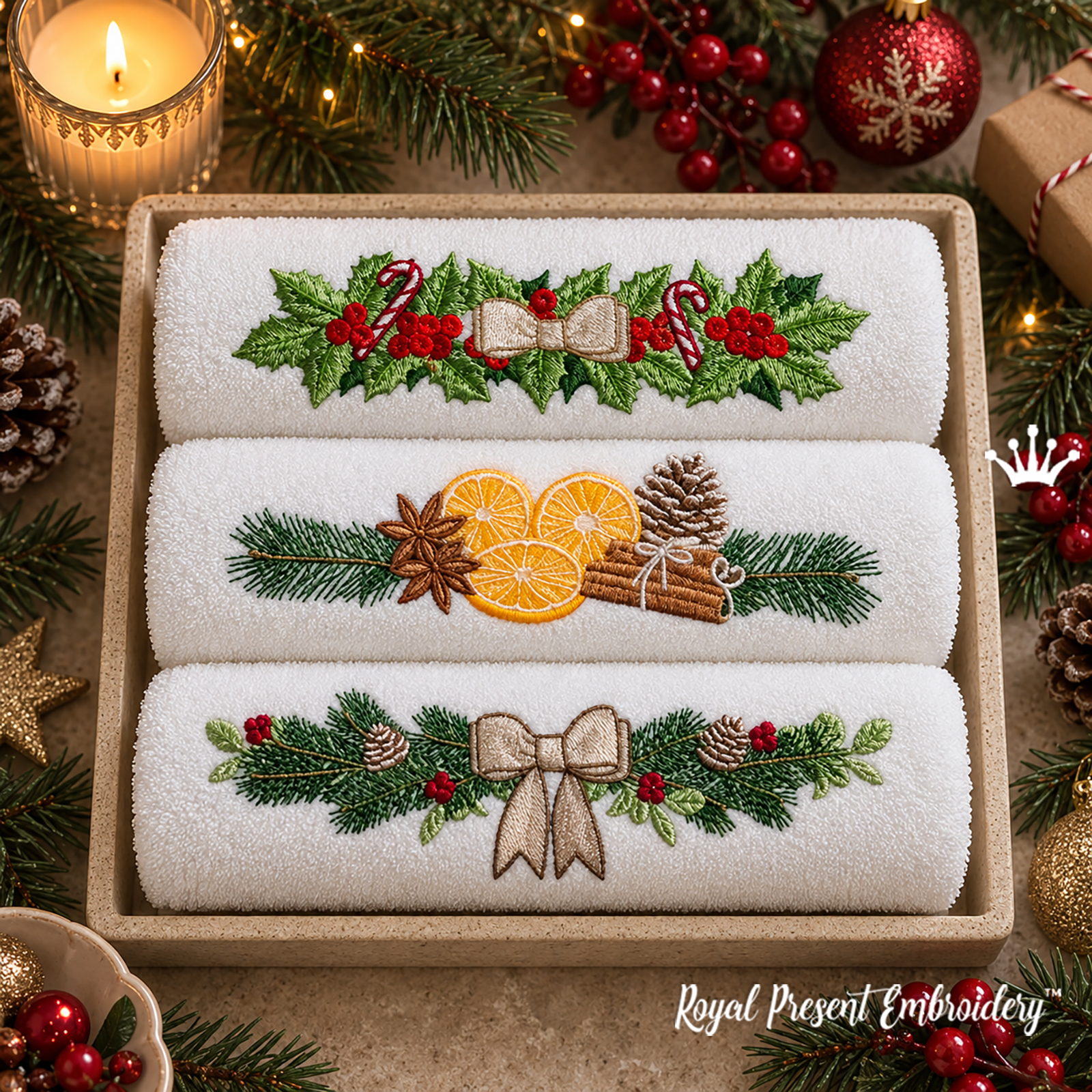
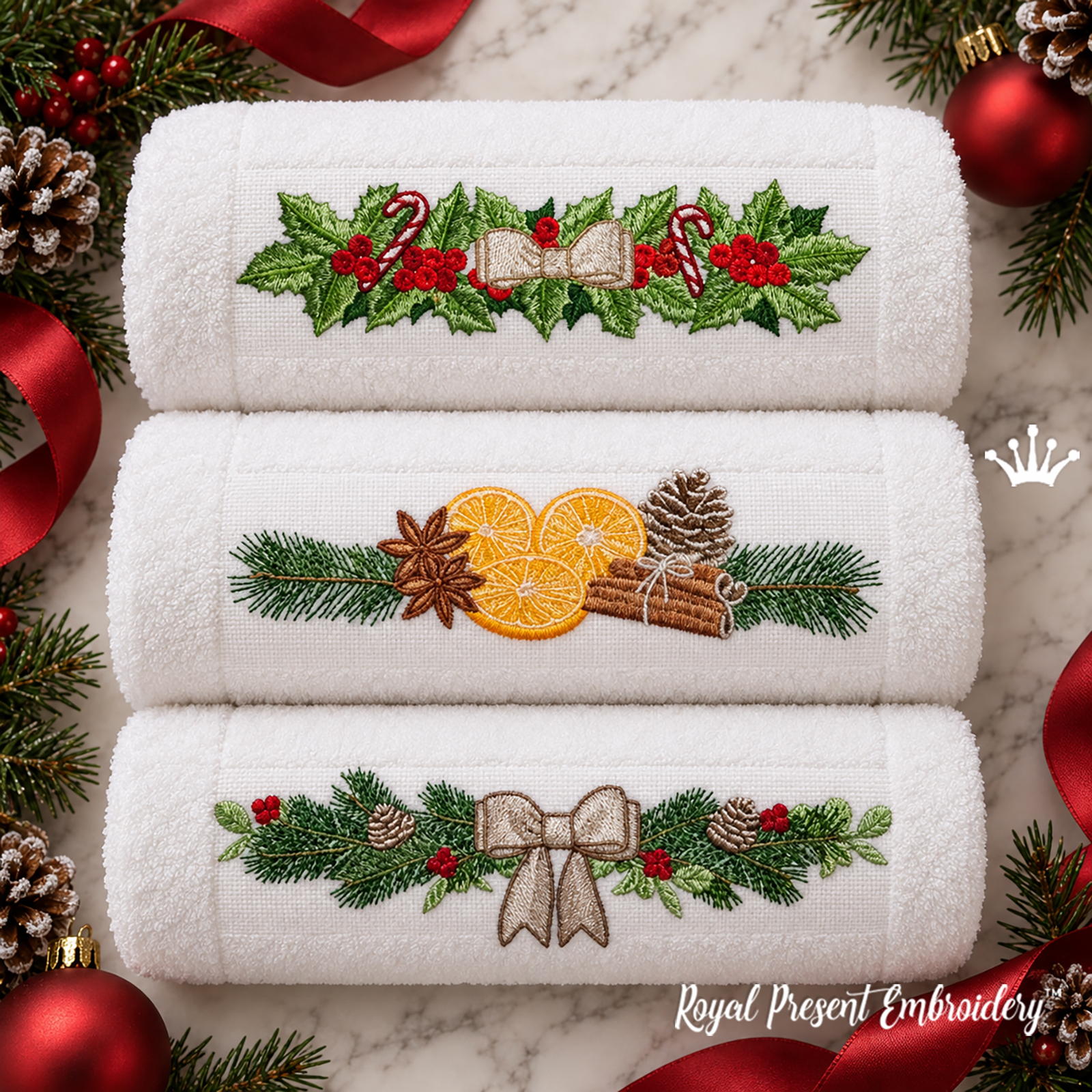
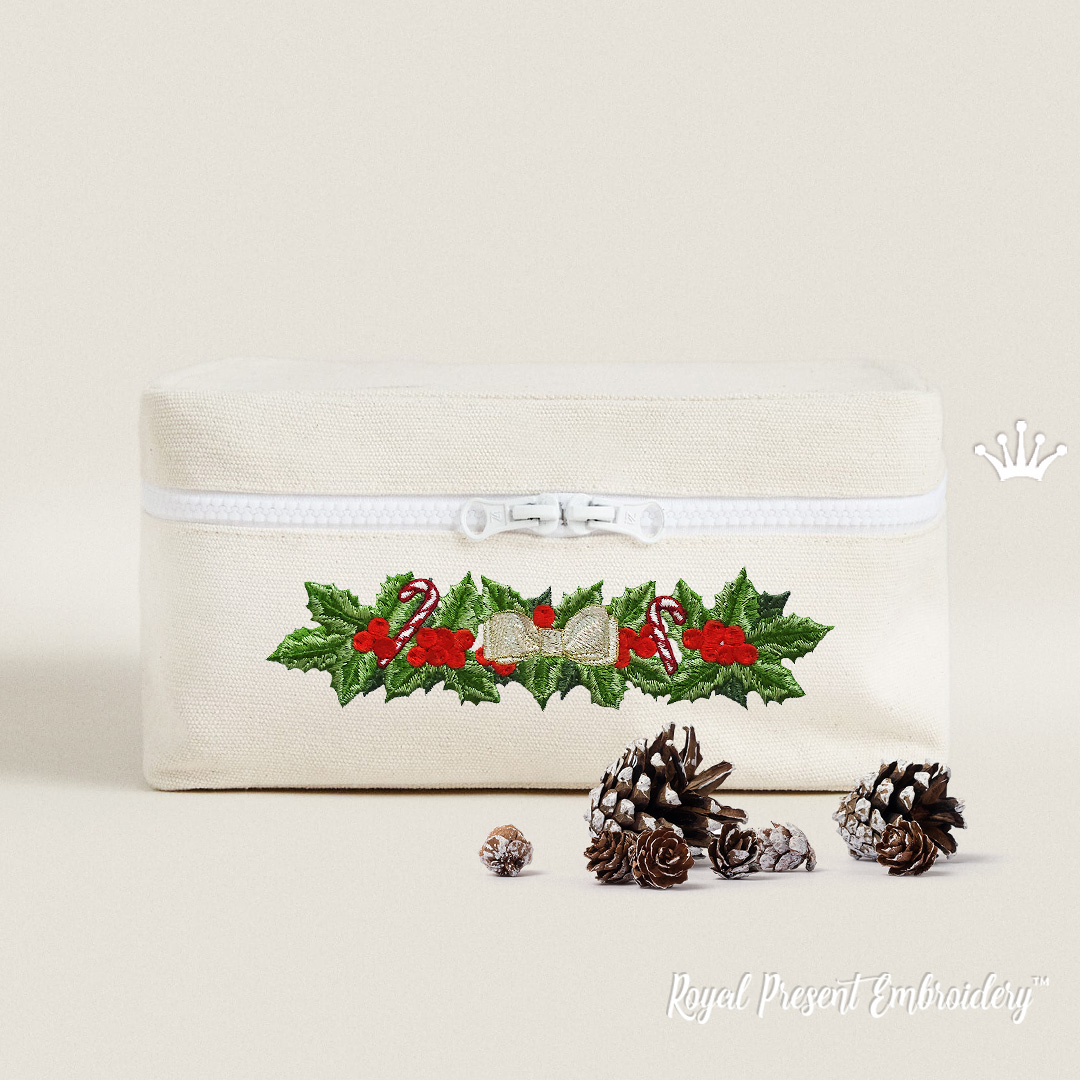
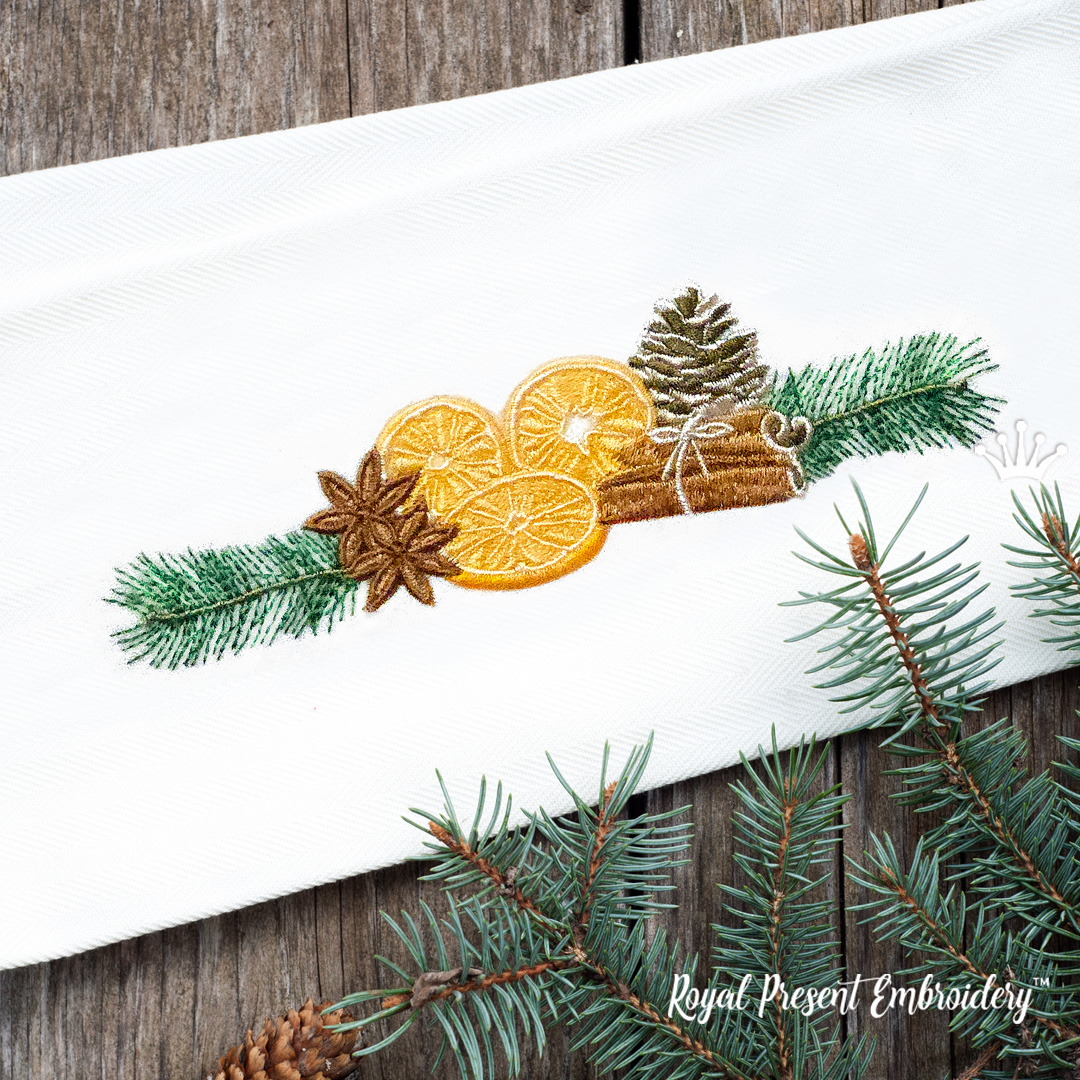
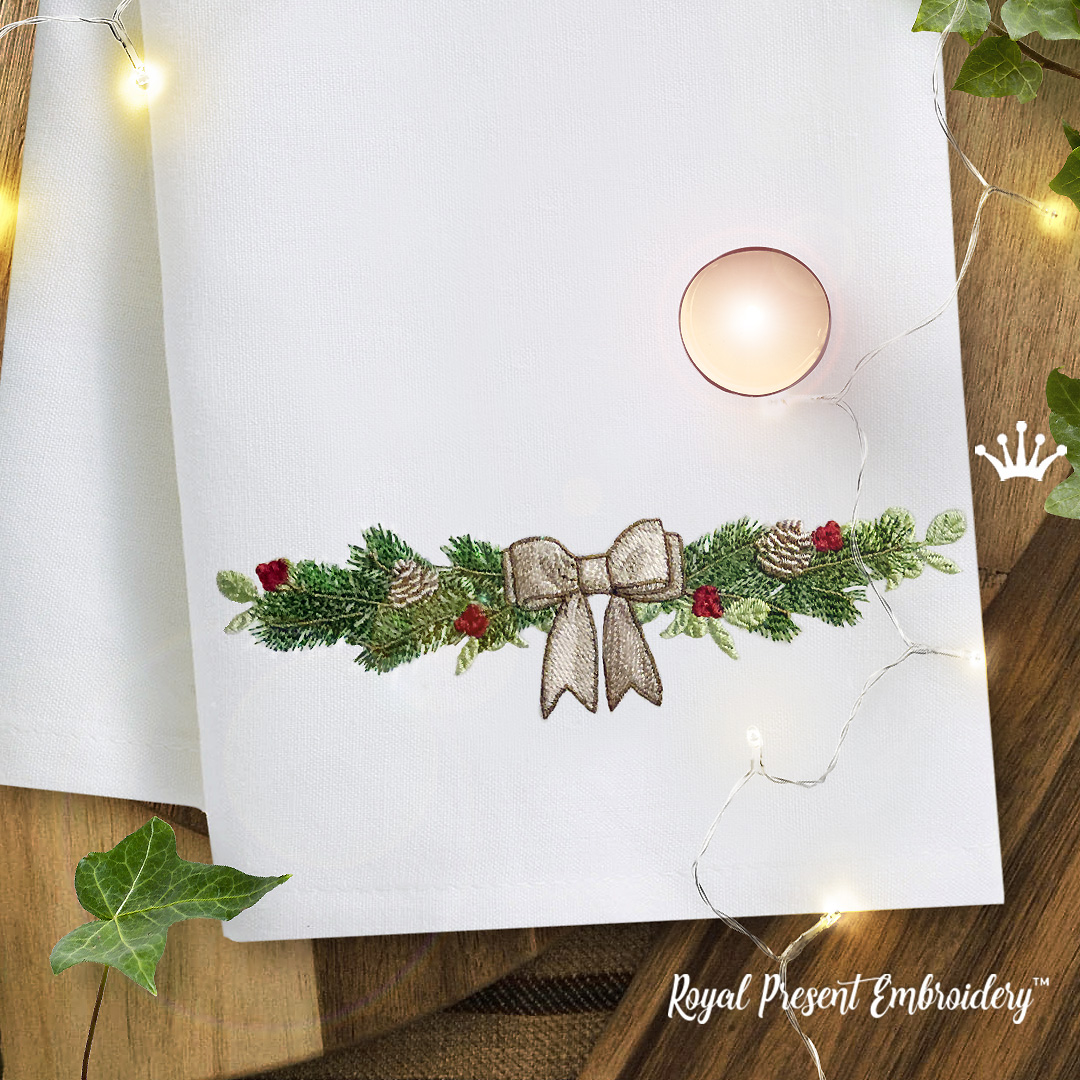
This Christmas towel border set includes 3 digital machine embroidery designs: evergreen and holly with berries, candy canes and a bow; fir branches with pine cones, berries and a bow; and fir branches with orange slices, cinnamon sticks, star anise and a pine cone. Each border is supplied in 2 sizes for an embroidery field of at least 130x180 mm (5x7") or 140x200 mm (5.5x8"). Use the coordinated designs on terry and kitchen towels, table runners, napkins, pillowcases, aprons and Christmas gifts. This is a digital download; no finished or physical product is shipped.
Set Details
| Product type | Digital machine embroidery design set |
|---|---|
| Number of designs | 3 |
| Sizes per design | 2 |
| Total size variants | 6 size variants in every included format |
| Minimum hoops | 130x180 mm / 5x7" and 140x200 mm / 5.5x8" |
| Theme | Christmas, winter greenery, berries, pine cones, bows, oranges and spices |
| Construction | Horizontal multicolor borders with open fabric areas between the motifs |
| Delivery | Instant digital download in a ZIP archive |
Sizes, Stitches and Minimum Hoops
| Included design | Exact design size and stitch count | Minimum compatible hoop |
|---|---|---|
| Berries, candy canes and bow | Size: 47.8x178.0 mm (1.88x7.01"). Stitches: 18882 | 130x180 mm / 5x7" |
| Size: 53.2x198.4 mm (2.09x7.81"). Stitches: 21256 | 140x200 mm / 5.5x8" | |
| Pine cones and bow | Size: 48.3x177.9 mm (1.90x7.00"). Stitches: 14410 | 130x180 mm / 5x7" |
| Size: 53.1x195.7 mm (2.09x7.70"). Stitches: 15697 | 140x200 mm / 5.5x8" | |
| Oranges, cinnamon and star anise | Size: 47.2x178.0 mm (1.86x7.01"). Stitches: 14522 | 130x180 mm / 5x7" |
| Size: 51.9x195.8 mm (2.04x7.71"). Stitches: 15885 | 140x200 mm / 5.5x8" |
Formats: .dst, .jef, .pec, .vip, .hus, .pes, .exp, .sew, .dat, .vp3, .xxx
The labels 5x7 and 5.5x8 are commercial hoop names. Compare both exact file dimensions with the actual embroidery field supported by your machine. The border may be rotated 90 degrees on the machine screen without changing its dimensions or the required stitching field.
Three Designs Included in the Set
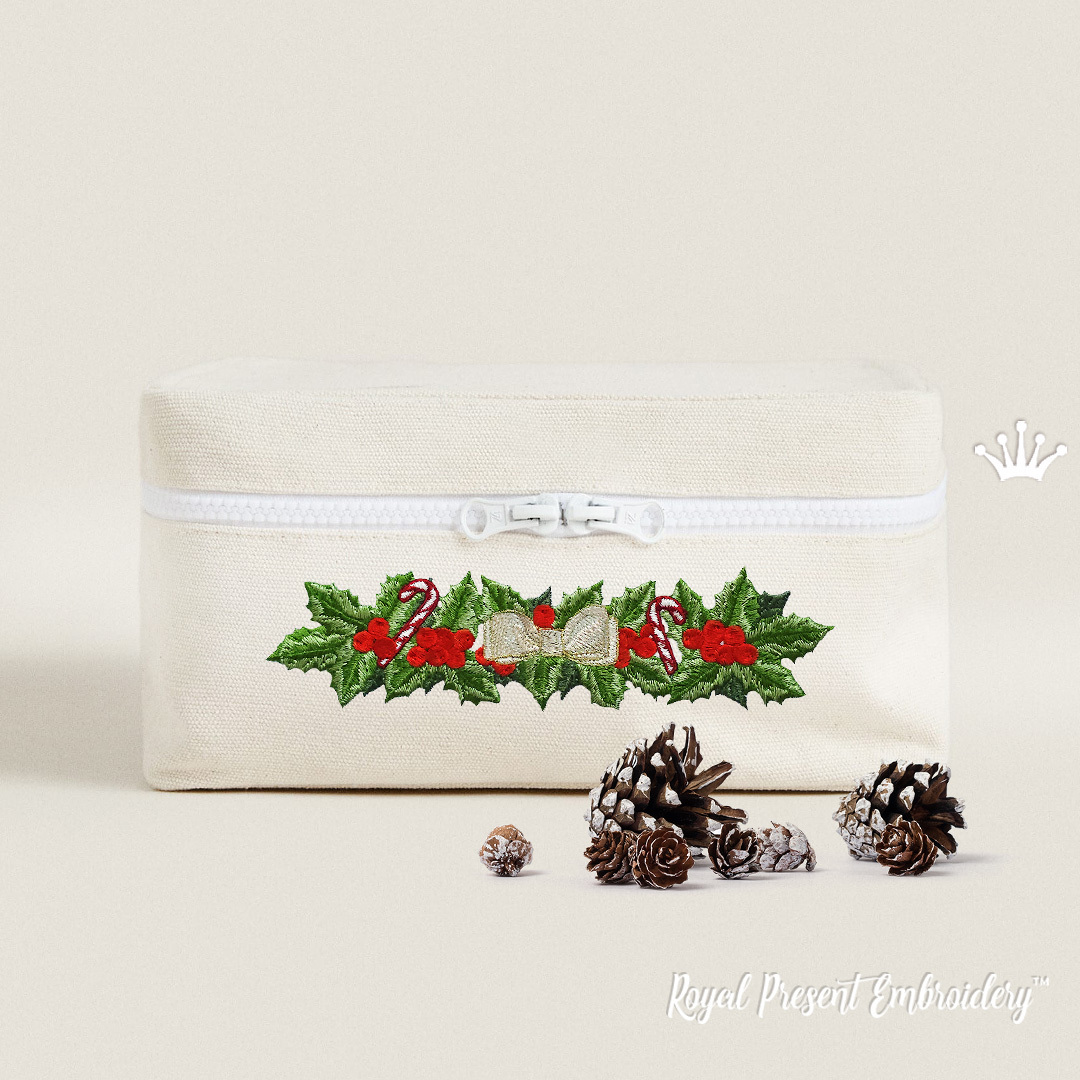
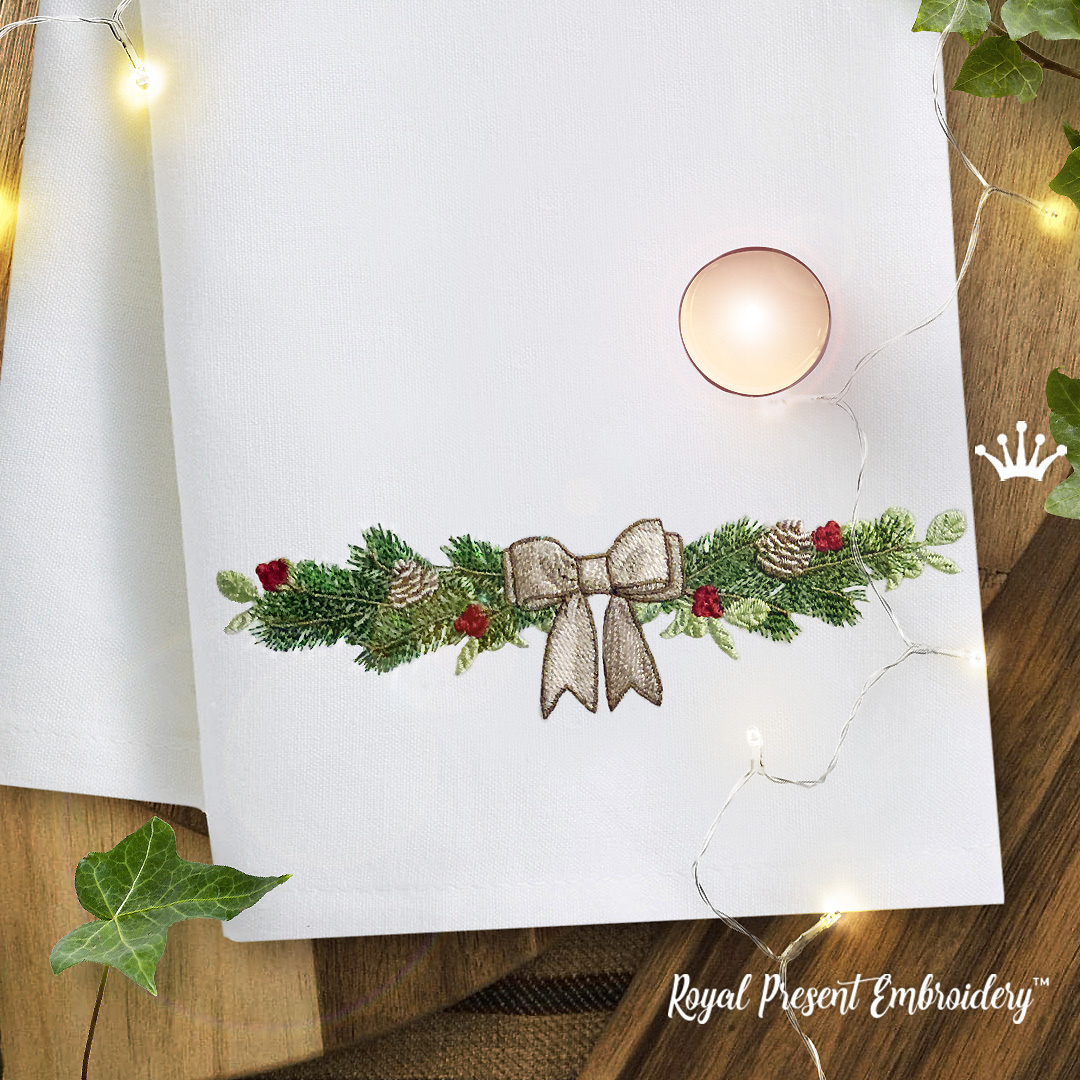
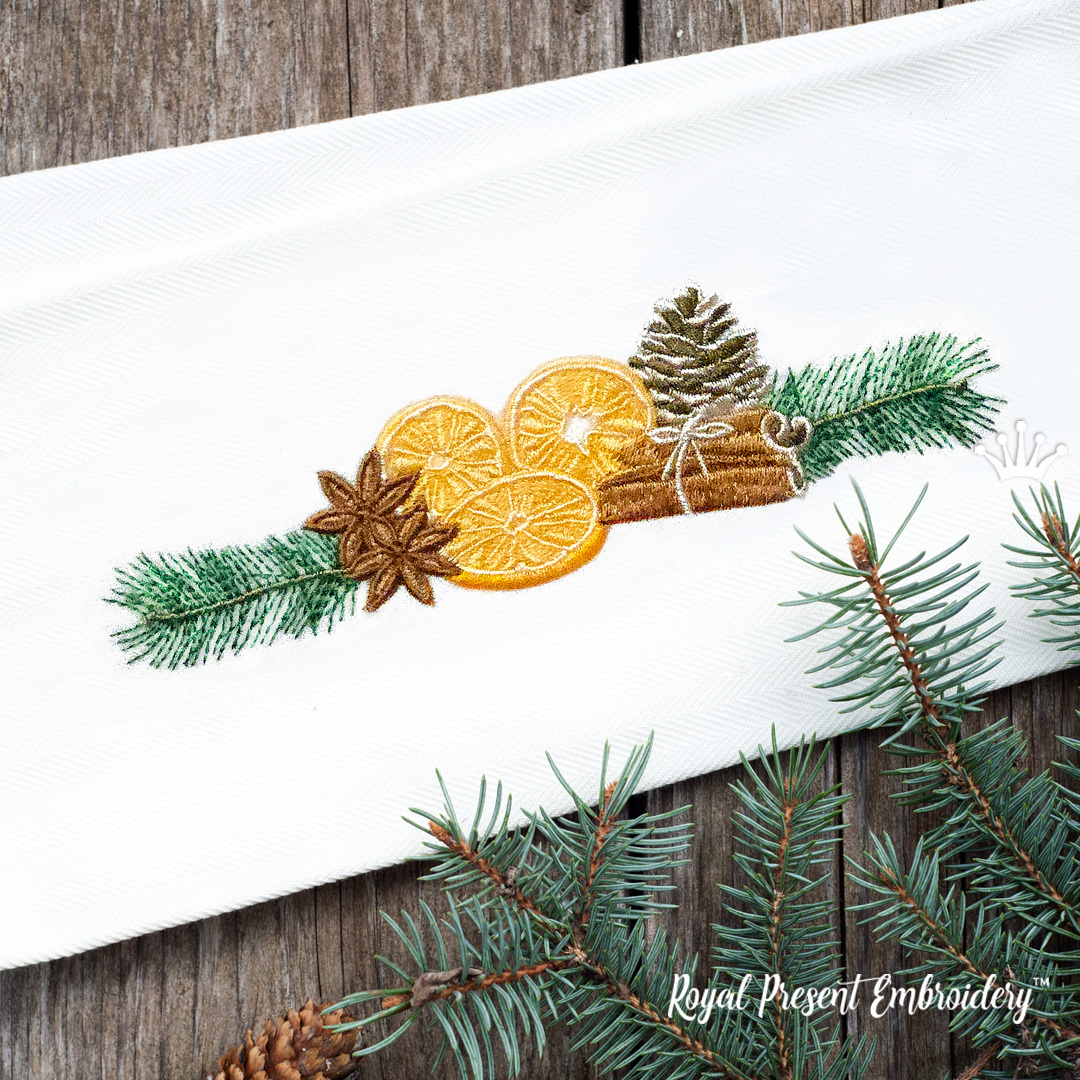
Browse more coordinated seasonal designs in the winter machine embroidery designs category.
Madeira Classic 40 Color Charts
The thread numbers below are taken from the original color chart for each included design. The swatches make the positions easier to distinguish on screen; use the Madeira number and a physical thread chart for final color selection. For another brand, use the Royal Present thread converter. A conversion is the nearest available match, not a guaranteed identical shade.
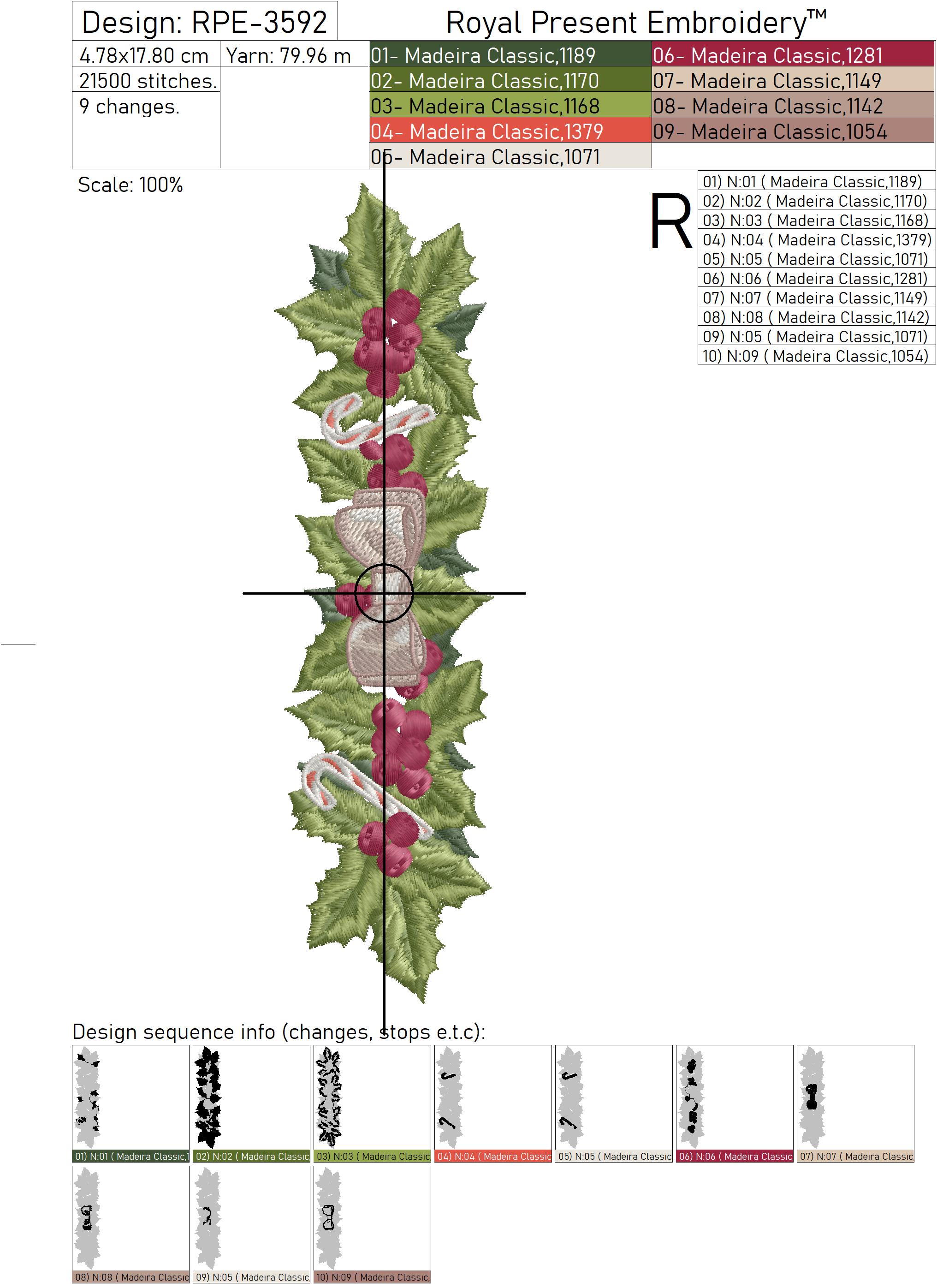
Berries, Candy Canes and Bow Border - 9 Colors
| Color | Madeira Classic 40 | Stitched area | |
|---|---|---|---|
|
|
1189 | deepest holly leaf shadows | |
|
|
1170 | main dark green holly areas | |
|
|
1168 | lighter holly areas and veins | |
|
|
1379 | red candy cane stripes | |
|
|
1071 | light candy cane base and later bow highlights | |
|
|
1281 | berries | |
|
|
1149 | light bow fill | |
|
|
1142 | bow shadows | |
|
|
1054 | bow outline and darkest details |
Color sequence: 1189 → 1170 → 1168 → 1379 → 1071 → 1281 → 1149 → 1142 → 1071 → 1054.
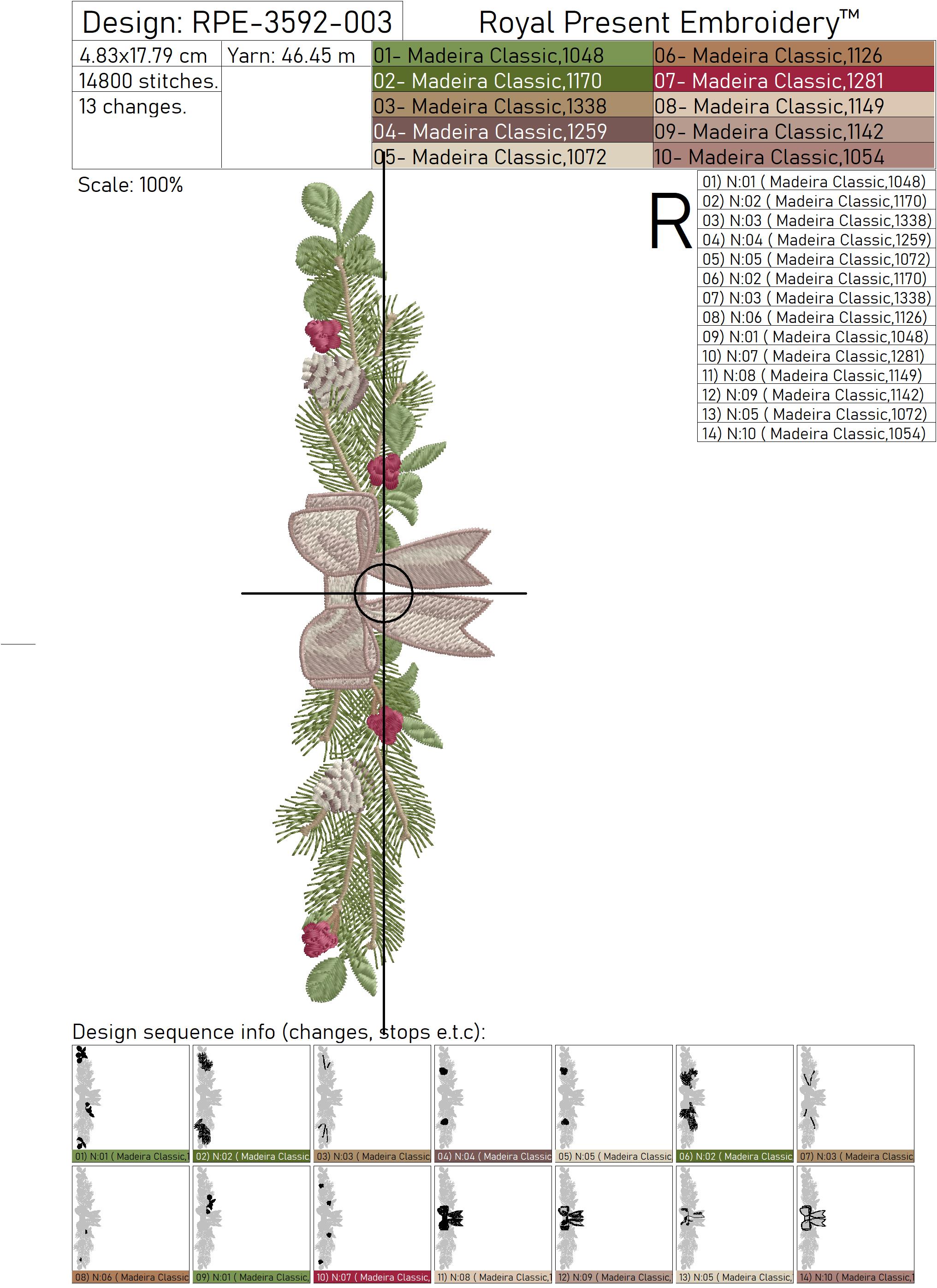
Pine Cones and Bow Border - 10 Colors
| Color | Madeira Classic 40 | Stitched area | |
|---|---|---|---|
|
|
1048 | light evergreen foliage and broad leaves | |
|
|
1170 | fir needles and dark greenery | |
|
|
1338 | branches and stems | |
|
|
1259 | dark pine cone areas | |
|
|
1072 | light pine cone details and final bow highlights | |
|
|
1126 | pine cone midtones and scales | |
|
|
1281 | berries | |
|
|
1149 | light bow fill | |
|
|
1142 | bow shadows | |
|
|
1054 | bow outline and darkest details |
Color sequence: 1048 → 1170 → 1338 → 1259 → 1072 → 1170 → 1338 → 1126 → 1048 → 1281 → 1149 → 1142 → 1072 → 1054.
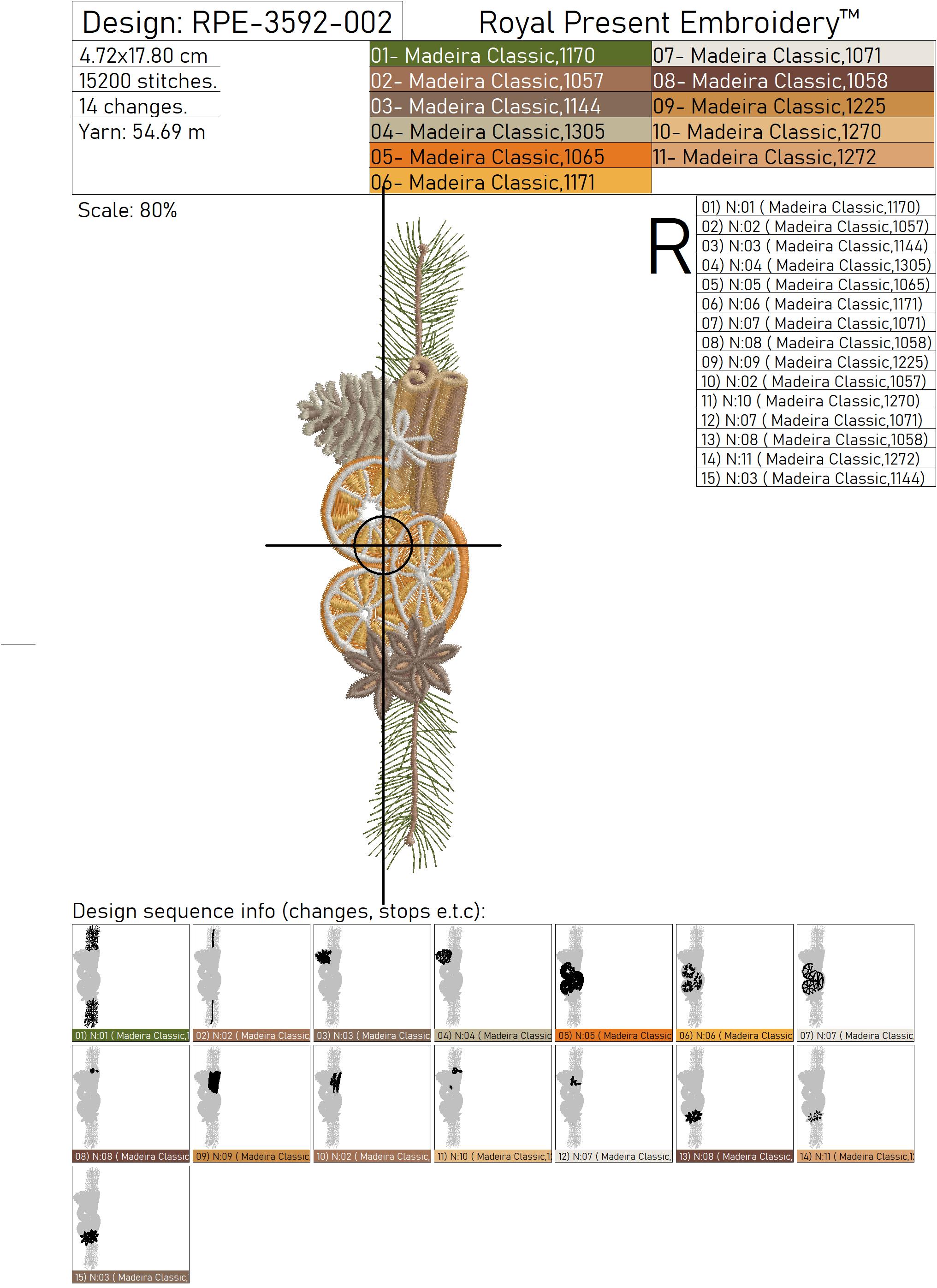
Oranges, Cinnamon and Star Anise Border - 11 Colors
| Color | Madeira Classic 40 | Stitched area | |
|---|---|---|---|
|
|
1170 | fir needles | |
|
|
1057 | branches and dark cinnamon details | |
|
|
1144 | pine cone shadows and final star anise details | |
|
|
1305 | light pine cone scales | |
|
|
1065 | main orange slice areas | |
|
|
1171 | golden orange interiors | |
|
|
1071 | segment lines, pith and the string around the cinnamon | |
|
|
1058 | dark pine cone, orange and star anise outlines | |
|
|
1225 | main cinnamon stick fill | |
|
|
1270 | cinnamon highlights and edges | |
|
|
1272 | star anise midtones and details |
Color sequence: 1170 → 1057 → 1144 → 1305 → 1065 → 1171 → 1071 → 1058 → 1225 → 1057 → 1270 → 1071 → 1058 → 1272 → 1144.
Fabric, Stabilizer and Towel Preparation
Check the width of the smooth decorative band. The finished borders are 47.2–53.2 mm (1.86–2.09") high. To keep the embroidery clear of terry loops and seams, allow a smooth band at least 70–75 mm (2.75–2.95") wide. Print a template at 100% scale and check both ends of the design before hooping.
Choose total stabilizer weight in relation to the fabric. A practical starting point is the fabric weight in g/m² divided by 3. For smooth cotton or linen weighing 180–240 g/m², begin with 60–80 g/m² tear-away or soft cut-away stabilizer. For a waffle towel weighing 180–250 g/m², a soft 60–85 g/m² cut-away is usually the safer starting point because a long border makes lengthwise shifting easy to see.
For terry towels weighing 350–500 g/m², the calculated total support is about 115–165 g/m². Build it from two layers, such as 70–90 g/m² cut-away plus a 40–70 g/m² supporting layer, instead of one excessively rigid layer. Add water-soluble topping such as Madeira Avalon Film or Sulky Solvy so the small needles, branches and outlines remain above the pile.
If the finished towel is difficult to hoop, float it on Madeira Cotton Fix 9439 or Gunold Filmoplast and add a basting box around the design. With a border up to 198.4 mm (7.81") long, secure attachment is more important than stretching the fabric tightly. Fabric stretched in the hoop may contract after release and bend the straight composition.
For additional size checks, see the embroidery hoop size and stitching field guide.
Questions and Practical Tips
Can I stitch the border horizontally if the color chart shows it vertically?
Yes. Rotate the design 90 degrees on the machine screen or in embroidery software without changing its scale. After rotation, the 47.8x178.0 mm file occupies 178.0x47.8 mm, but it still requires a stitching field of at least 130x180 mm (5x7"). Trace the outer boundary before starting.
How can I prevent color misalignment in a long border?
Prewash the towel, hoop fabric and stabilizer together, and do not stretch the decorative band. If floating, secure the towel to adhesive stabilizer and use a basting box. Start with a new 80/12 embroidery needle; dense terry may need 90/14. Do not remove the hoop between color changes.
Can I add gold or silver thread?
Yes. Replace only a selected accent such as a light bow detail, candy cane stripe, string around the cinnamon or a short outline section. Keep Madeira Classic 40 or 40-weight polyester for large fills and foliage. Madeira FS Metallic 40 and Gunold METY 40 are suitable examples.
How do I keep metallic thread from breaking?
Use a metallic needle with a larger polished eye, such as SCHMETZ Metallic 90/14 or Organ Metallic No. 90. Reduce the speed to about 400–500 stitches per minute, slightly lower the upper-thread tension, and use a separate vertical thread stand if the thread unwinds in jerks. Keep standard embroidery bobbin thread and test the selected color block on a sample first.
Can I resize these borders?
Use one of the two prepared sizes. Automatic scaling of a long multicolor stitch file can change fill density, stitch length and outline registration. If another exact size is required, request professional resizing from the original working file and test-stitch it on fabric of the same weight.
Tip for matching placement on three towels
Make one paper template in the selected size and mark its center and horizontal axis. Measure placement from the same finished edge on every towel instead of from the center of the full blank. The three different borders will then sit at the same height and read as one coordinated Christmas gift set.

 Get Sign-In Link
 Login with Google
 Login with Facebook
 Login with Amazon
 Login with Paypal