HP–PH Monogram Machine Embroidery Design - 3 sizes
By knowing the speed of your embroidery machine, you can find out how long it will take to embroider a design.
To use the embroidery calculator, click on the number of stitches in the product description.
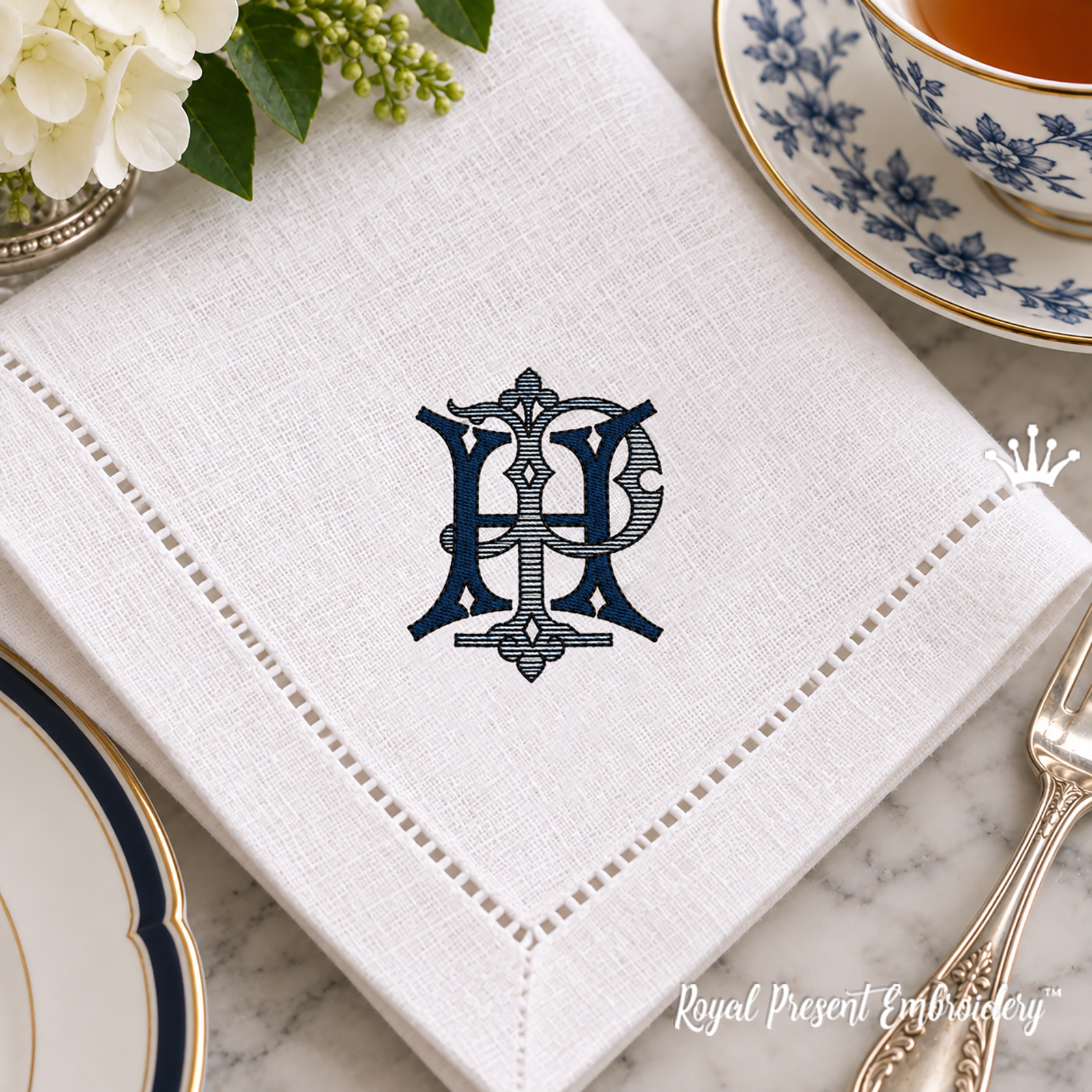
The HP–PH monogram machine embroidery design combines the interlocking capital letters H and P in one refined composition. It works for either HP or PH initials. All three sizes fit a minimum 80x80 mm (3x3 inch) hoop. Use it to personalize linen napkins, towels, handkerchiefs, robe pockets, pillowcases and gifts.
Design Details
| Product Type | Digital machine embroidery design |
| Subject | Interlocking two-letter HP–PH monogram |
| Minimum Hoop Size | 80x80 mm / 8x8 cm / 3x3 inch |
| Number of Sizes | 3 |
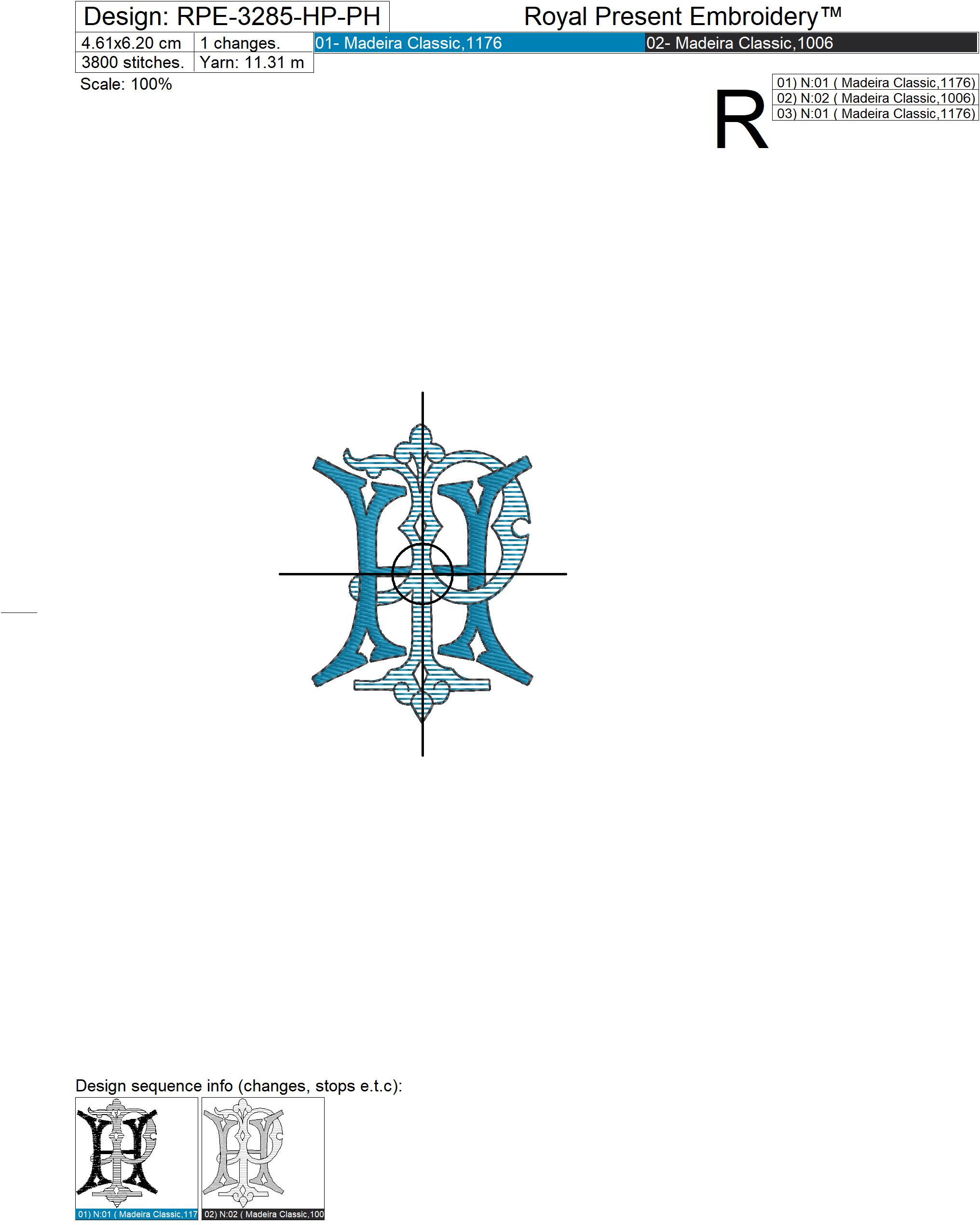
| Stitching Sequence | 2 color blocks, 1 color change: main letters followed by the outline |
| Download | Instant digital download |
| Formats | .dst, .jef, .pec, .vip, .hus, .pes, .exp, .sew, .dat, .vp3, .xxx |
Sizes & Hoop Compatibility
| Exact Design Size and Stitches | Minimum Compatible Hoop |
|---|---|
| Size: 46.1x62.0 mm (1.81x2.44 "), Stitches: 3800 | 80x80 mm (3x3") |
| Size: 50.7x68.2 mm (2.00x2.69 "), Stitches: 4200 | 80x80 mm (3x3") |
| Size: 55.6x75.0 mm (2.19x2.95 "), Stitches: 4800 | 80x80 mm (3x3") |
What the Design Shows
The composition combines the capital Latin letters H and P with pronounced serifs. The letters interlock around a decorative vertical axis with small diamond-shaped accents. Its clean silhouette remains readable on solid fabric and gives table linens, personal accessories and gifts a classic personalized finish.
Choosing Your Thread Colors
The color chart shows only one example of contrast. The first block stitches the main H and P letters, and the second block stitches the outline and decorative lines. You may use any colors you like: dark letters with a lighter or contrasting outline, light letters with a darker outline, two related shades for a tone-on-tone effect, or one color for both blocks. Choose the final combination according to the color and texture of your fabric.
Madeira Classic Color Chart
| Color | Number | Thread | Stitched Element | |
|---|---|---|---|---|
|
|
1176 | Madeira Classic | Main interlocking H and P letters | |
|
|
1006 | Madeira Classic | Letter outline, central axis and decorative details |
Important: the design contains two consecutive blocks and one color change. The main letters stitch first, followed by the outline. Madeira Classic 1176 and 1006 are shown only as one example of contrast; they are not required colors.
Fabric, Stabilizer and Thread
- Linen and firm woven cotton: use one layer of medium-weight tear-away stabilizer, such as Madeira Cotton Soft. Do not stretch the fabric in the hoop; keep the warp and weft threads straight.
- A finished napkin or a small area that is difficult to hoop: secure the item on Madeira Cotton Fix self-adhesive stabilizer. It holds the fabric in place and helps with precise monogram placement.
- Terry towels: place Madeira Avalon Film water-soluble topping over the pile so the stitches stay visible. Use a suitable backing underneath; a durable cut-away stabilizer is preferable for towels that will be washed frequently.
- Thread: 40-weight polyester is practical for towels and frequently washed items, while 40-weight rayon gives table linens and gift textiles a more pronounced sheen.
Project Ideas
- linen and cotton dinner napkins;
- guest towels and terry towels;
- handkerchiefs and gift bags;
- robe pockets and household linens;
- pillowcases, cosmetic bags and personalized accessories;
- wedding gifts and textiles for a couple with H and P initials.
Practical Tips
- If you are sewing the napkin yourself, embroider the monogram before finishing the edges. The fabric will be easier to hoop accurately.
- For a finished napkin, fold it exactly as it will appear in the table setting before marking the monogram center.
- For medium-weight linen, start with a 75/11 embroidery needle and test the design on a scrap of the same fabric.
- Check the reverse side on light fabric. Clean trimming and a suitable bobbin thread are particularly important on napkins and handkerchiefs.
- For a one-color version, use the same thread for both blocks. The machine will keep the sequence: main letters first, outline second.
Helpful reading: monogram placement and stabilization and choosing fabric for machine embroidery.
Coordinating Monograms
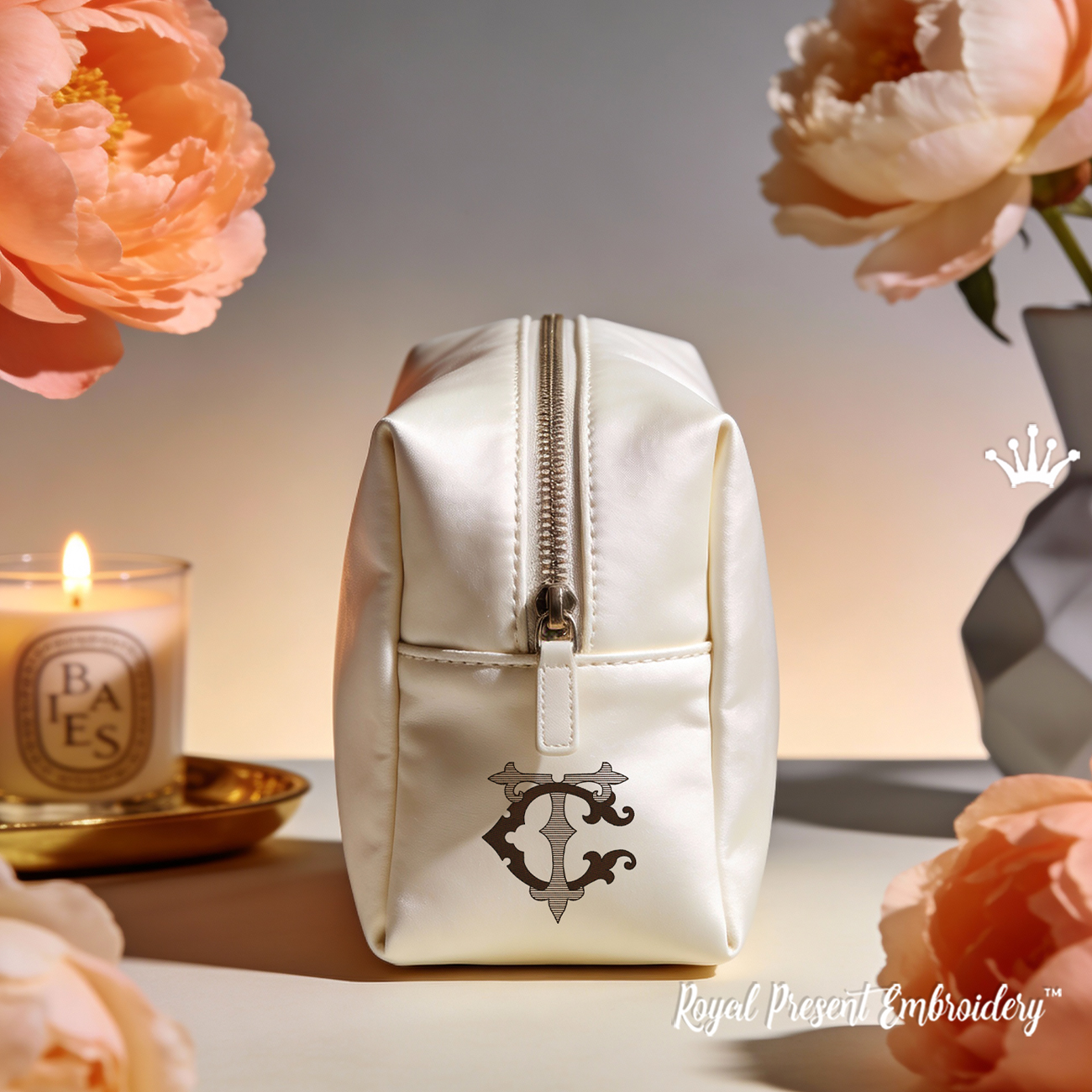 CT–TC Monogram CT–TC Monogram |
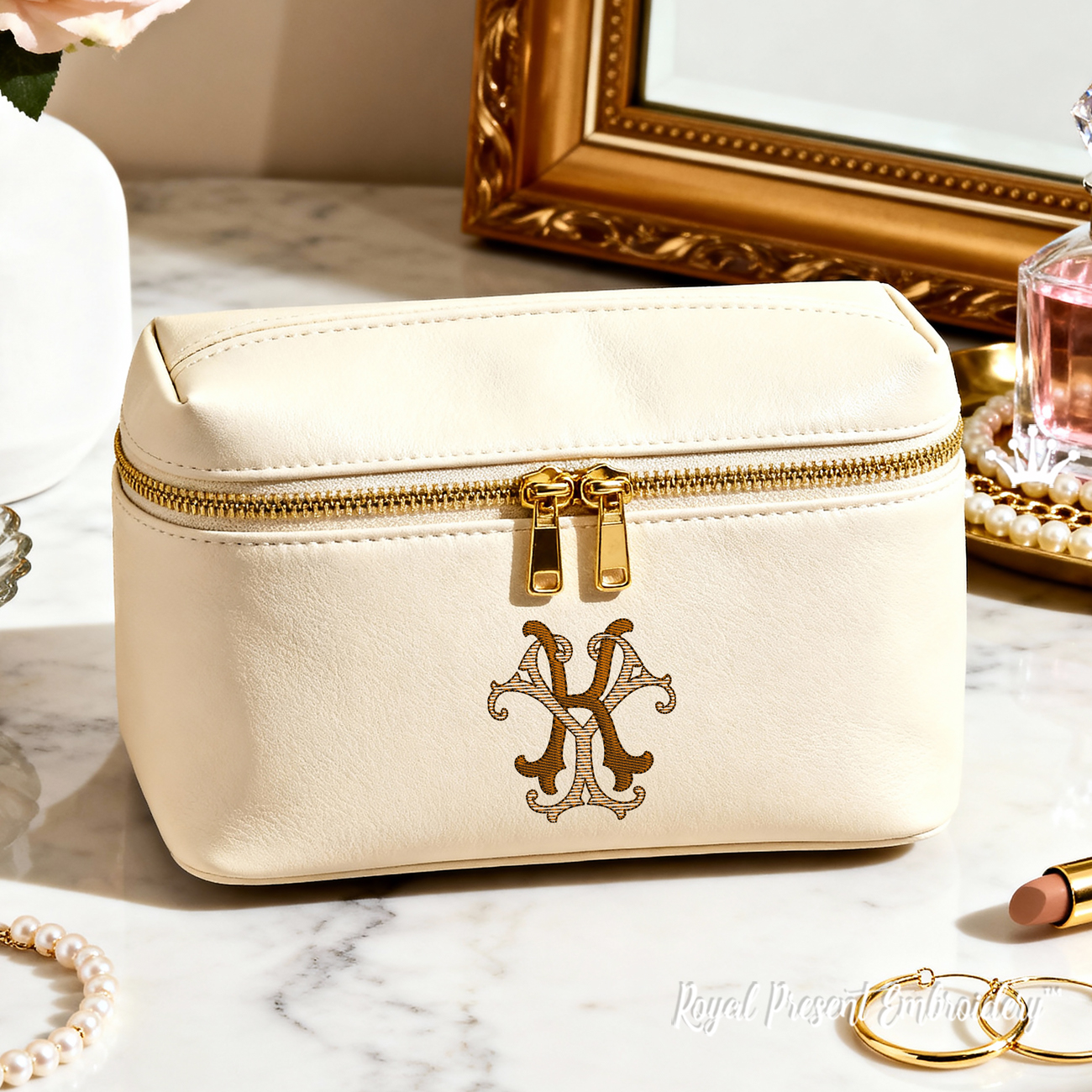 KY–YK Monogram KY–YK Monogram |
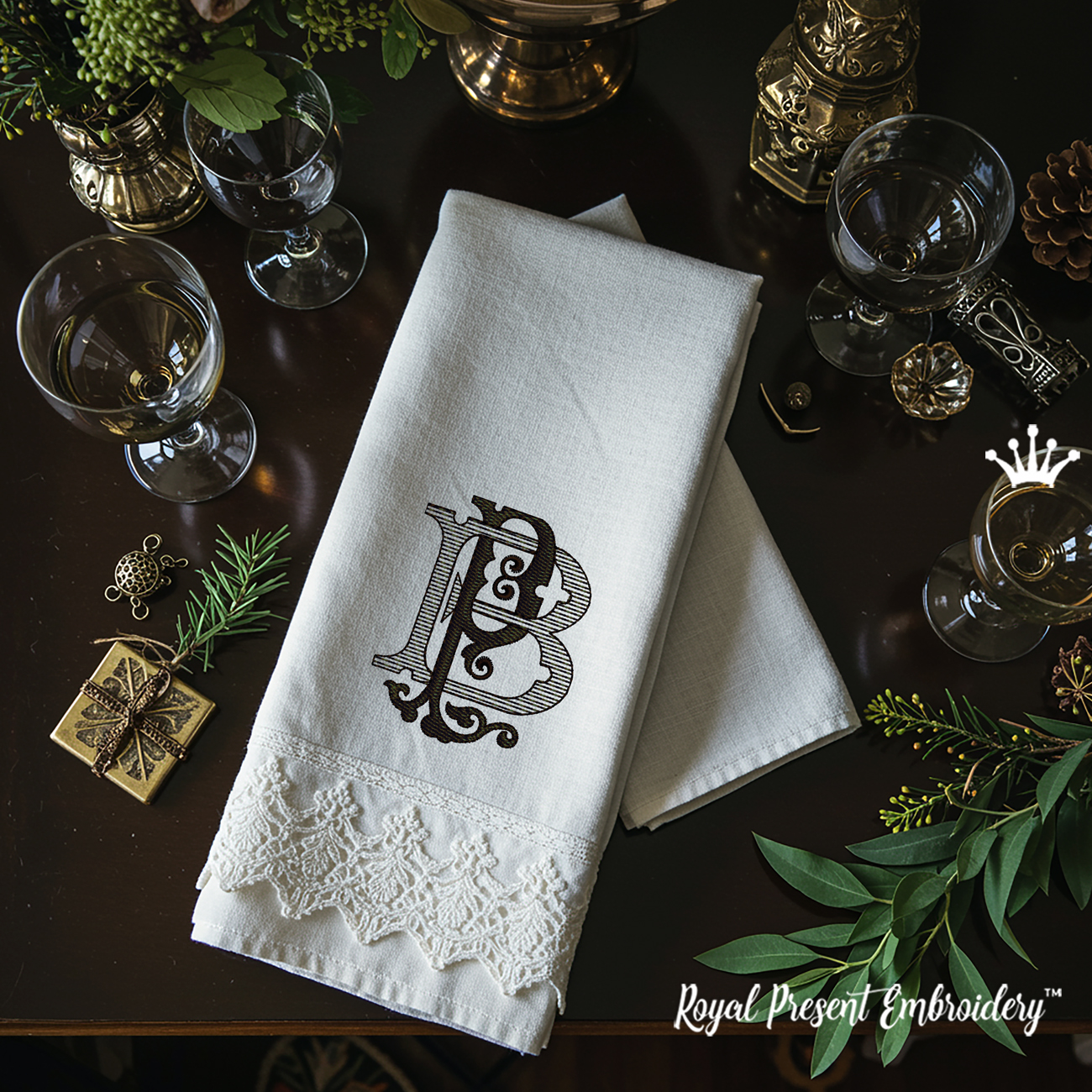 BP–PB Monogram BP–PB Monogram |
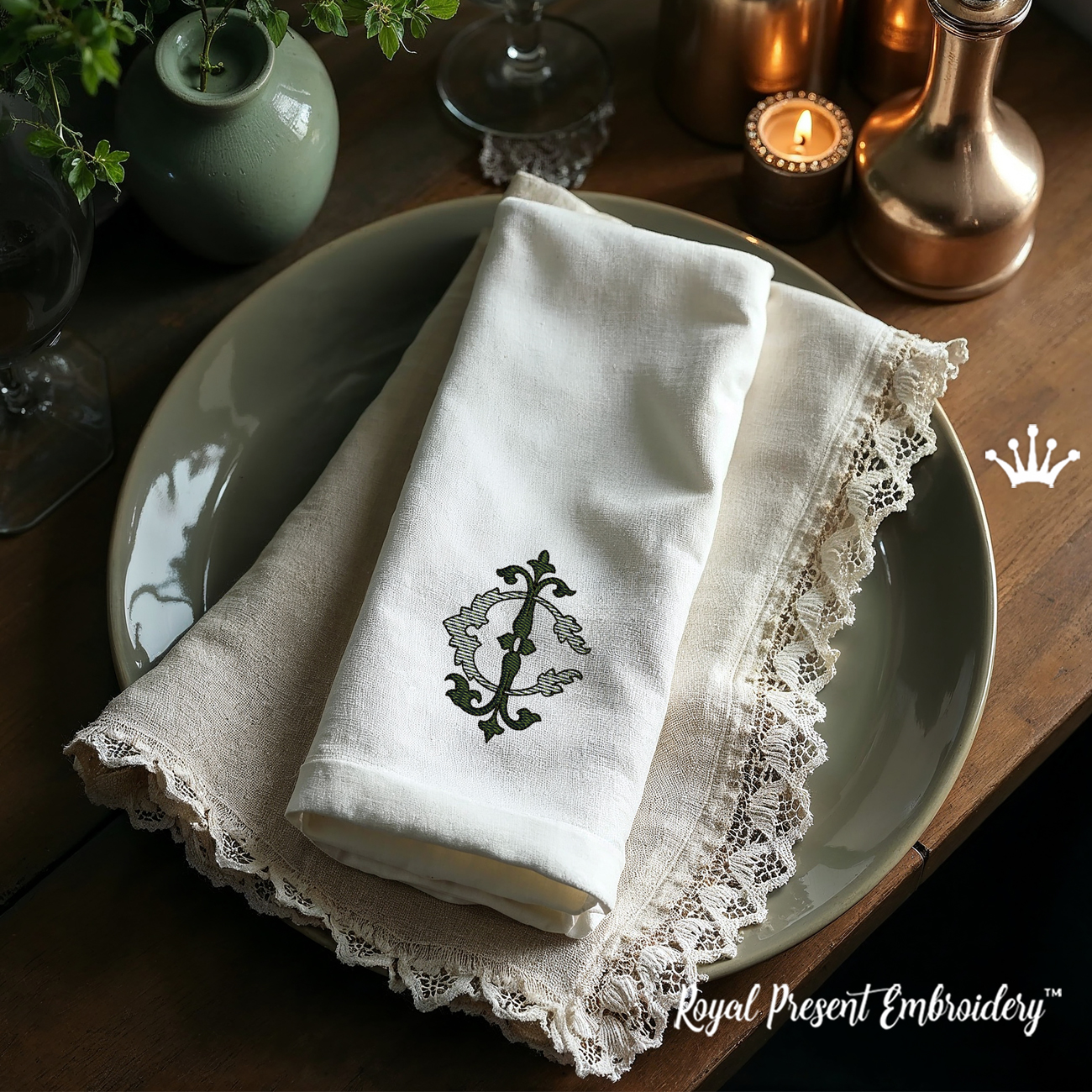 CJ–JC Monogram CJ–JC Monogram |
Helpful Questions and Tips
Which initials does this monogram represent?
The composition combines the Latin letters H and P and can be used for either HP or PH initials.
What is the correct color order?
The first block stitches the main interlocking letters. The second block stitches the outline and decorative lines. Select each thread according to the contrast you want on your fabric.
Which colors work well on a white napkin?
For a subtle classic result, use two related shades of blue, gray or beige. For stronger definition, combine dark letters with a lighter outline or light letters with a darker outline. The Madeira colors in the chart are only an example.
Can I embroider the monogram in one color?
Yes. Use the same thread for both sequential blocks. The different stitch directions will still keep the outline and letter structure visible.
How should I place the monogram on a dinner napkin?
Fold the napkin in the intended table-setting style first, then position a full-size printed template on the visible section. This prevents the monogram from disappearing inside a fold.
What matters when stitching on a terry towel?
Use Madeira Avalon Film water-soluble topping and suitable backing underneath. The topping controls the pile and helps the fine outline remain clear.
Why should I make a test stitchout?
A test on the same fabric shows whether the stabilization is sufficient and whether the selected thread colors create enough definition. It is especially useful for loosely woven linen, terry cloth and tone-on-tone combinations.

 Get Sign-In Link
 Login with Google
 Login with Facebook
 Login with Amazon
 Login with Paypal