By knowing the speed of your embroidery machine, you can find out how long it will take to embroider a design.
To use the embroidery calculator, click on the number of stitches in the product description.
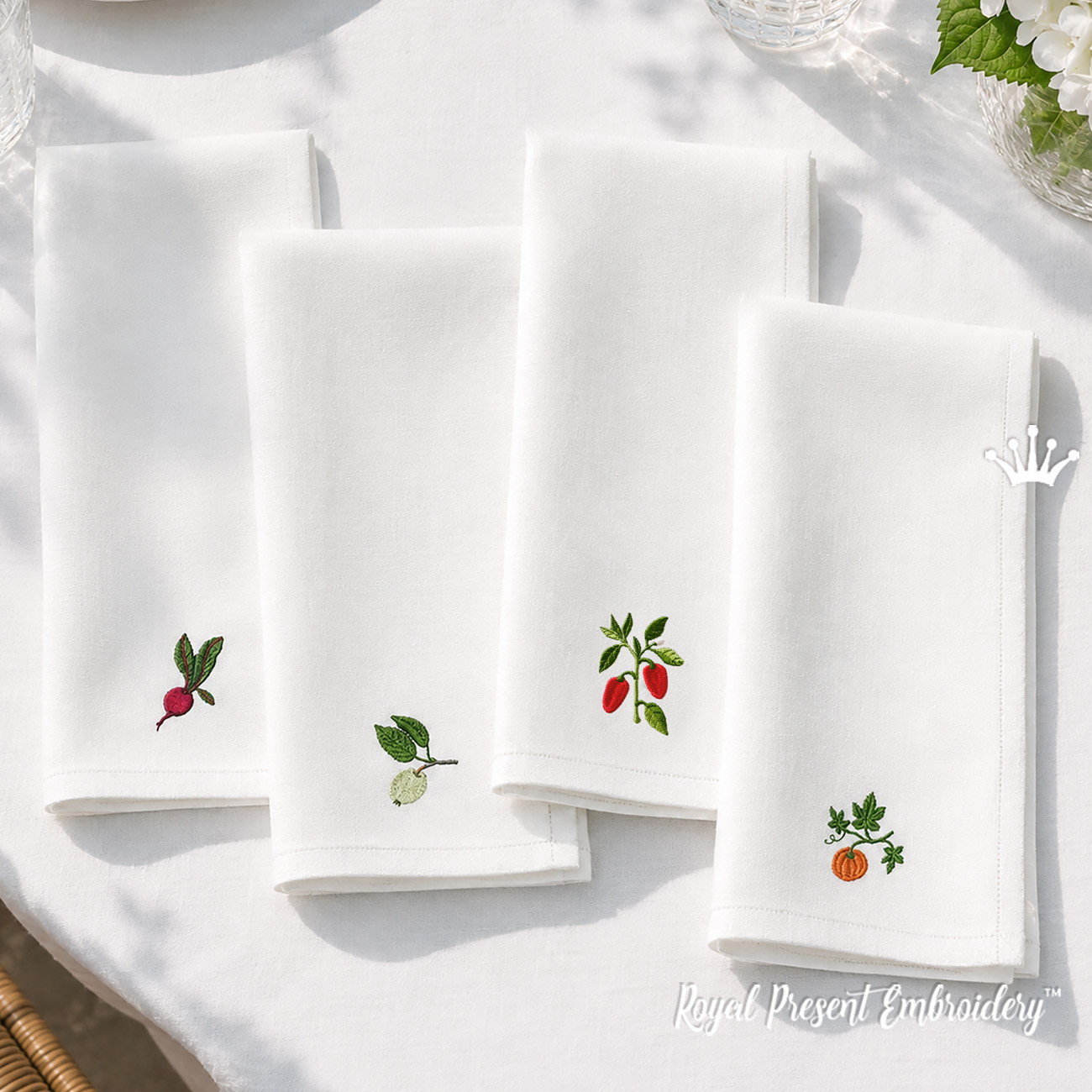
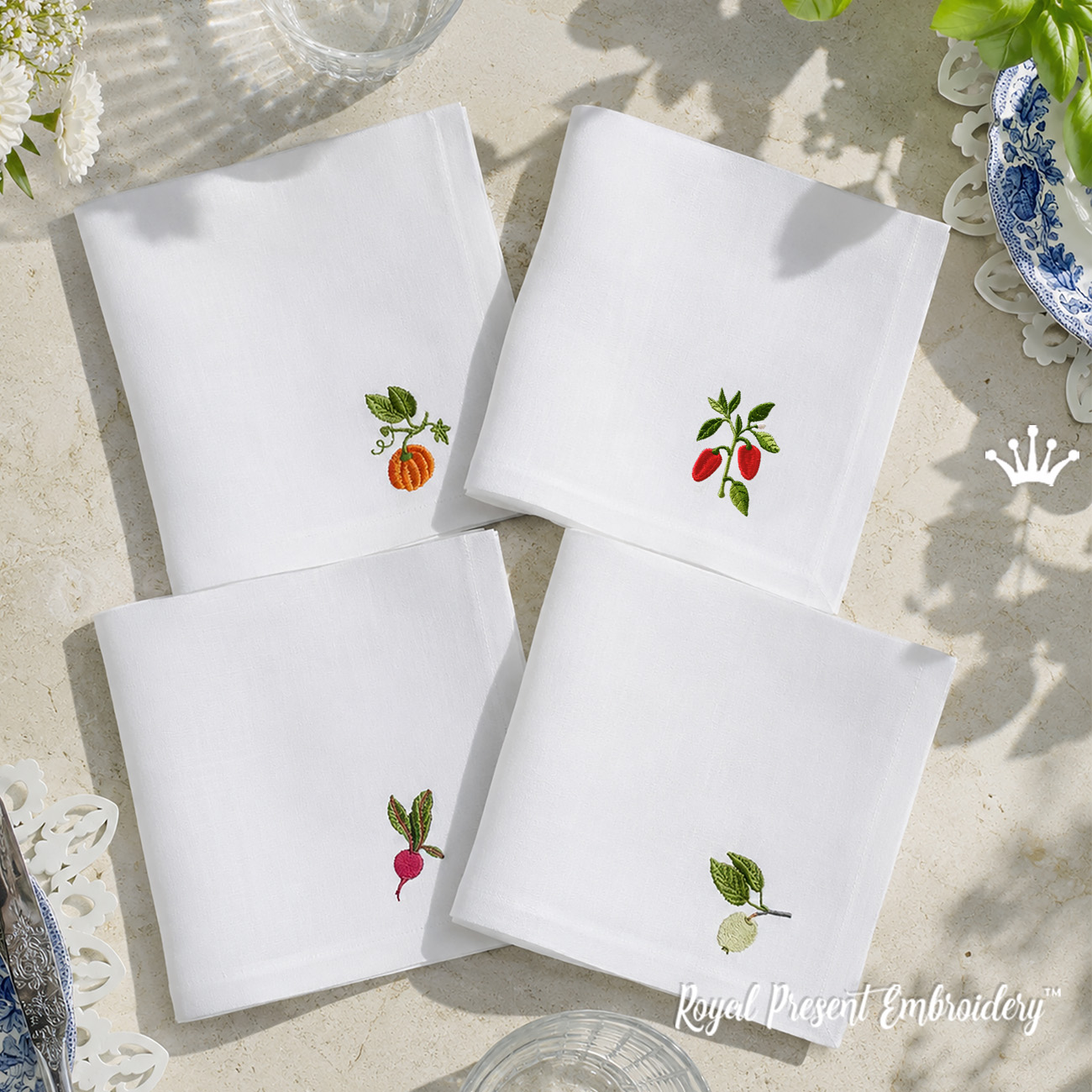
Mini Fruits and Vegetables Machine Embroidery Design Set is a digital collection for computerized embroidery machines. It includes four separate botanical food motifs: an orange pumpkin on a leafy vine, a yellow-green apple on a leafy branch, a pepper plant with two red fruits and a small flower, and a beetroot with leafy tops. The 13 original size files combine satin stitches, tatami fills and fine running-stitch details for compact kitchen, garden and harvest-themed textile projects; no finished physical item is shipped.
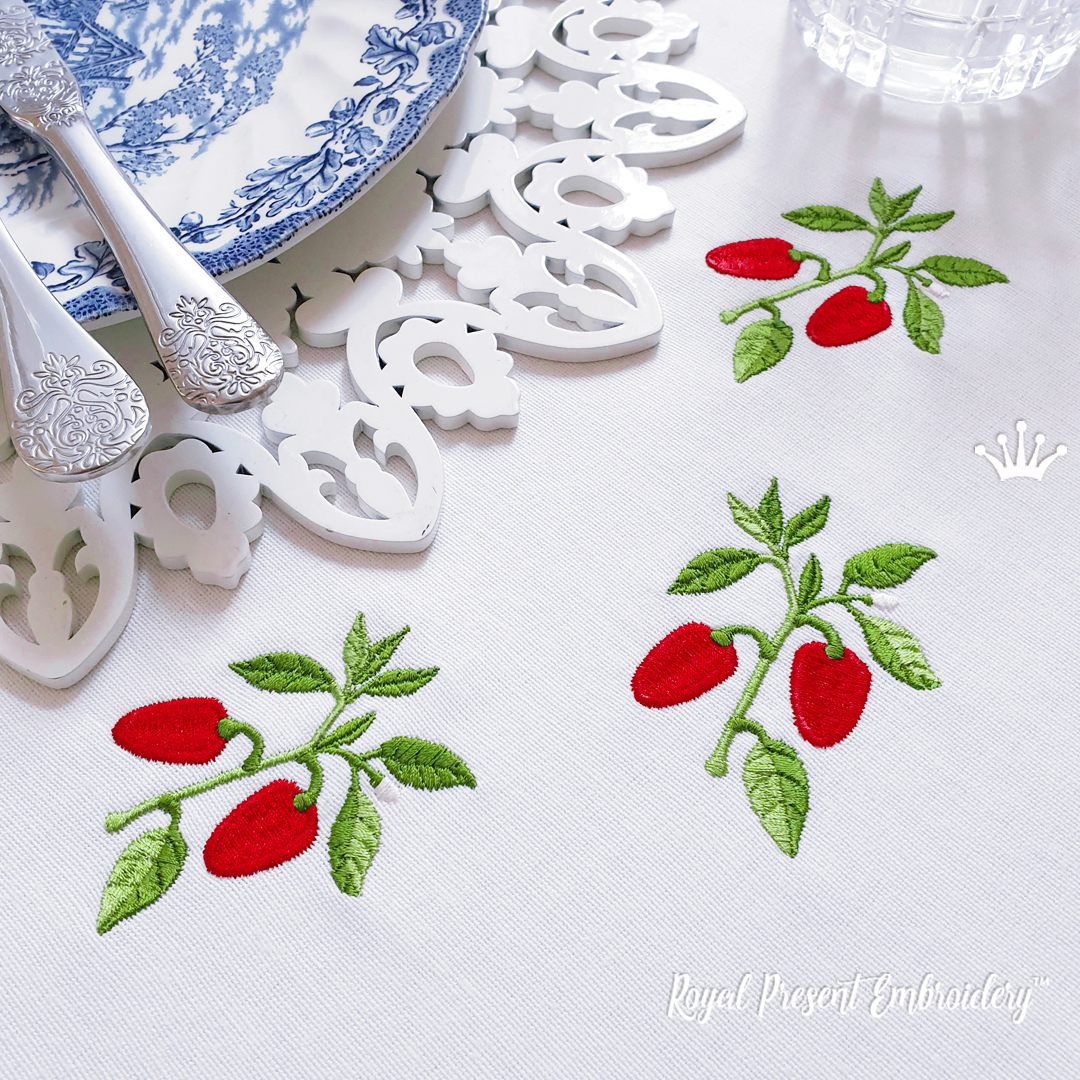
Pepper
Size: 47.7x64.2 mm (1.88x2.53 "), Stitches: 4196
Size: 52.5x70.6 mm (2.07x2.78 "), Stitches: 4805
Pumpkin
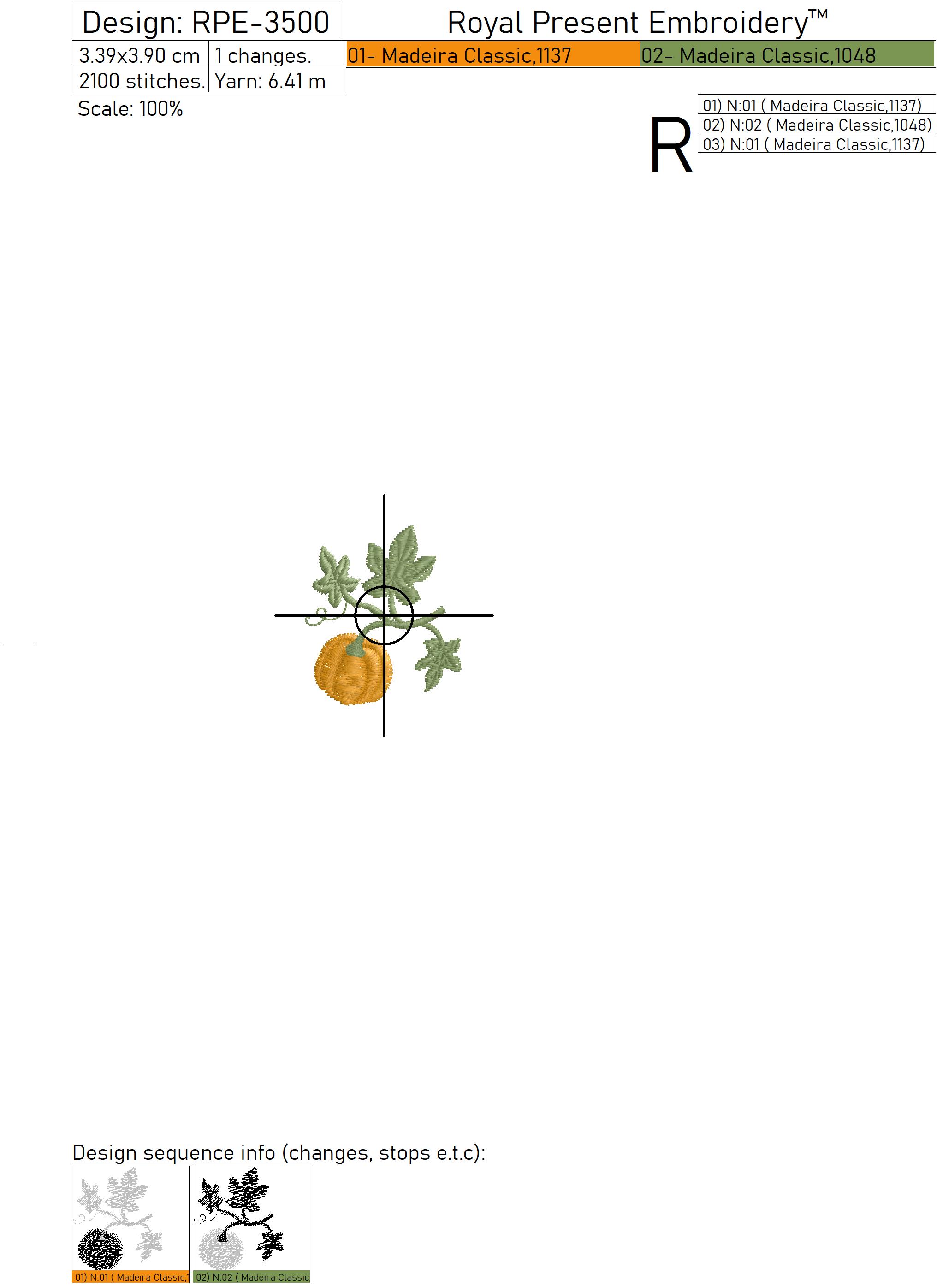
Size: 33.9x39.0 mm (1.33x1.54 "), Stitches: 2021
Size: 37.3x42.9 mm (1.47x1.69 "), Stitches: 2230
Size: 41.0x47.2 mm (1.61x1.86 "), Stitches: 2499
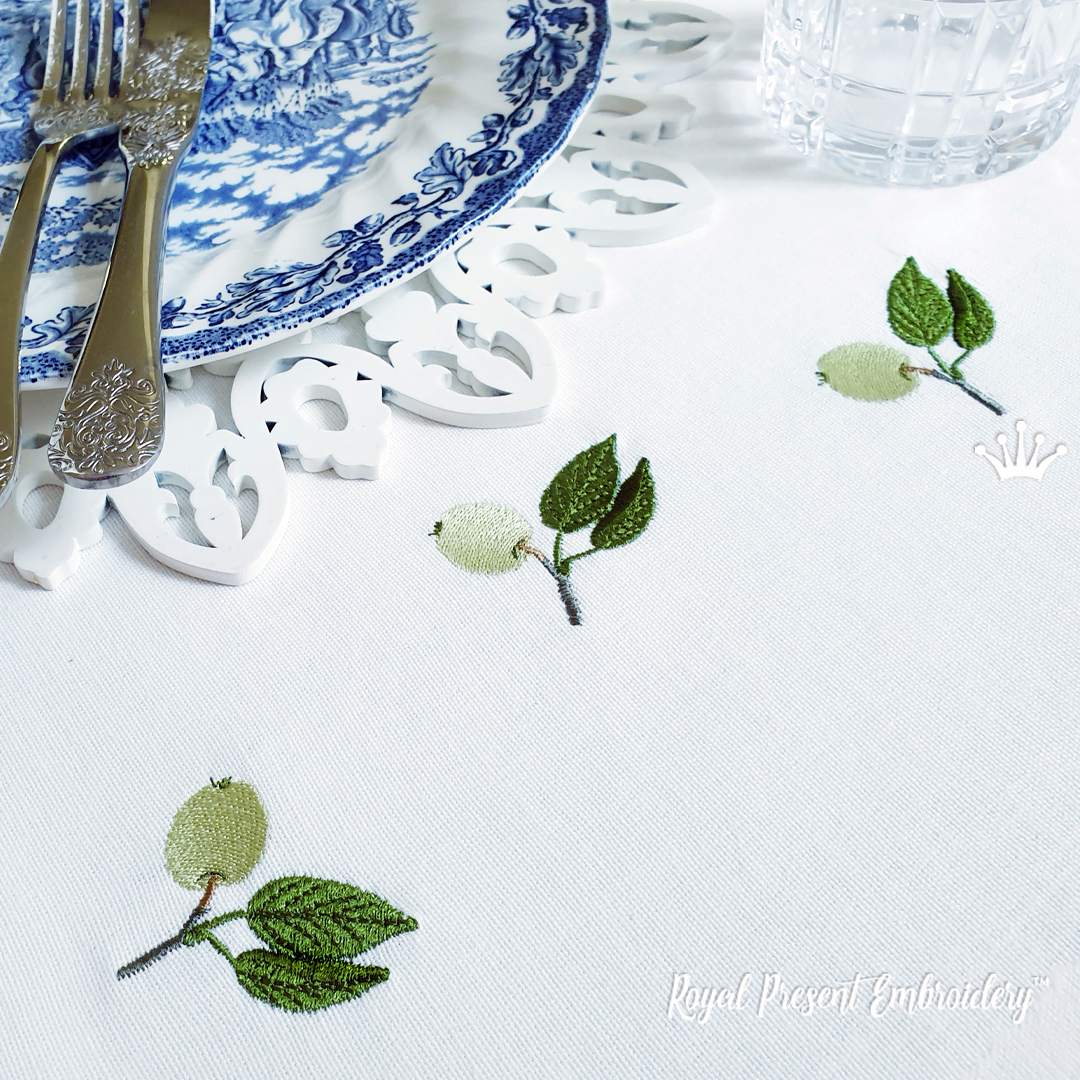
Apple
Size: 44.2x39.5 mm (1.74x1.56 "), Stitches: 2678
Size: 48.5x43.5 mm (1.91x1.71 "), Stitches: 3035
Size: 53.4x47.8 mm (2.10x1.88 "), Stitches: 3488
Size: 58.7x52.5 mm (2.31x2.07 "), Stitches: 3942
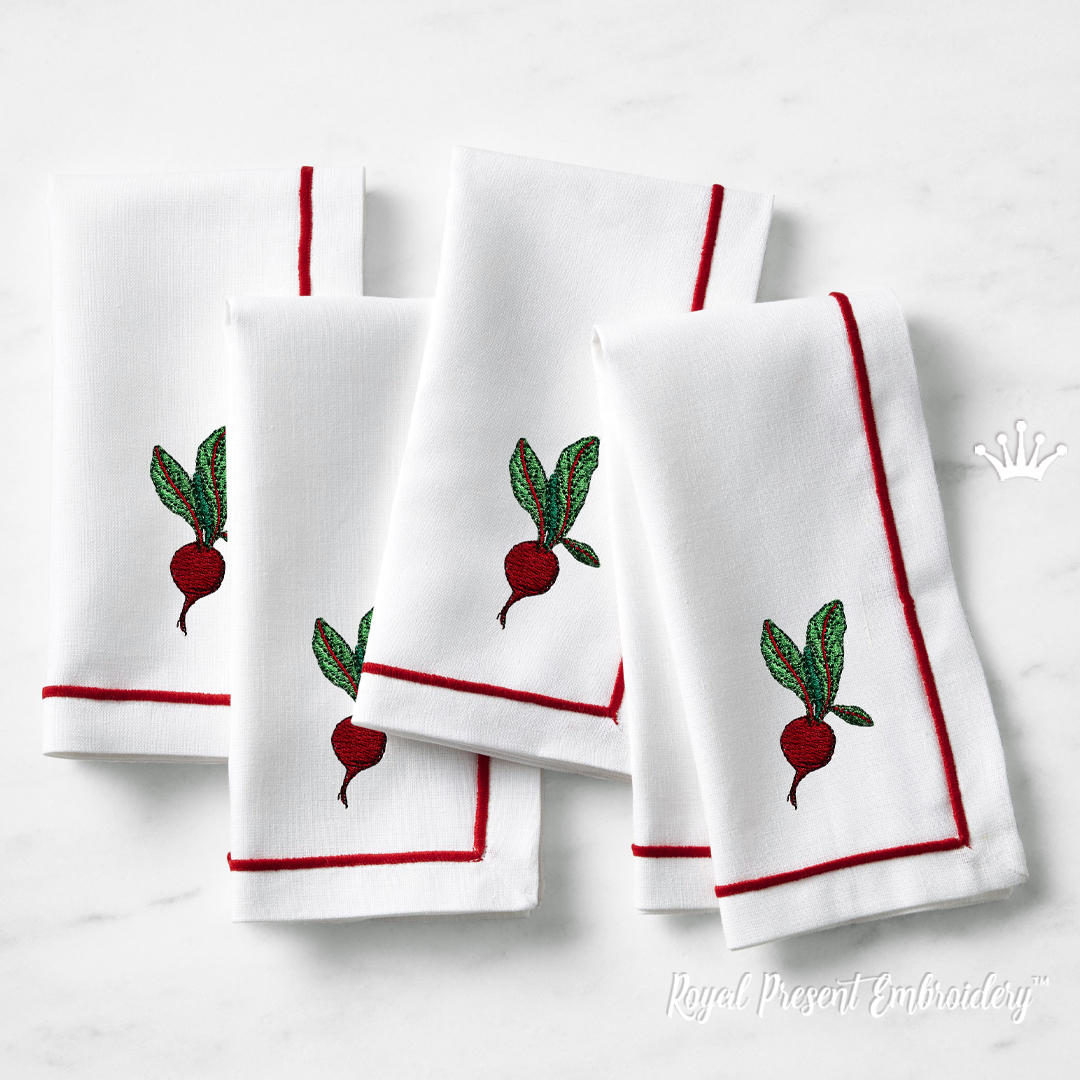
Beetroot
Size: 32.9x49.0 mm (1.30x1.93 "), Stitches: 2220
Size: 36.2x53.9 mm (1.43x2.12 "), Stitches: 2430
Size: 39.8x59.3 mm (1.57x2.33 "), Stitches: 2656
Size: 43.7x65.2 mm (1.72x2.57 "), Stitches: 2963
Formats: .dst, .jef, .pec, .vip, .hus, .pes, .exp, .sew, .dat, vp3, xxx
What the set contains
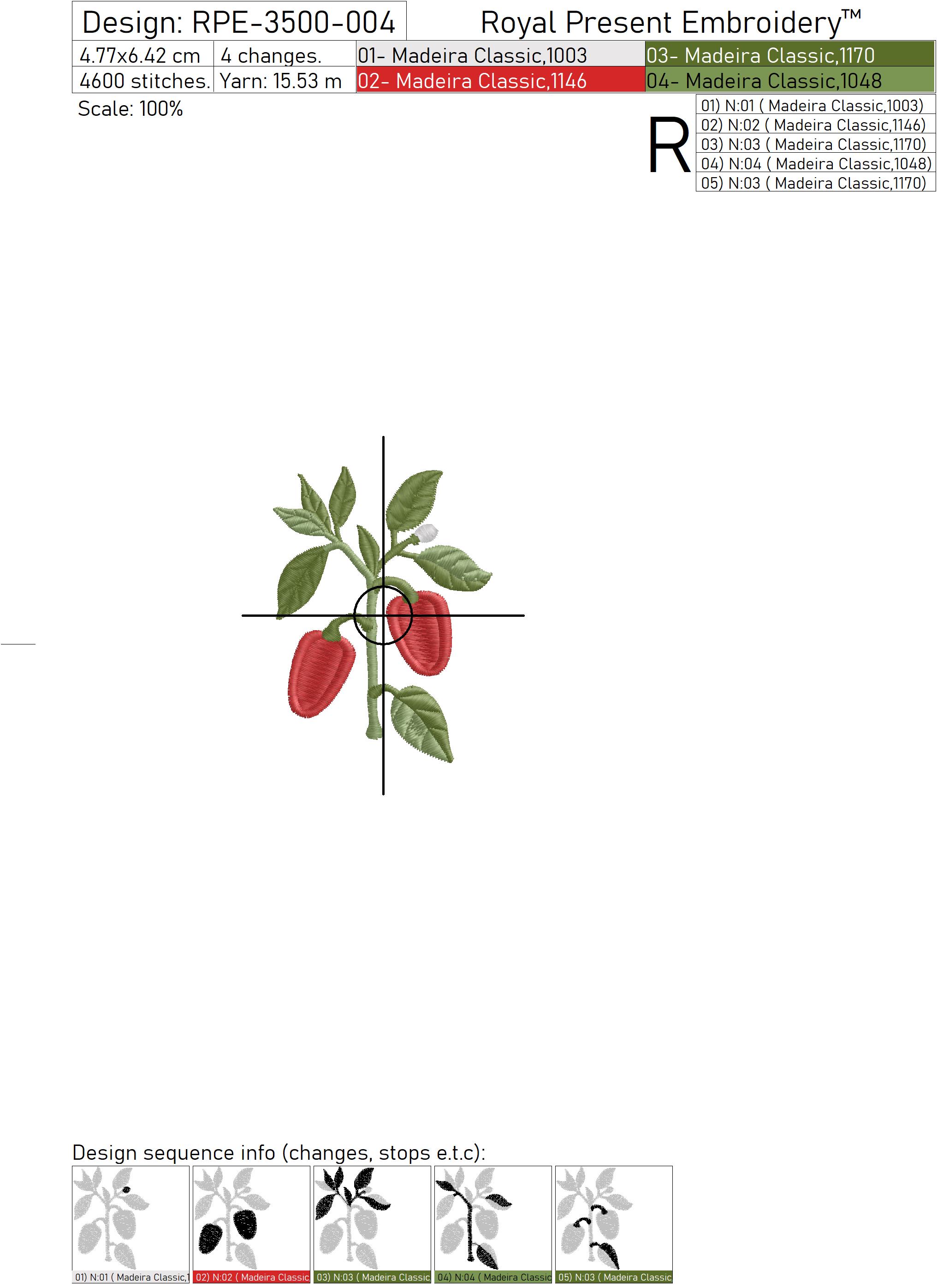
- Pepper: a green plant branch with two red sweet peppers, multiple leaves and a small white flower.
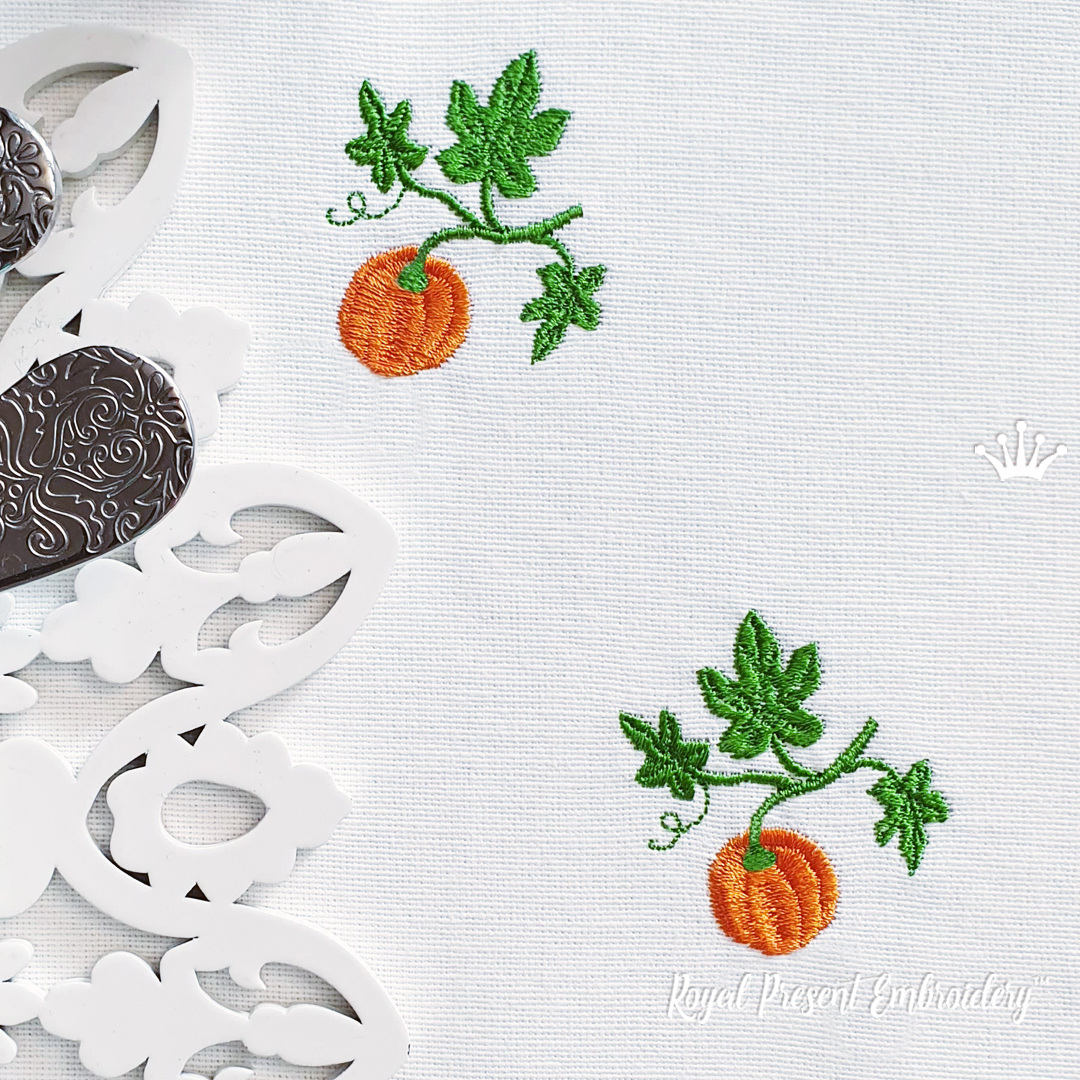
- Pumpkin: a small orange pumpkin with segmented satin-stitched ribs, green leaves and a curling tendril.
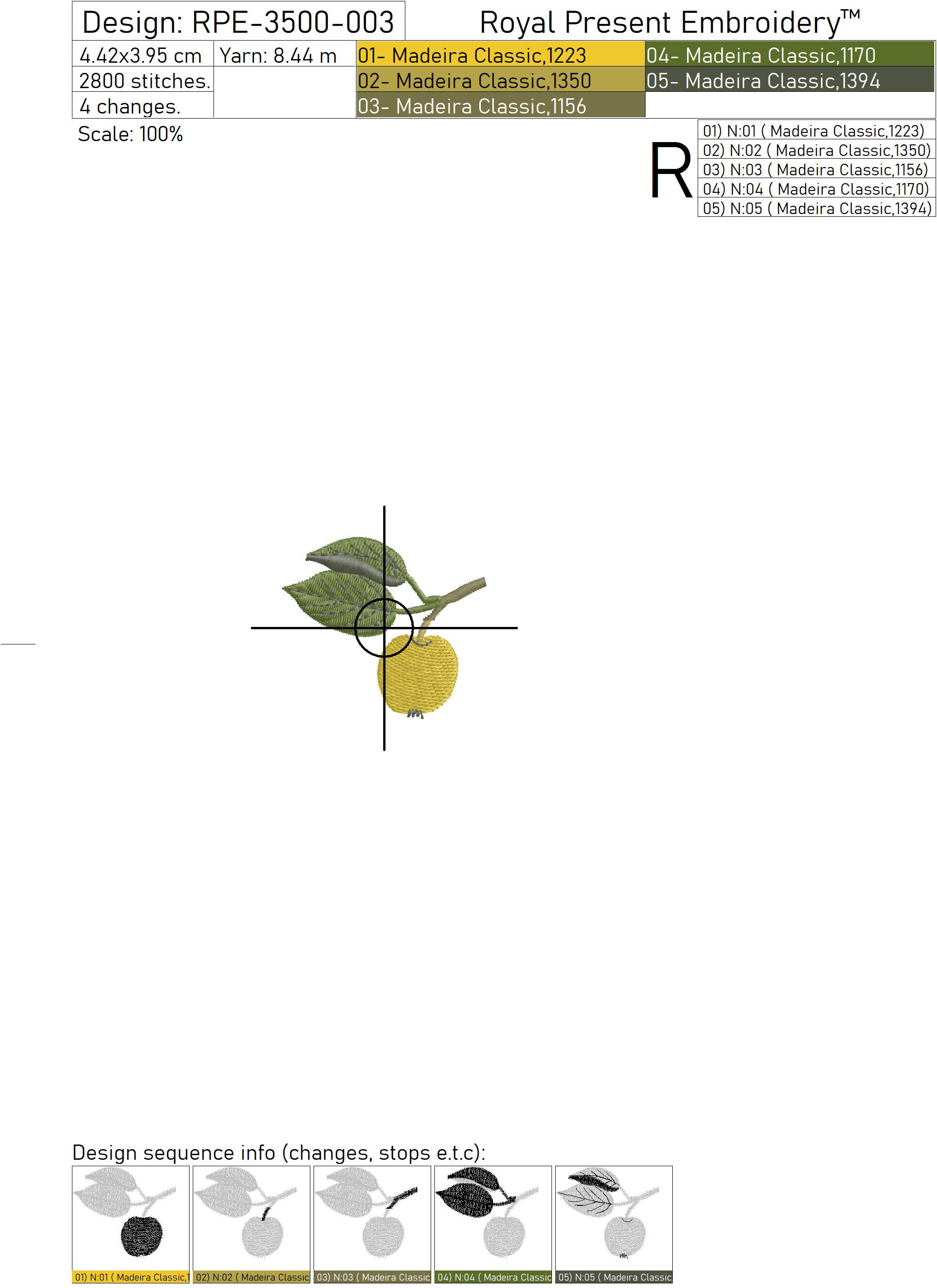
- Apple: a yellow-green apple with tatami fill, a short stem, branch and two veined leaves.
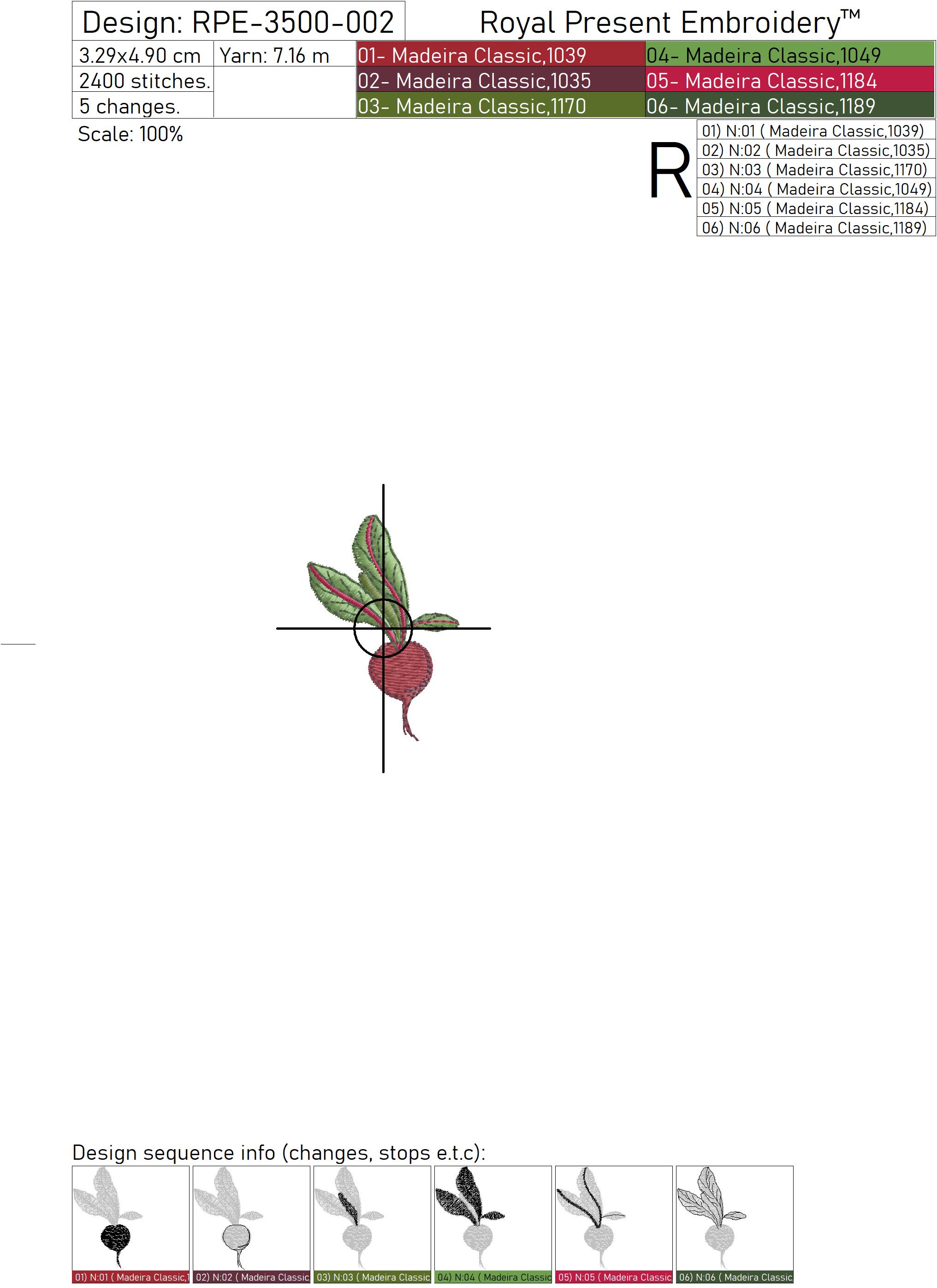
- Beetroot: a red-burgundy root with tatami fill, green leafy tops, colored veins and a fine root tail.
- Satin stitches shape the compact fruit, leaf and stem sections; tatami fills cover the wider apple and beetroot areas; running stitches form fine veins, tendrils and root details.
- Each motif is supplied as a separate machine embroidery file; a combined four-motif composition is not included.
Exact design size and suitable hoop
| Motif |
Original file size |
Suitable embroidery field |
| Pepper |
47.7x64.2 mm (1.88x2.53 ") |
80x80 mm (3.15x3.15 in) or larger |
| Pepper |
52.5x70.6 mm (2.07x2.78 ") |
80x80 mm (3.15x3.15 in) or larger |
| Pumpkin |
33.9x39.0 mm (1.33x1.54 ") |
80x80 mm (3.15x3.15 in) or larger |
| Pumpkin |
37.3x42.9 mm (1.47x1.69 ") |
80x80 mm (3.15x3.15 in) or larger |
| Pumpkin |
41.0x47.2 mm (1.61x1.86 ") |
80x80 mm (3.15x3.15 in) or larger |
| Apple |
44.2x39.5 mm (1.74x1.56 ") |
80x80 mm (3.15x3.15 in) or larger |
| Apple |
48.5x43.5 mm (1.91x1.71 ") |
80x80 mm (3.15x3.15 in) or larger |
| Apple |
53.4x47.8 mm (2.10x1.88 ") |
80x80 mm (3.15x3.15 in) or larger |
| Apple |
58.7x52.5 mm (2.31x2.07 ") |
80x80 mm (3.15x3.15 in) or larger |
| Beetroot |
32.9x49.0 mm (1.30x1.93 ") |
80x80 mm (3.15x3.15 in) or larger |
| Beetroot |
36.2x53.9 mm (1.43x2.12 ") |
80x80 mm (3.15x3.15 in) or larger |
| Beetroot |
39.8x59.3 mm (1.57x2.33 ") |
80x80 mm (3.15x3.15 in) or larger |
| Beetroot |
43.7x65.2 mm (1.72x2.57 ") |
80x80 mm (3.15x3.15 in) or larger |
All 13 files fit an 80x80 mm (3.15x3.15 in) embroidery field. A standard 100x100 mm (3.94x3.94 in), commonly called a 4x4 hoop, also accommodates every included file.
Madeira Classic Rayon 40 color map
The original color charts contain 14 unique Madeira Classic 40 numbers across the complete set. Each square is an approximate screen preview; use the Madeira number as the thread reference. The fragment column identifies what that color stitches in each motif.
| Color |
Madeira Classic 40 |
Visible shade |
Embroidered fragments |
Used in |
| |
1137 |
Pumpkin orange |
Pumpkin body, segmented satin ribs and final orange rib accents. |
Pumpkin |
| |
1048 |
Muted light green |
Pumpkin leaves, stem and curling tendril; pepper stems, calyxes and lighter leaf sections. |
Pumpkin, pepper |
| |
1223 |
Yellow green |
Main tatami fill of the apple body. |
Apple |
| |
1170 |
Deep olive green |
Apple leaf fills; pepper leaf fills and dark stem sections; first dark beet leaf and stem sections. |
Apple, pepper, beetroot |
| |
1350 |
Warm ochre |
Short apple stem and warm stem highlight. |
Apple |
| |
1156 |
Olive brown |
Main apple branch and twig sections. |
Apple |
| |
1394 |
Dark grey green |
Apple leaf veins, fine branch details and small blossom-end stitches beneath the fruit. |
Apple |
| |
1003 |
White |
Petals of the small pepper flower. |
Pepper |
| |
1146 |
Tomato red |
Satin fill of both red pepper fruits. |
Pepper |
| |
1039 |
Deep red |
Main tatami fill of the beetroot body. |
Beetroot |
| |
1035 |
Burgundy |
Burgundy root shading, lower root tail and dark root details. |
Beetroot |
| |
1049 |
Light leaf green |
Light green fills in the beetroot leaves. |
Beetroot |
| |
1184 |
Magenta red |
Magenta veins and stem accents in the beetroot tops. |
Beetroot |
| |
1189 |
Dark forest green |
Dark green leaf veins and fine running-stitch details in the beetroot tops. |
Beetroot |
Fabric, stabilizer and needle
| Fabric or item |
Stabilizer |
Practical setup |
| Medium cotton or linen |
Medium-weight tear-away |
Use a new 75/11 embroidery needle and hoop the fabric without stretching the grain. |
| Lightweight cotton |
Medium tear-away; add a second light layer if the sample puckers |
Test the complete motif because the compact satin sections and tatami fills require firm, even support. |
| Canvas, twill or apron fabric |
Strong medium tear-away |
Embroider a pocket or front panel before assembly and keep construction seams outside the stitch area. |
| Terry kitchen towel |
Tear-away underneath and thin water-soluble topping above |
Choose a smooth woven band when possible so the small leaves and fine running-stitch details remain clear. |
| Knit garment |
Medium cut-away |
Use a 75/11 ballpoint embroidery needle and do not stretch the garment during preparation. |
A stable, smooth fabric helps the satin edges stay clean and keeps the tatami-filled apple and beetroot bodies flat. For frequently washed towels and aprons, use quality 40-weight polyester thread; rayon gives decorative napkins a softer sheen. Start near 500–650 stitches per minute and slow down if narrow satin sections become uneven. For additional setup guidance, read about stitch density, fabric and stabilizer balance.
Placement and project ideas
- Use the smallest pumpkin or apple on cocktail napkins and small fabric labels.
- Place one different motif on each napkin, tea towel or reusable produce bag to create a coordinated four-piece set.
- For an apron pocket, embroider the flat pocket piece before attaching it to the apron.
- Position the design above the lower towel edge so it remains visible when the towel is folded or hanging.
- Use the motifs on bread-basket liners, recipe-book covers, bowl covers and farmers-market textiles.
- Center designs of different proportions inside the same imaginary placement cell instead of aligning their top edges.
Stitching tips for the mini satin and tatami motifs
- Print every selected size at 100% and check its position with a paper template.
- Support the complete stitch area so the satin sections remain smooth and the tatami fills do not pull the fabric inward.
- Keep the fabric grain straight and avoid placing the motif over a heavy hem, pocket edge or seam allowance.
- Test the complete color sequence on the chosen fabric, paying particular attention to the narrow leaves, stems, tendril and root tail.
- Run the machine trace function after loading the file, especially on small finished napkins or narrow towel bands.
Matching mini fruit and vegetable designs
Frequently asked questions
Do all 13 files fit an 80x80 mm hoop?
Yes. Every listed size fits an 80x80 mm (3.15x3.15 in) embroidery field. A 100x100 mm or 4x4 hoop also fits every file.
Are the four motifs supplied as one combined design?
No. The pumpkin, pepper, apple and beetroot are separate embroidery files. They can be arranged together in embroidery software, but the merged composition must be checked against the machine’s complete embroidery field.
Which sizes work best on cocktail napkins?
Begin with the smallest pumpkin, apple or beetroot. The pepper is taller, so place printed templates inside equal imaginary cells and align the motif centers rather than their top or bottom edges.
Which stitch types are used in the set?
The motifs combine satin stitches, tatami fills and fine running stitches. The pepper fruits are satin stitched without a separate outline; the wider apple and beetroot bodies use tatami fill, while veins, tendrils and root details use fine running stitches.
Can these designs be embroidered on terry towels?
Yes. Use suitable backing underneath and thin water-soluble topping over the pile. A smooth woven towel band gives the clearest result for the small leaves, root tails and fine running-stitch details.
Machine embroidery designer: Ludmila Konovalova.



 Get Sign-In Link
 Login with Google
 Login with Facebook
 Login with Amazon
 Login with Paypal