Vintage Marine Seashell Bluework Machine Embroidery Design - 3 Sizes
By knowing the speed of your embroidery machine, you can find out how long it will take to embroider a design.
To use the embroidery calculator, click on the number of stitches in the product description.
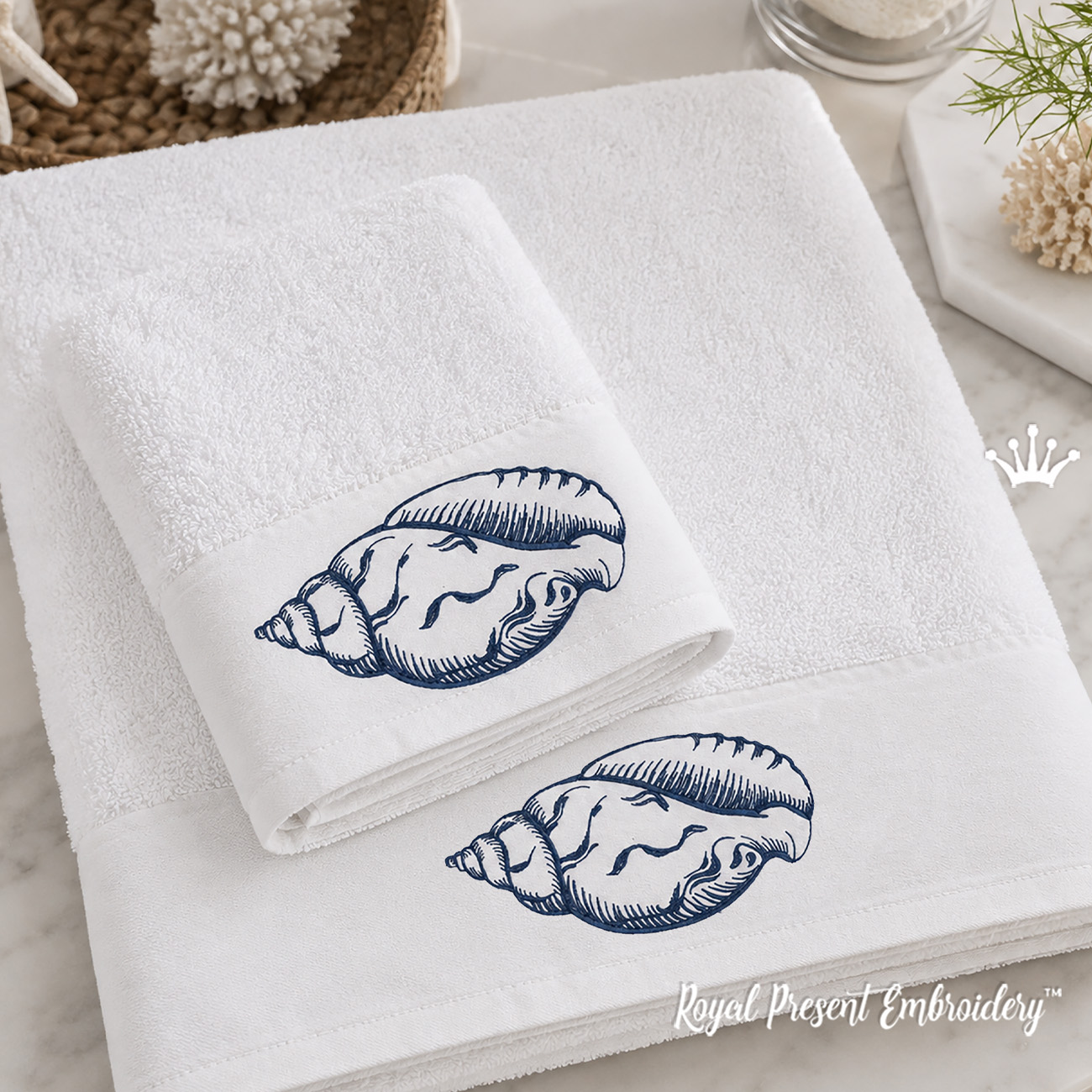
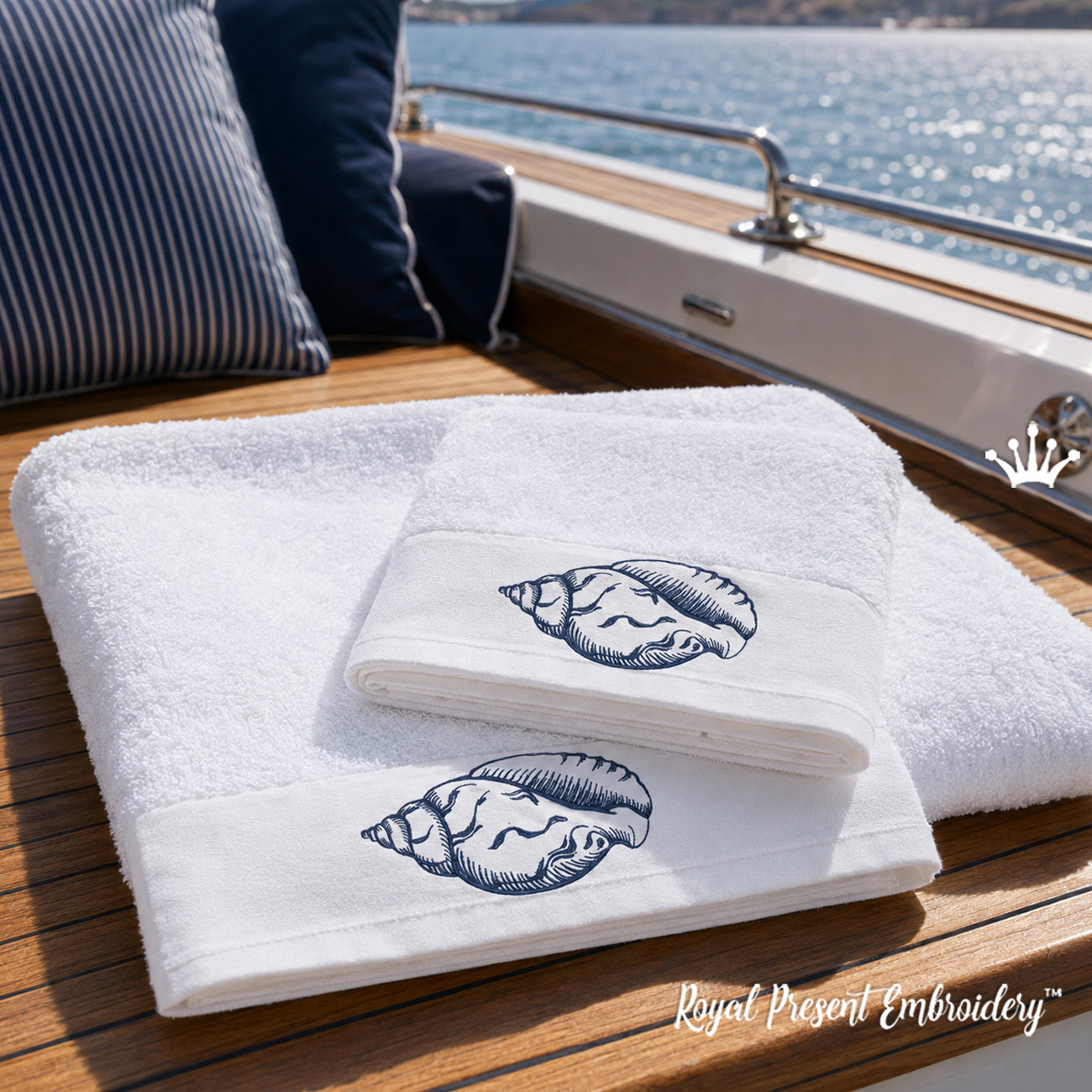
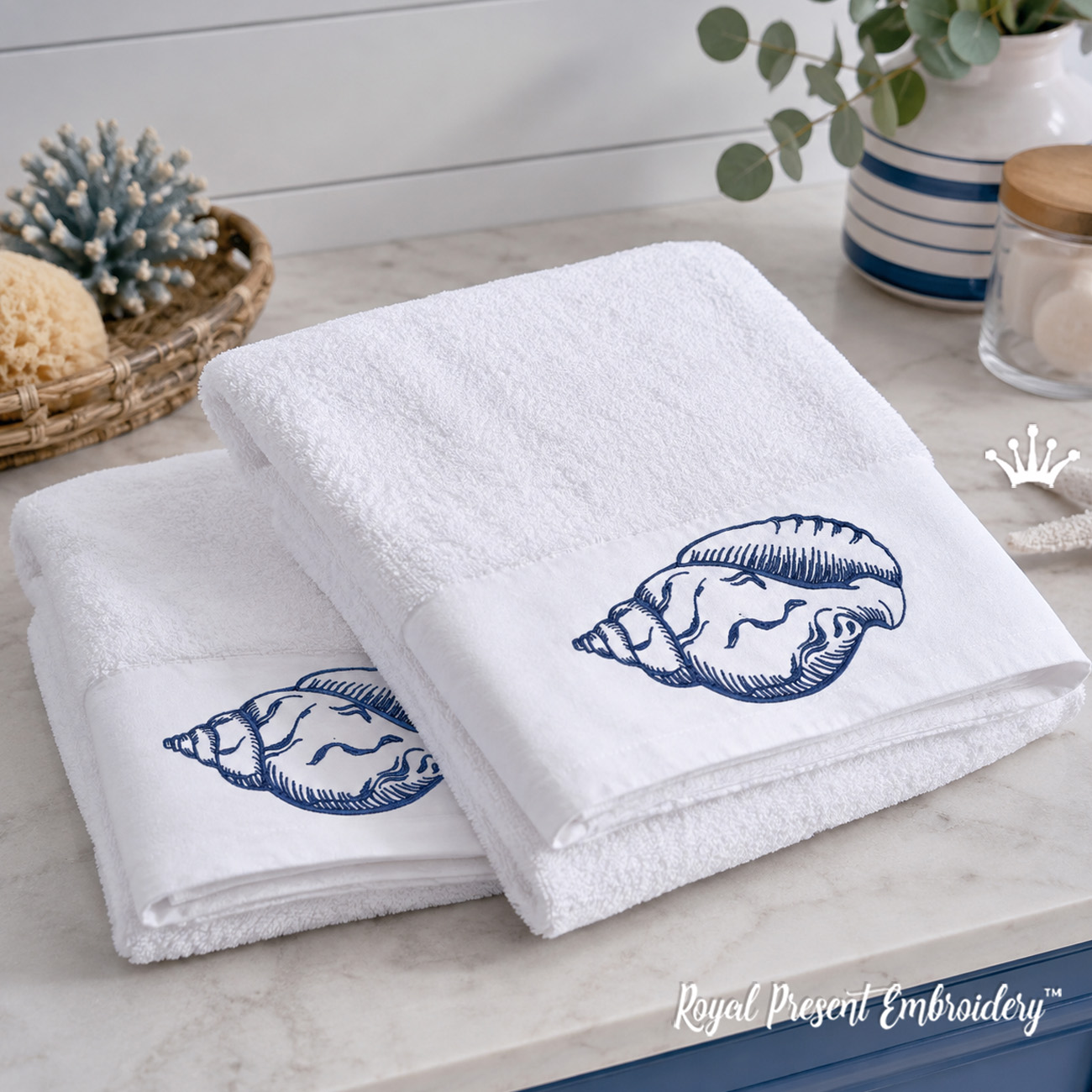
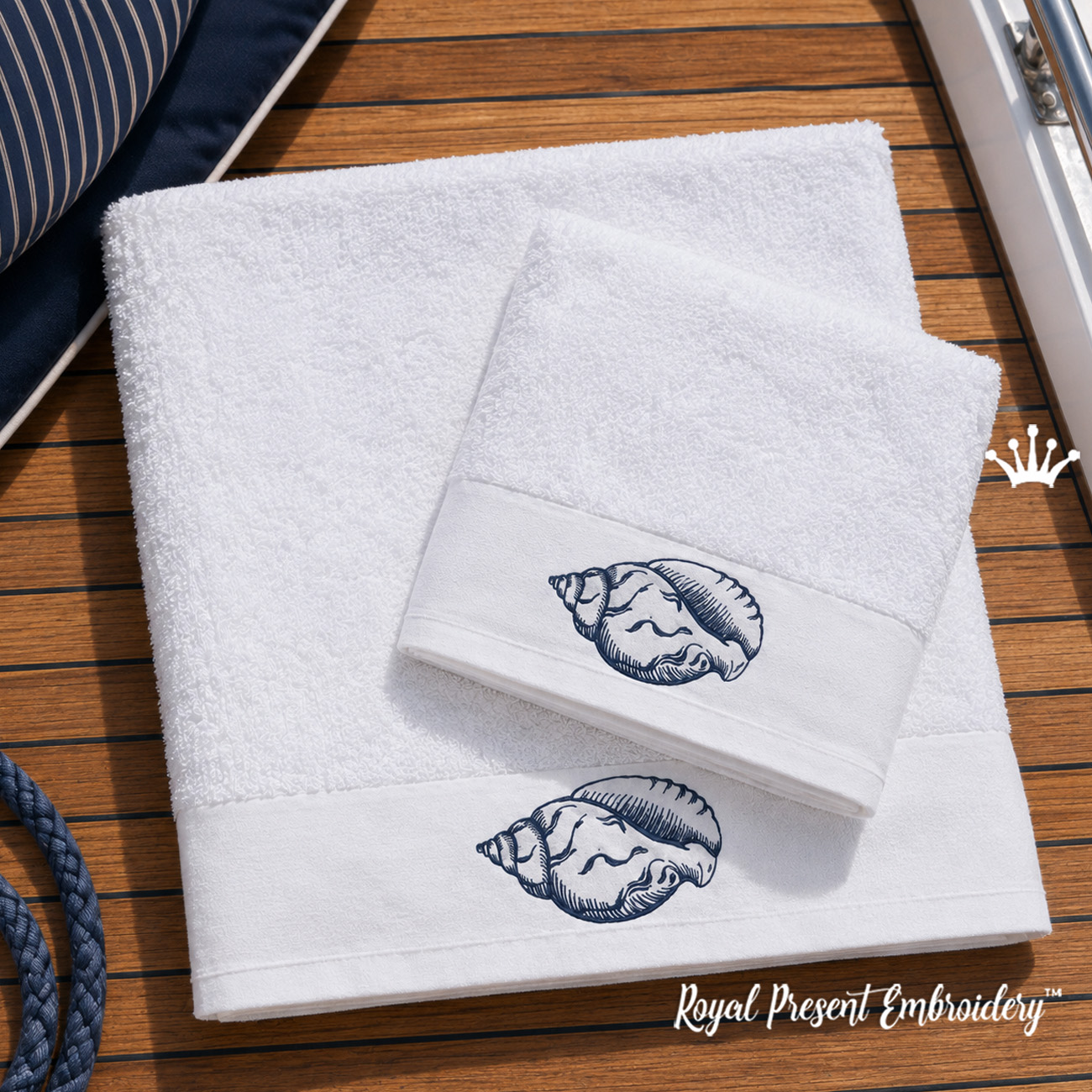
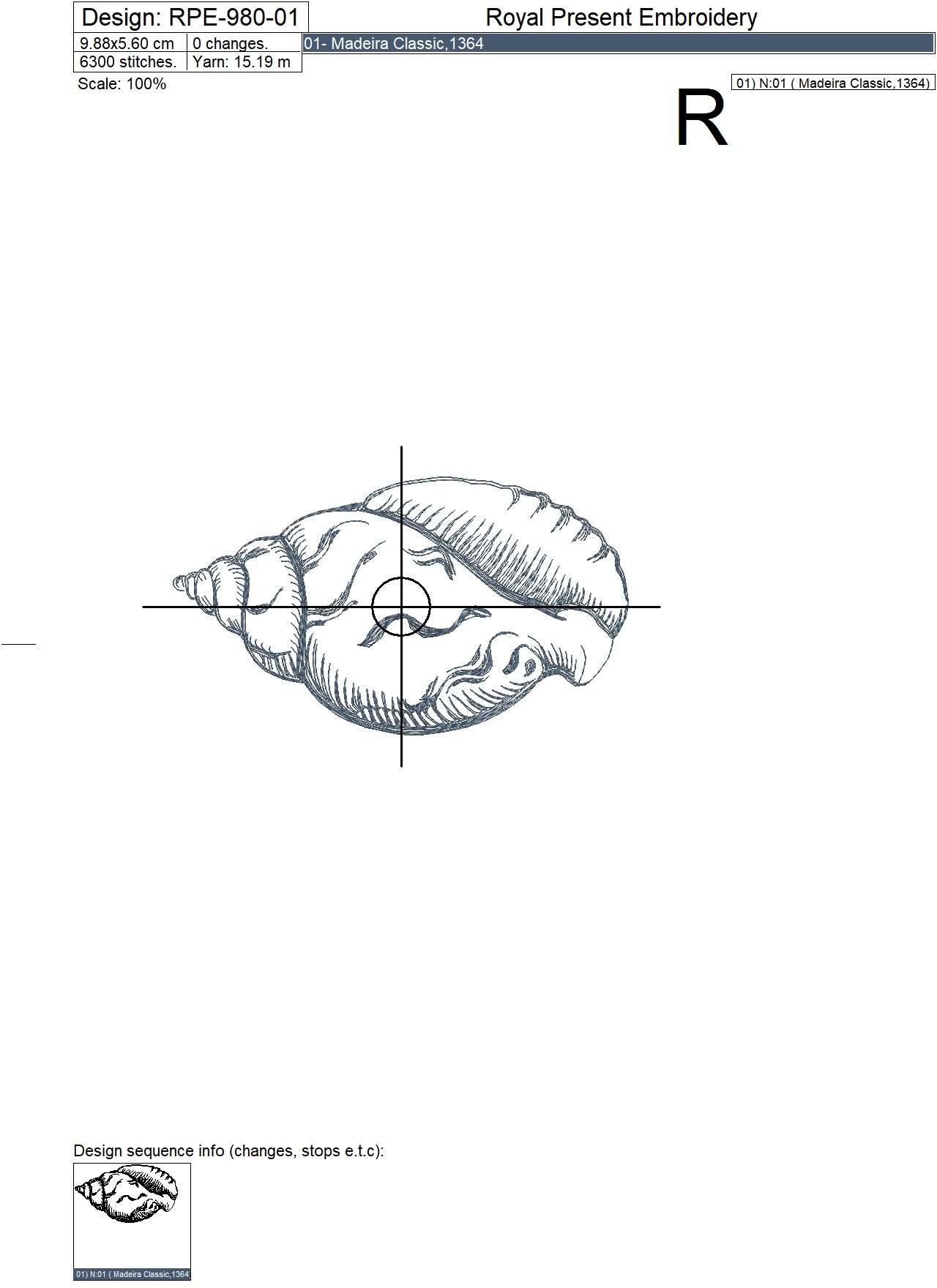
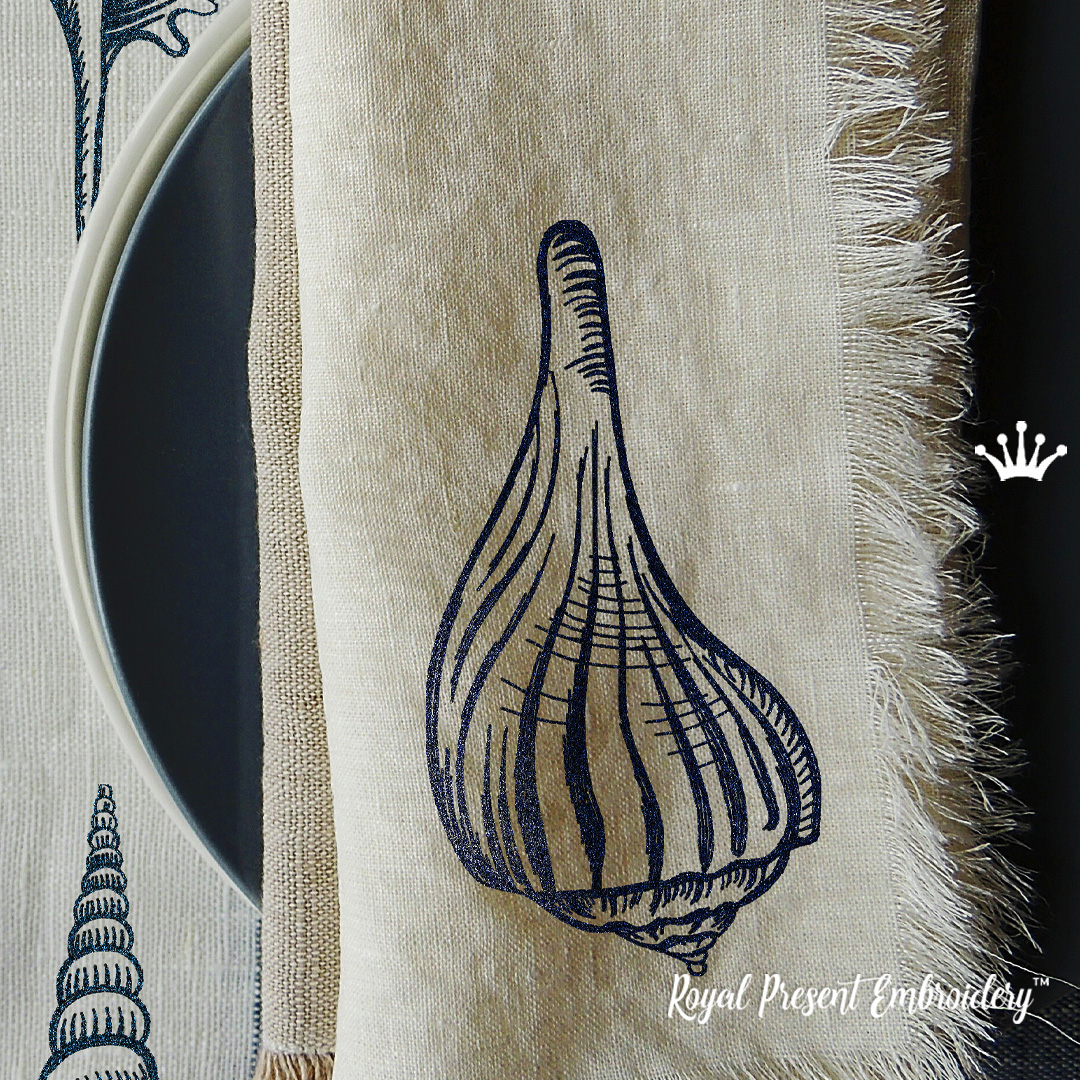
Vintage Marine Seashell Bluework is a one-color digital machine embroidery design supplied in three sizes. The motif shows an elongated seashell profile drawn with fine contours and engraving-style hatching rather than a solid fill. Its horizontal shape works on linen napkins, decorative towels, shirt pockets and cuffs, pillows, table runners, coastal tote bags and yacht textiles. This listing contains downloadable files for an embroidery machine, not a finished embroidered item.
Size: 98.8x56.0 mm (3.89x2.20 "), Stitches: 6207
Size: 108.8x61.6 mm (4.28x2.43 "), Stitches: 6683
Size: 119.6x67.8 mm (4.71x2.67 "), Stitches: 7034
Formats: dat, dst, exp, hus, jef, jef+, jpx, pec, pes, sew, vip, vp3, vp4, xxx
How this Bluework design stitches
The shell is digitized as open one-color linework. The outer contour defines the silhouette, while short directional stitches create the ribbing and engraved shadows. Because the fabric remains visible between the lines, the motif is lighter and more flexible than a filled embroidery design. It is especially suitable for textiles that must still fold naturally, such as napkins, towels and shirt details.
Do not judge this technique by the stitch count alone. The important test is whether the fabric stays stable under the repeated fine lines. Open-weave linen needs firmer support than tightly woven cotton even when both fabrics have the same weight.
Hoop compatibility for all three sizes
| Hoop size | Included design size | Orientation |
|---|---|---|
| 4x4 in (100x100 mm) | Size 1 only — 3.89x2.20 in (98.8x56.0 mm) | Horizontal |
| 4x6.69 in (100x170 mm) | Sizes 1–3 — up to 4.71x2.67 in (119.6x67.8 mm) | Rotate the design 90 degrees |
| 5x7 in (130x180 mm) | Sizes 1–3 — up to 4.71x2.67 in (119.6x67.8 mm) | Horizontal or vertical |
The smallest file is 3.89 in wide, leaving very little clearance inside a nominal 4x4 field. Run the machine trace function before stitching, especially when the shell is positioned near a hem, pocket seam or towel border. The second and third sizes do not fit a 4x4 embroidery field.
Madeira thread choices
| Color | Thread | What it stitches | Result |
|---|---|---|---|
| Navy blue | Madeira Classic 40 No. 1043 Navy Blue | The entire shell: outline, internal ribs and hatching | Traditional polished Bluework on white or ivory fabric |
| Deep navy | Madeira Cotona 30 No. 680 Navy | The complete one-color design | Matte vintage character similar to hand embroidery |
| Dusty blue | Madeira Cotona 30 No. 573 Dusty Navy | The complete one-color design | Soft faded look on natural, gray or unbleached linen |
The color squares show the general screen appearance only. Use a physical Madeira color card when an exact match matters. For reverse Bluework, stitch the shell in white or warm ivory thread on dark navy linen or canvas.
Placement trick for folded towels
Do not position the design while the towel is lying completely open. First fold the towel exactly as it will hang from a bar, sit on a shelf or appear in a guest basket. Mark the visible rectangle with pins, unfold the towel and place the printed shell template inside that marked area. This prevents the embroidery from disappearing into a fold or landing too close to the lower hem.
On a terry towel, choose a smooth woven border whenever possible. If the available area has a short pile, add a water-soluble film on top so the fine hatching remains visible. Deep loops are not ideal for this light linework.
Build a balanced border from one file
Print the template at 100 percent and decide the finished length of the border. Mark the center of the first and last shell at equal distances from the ends of the textile. Divide the remaining distance into equal sections and mark the intermediate centers. This method produces even spacing; measuring every new repeat from the previous embroidery allows small placement errors to accumulate.
Baste or mark one shared horizontal centerline. During each rehooping, align the design center with the next cross on that line. Mirroring every second shell creates a flowing wave-like rhythm. Test the complete arrangement with paper templates before the first stitch.
Fabric, stabilizer and clean reverse
| Project | Fabric | Stabilizer | Practical setup |
|---|---|---|---|
| Table napkin | Firm linen or cotton | Light or medium tear-away | Use matching blue bobbin thread if the reverse will be visible |
| Decorative towel | Smooth woven band or low pile | Medium tear-away; topper only over pile | Fold first and mark the visible area before hooping |
| Shirt or blouse | Linen, poplin or firm cotton | Soft tear-away; light cut-away for unstable fabric | Embroider the pocket, cuff or yoke before final assembly |
| Runner or repeated border | Linen, cotton or blended woven fabric | Medium tear-away | Align every repeat to one shared centerline |
For a napkin, remove tear-away from the outside toward the embroidery while supporting the stitched lines with your fingers. Trim long jumps, then press from the reverse over a folded towel. Pressing directly on the front can flatten the small relief that makes the engraved lines readable.
Polyester No. 40 is practical for frequently washed towels and table linens. Cotona No. 30 gives a more antique matte finish; use it as the top thread with a finer bobbin thread and stitch a test sample before working on the final item. Prewash natural linen because later shrinkage can distort the open linework around the shell.
Companion seashell designs
Combine different vintage line-art shells in the same thread color to create a coordinated set without repeating one motif on every napkin, placemat or pillow.
 Line Art Ammonite Seashell Line Art Ammonite Seashell |
 Ribbed Spiral Seashell Bluework Ribbed Spiral Seashell Bluework |
 Towering Spiral Shell Bluework Towering Spiral Shell Bluework |
 Coastal Clam Shell Bluework Coastal Clam Shell Bluework |
Explore more one-color marine motifs in the Sea Life Line Collection and Shells Embroidery Designs.
FAQ
Which included size fits a 4x4 hoop?
Only Size 1 — 3.89x2.20 in (98.8x56.0 mm). Trace the embroidery field before stitching because the design is 3.89 in wide. Sizes 2 and 3 require a larger hoop.
Do all three sizes fit a 4x6.69 hoop?
Yes. Rotate the files 90 degrees. The largest included size becomes 2.67 in wide and 4.71 in high, so it fits within a 3.94x6.69 in (100x170 mm) embroidery field.
Why can fine Bluework lines look uneven on loose linen?
The fabric threads can shift during stitching. Apply fusible tear-away to the reverse before hooping and keep the linen grain square to the hoop. Do not stretch the fabric to make it drum-tight.
Can I use cotton thread for a vintage finish?
Yes. Madeira Cotona No. 30 creates a matte, hand-embroidered appearance. Use the cotton thread on top, keep a finer bobbin thread underneath and test the needle and tension on the same fabric first.
Does the design need a water-soluble topper?
Not on smooth linen, cotton, poplin or canvas. Use topper only on a lightly textured or low-pile towel surface. A deep terry pile can hide the fine engraved lines.
May I sell finished items made with this design?
Yes, finished physical items may be sold in small handmade quantities. The digital embroidery files may not be copied, shared, exchanged or resold.

 Get Sign-In Link
 Login with Google
 Login with Facebook
 Login with Amazon
 Login with Paypal