By knowing the speed of your embroidery machine, you can find out how long it will take to embroider a design.
To use the embroidery calculator, click on the number of stitches in the product description.
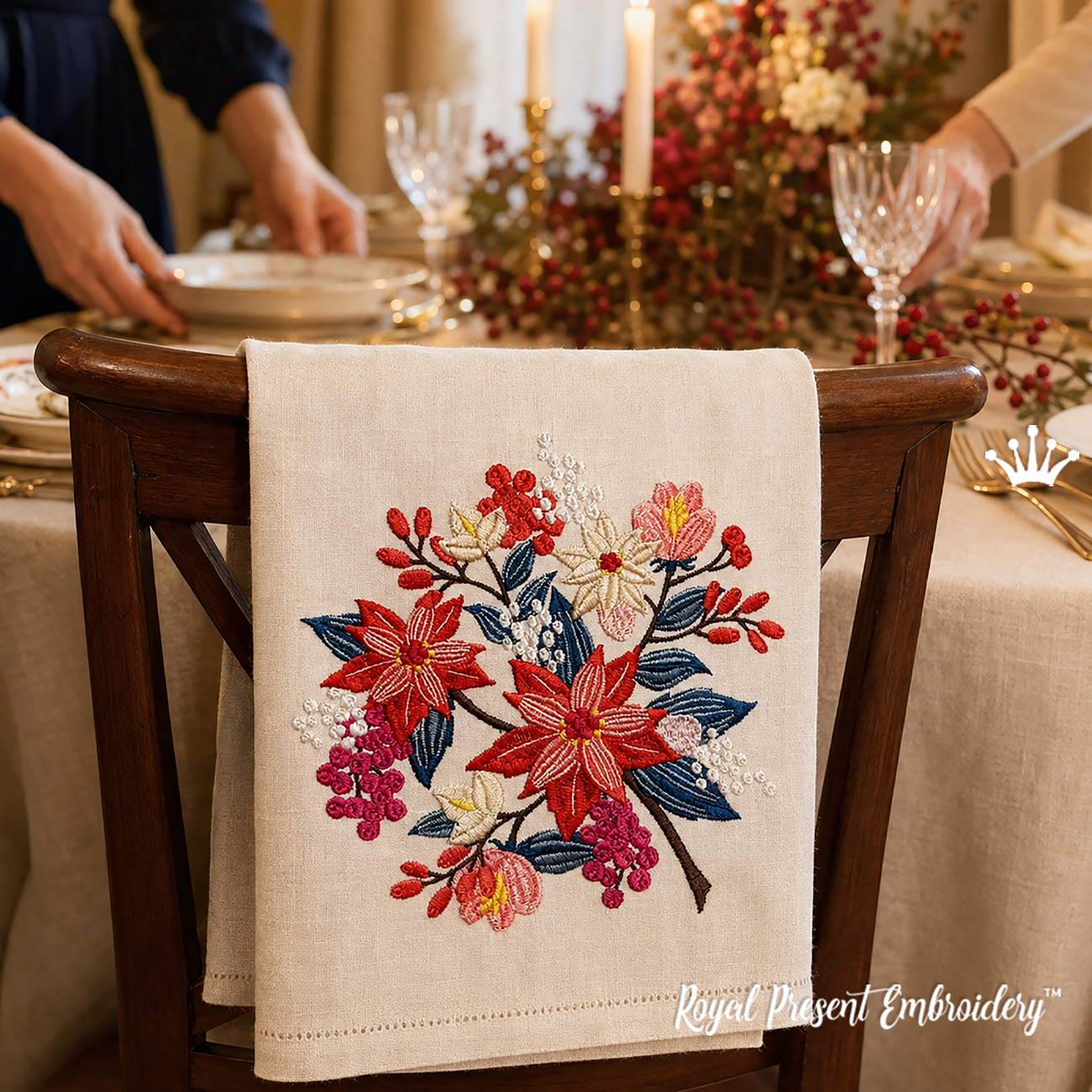
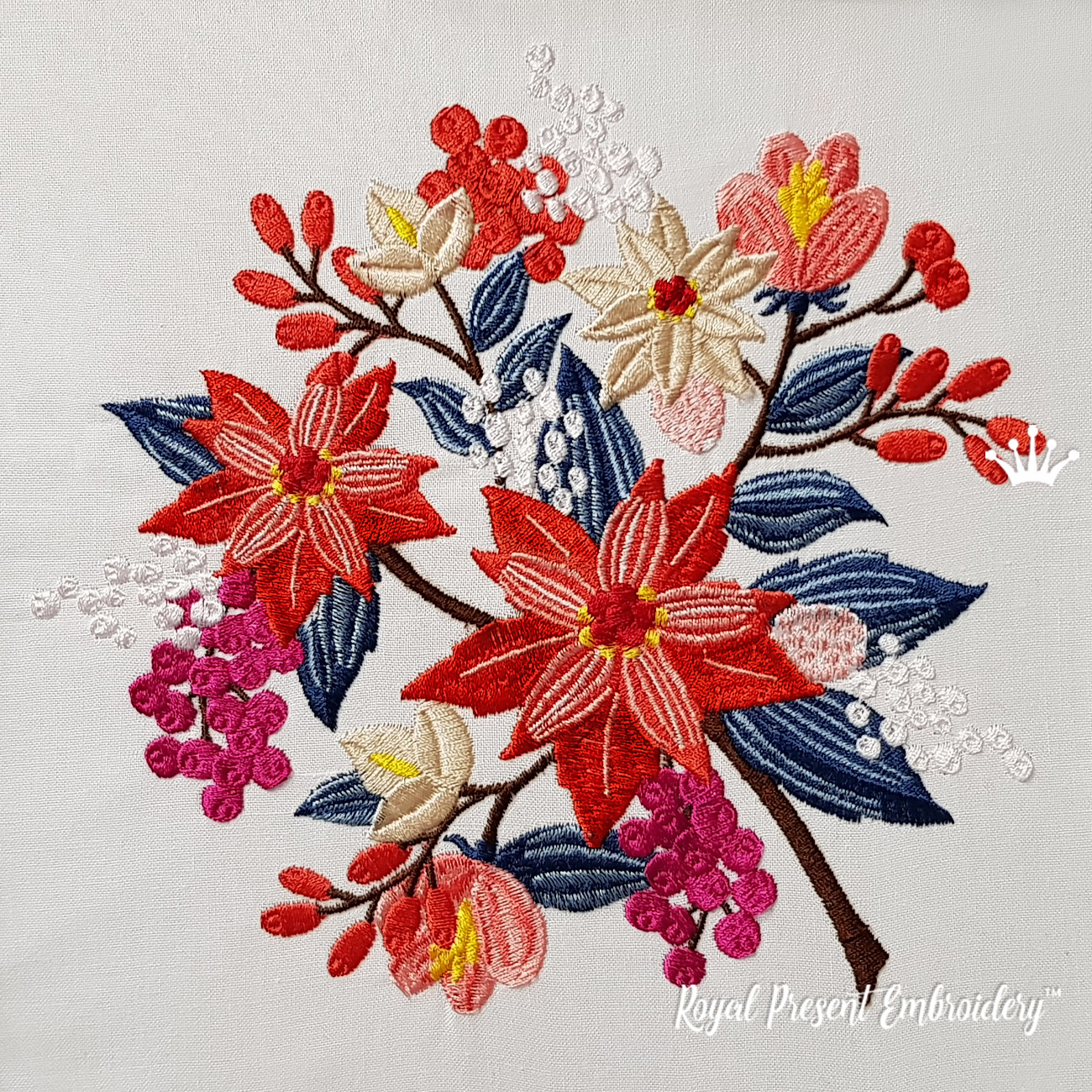
This download includes one winter poinsettia bouquet machine embroidery design in three separately prepared sizes. It is a large, fully stitched Christmas floral motif for decorative pillows, table runners, placemats, tablecloth panels and framed textile décor; no finished embroidered item is shipped.
Sizes, Stitches and Formats
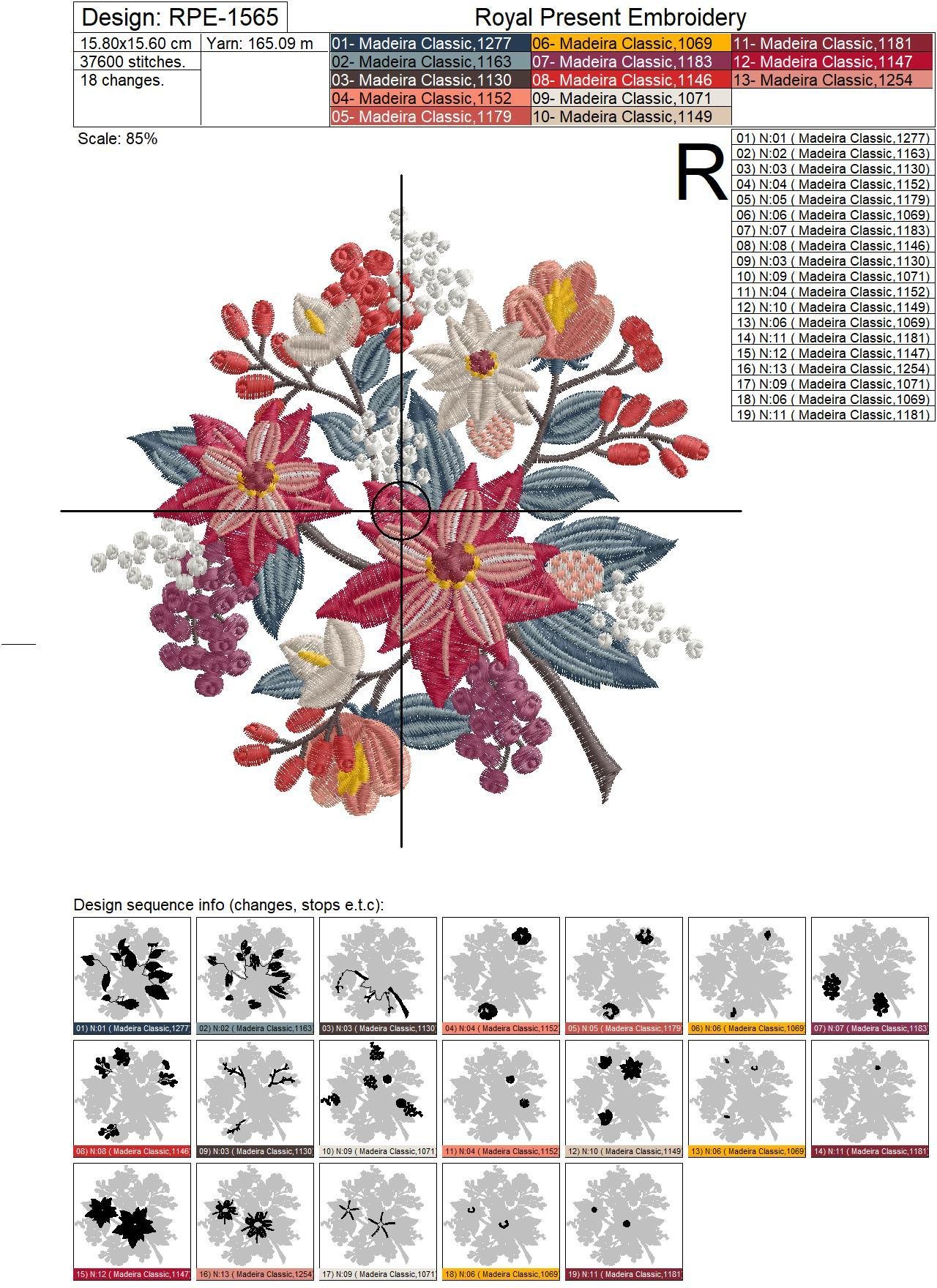
Size: 158.0x156.0 mm (6.22x6.14 "), Stitches: 37648
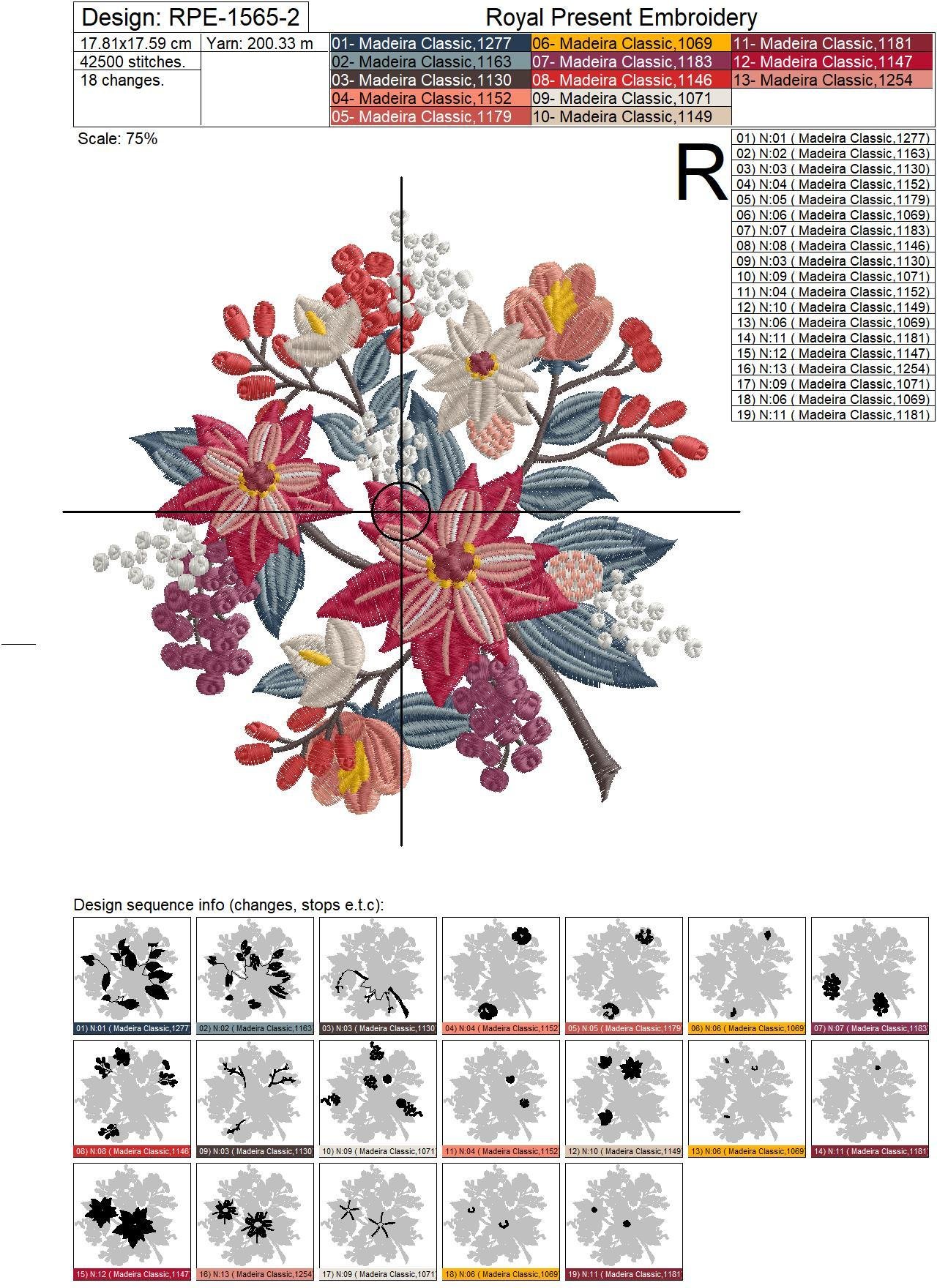
Size: 178.1x175.9 mm (7.01x6.93 "), Stitches: 42532
Size: 198.1x195.6 mm (7.80x7.70 "), Stitches: 48355
Formats: .pes, .pec, .hus, .vip, .dst, .exp, .sew, .exp, .dat, .vp3, .jef, xxx
Important hoop check: none of the three files fits a standard 150 × 240 mm or 6 × 10-inch embroidery field. The smallest file is 158.0 × 156.0 mm, so both sides exceed the 150 mm limit even if the design is rotated. Compare the exact file dimensions with your machine’s usable embroidery field, not only with the hoop name.
Design Specifications
| Included |
1 digital machine embroidery design in 3 sizes |
| Composition |
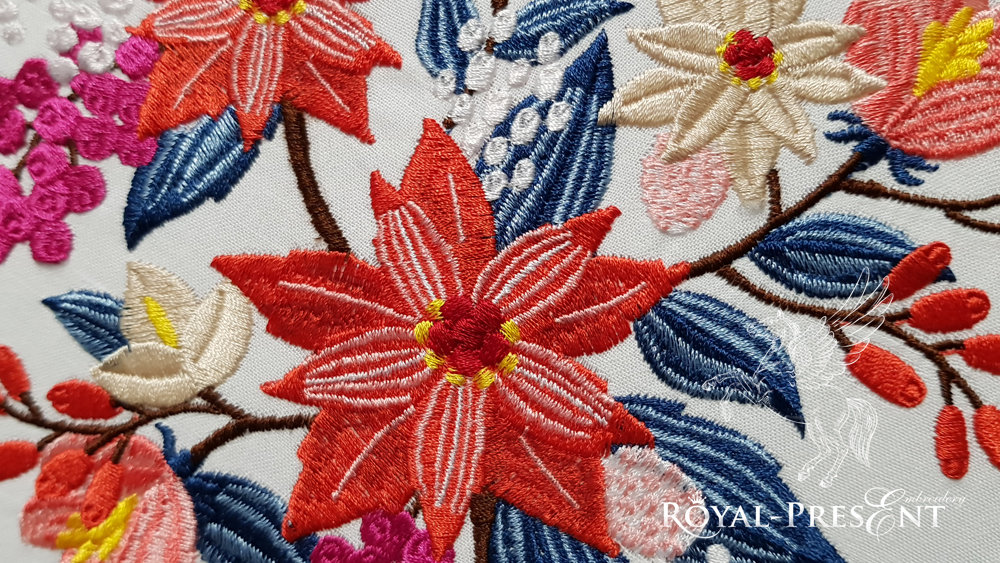
A winter bouquet with two large red poinsettias, ivory and peach flowers, red and cranberry berries, brown branches and blue-gray foliage |
| Technique |
Standard filled machine embroidery; not appliqué, ITH, freestanding lace or a split design |
| Hooping |
Each size is stitched in one hooping; no multi-hoop alignment is required |
| Best project scale |
Large Christmas pillows, table runners, oversized placemats, tablecloth panels, wall hangings and other statement-size holiday textiles |
| Recommended fabric |
Stable medium- to heavyweight linen, cotton, cotton-linen blends, canvas, denim or furnishing fabric |
| Designer |
Ludmila Konovalova |
| Delivery |
Instant digital download supplied as a ZIP archive with machine files and color information; no physical product is mailed |
Hoop Requirements and Project Scale
| Design file |
Minimum usable field |
Practical hoop class |
Good placement |
| 158.0x156.0 mm |
At least 158.0 × 156.0 mm |
160 × 160 mm or larger, subject to the machine’s true field |
Large towel panel, apron bib, placemat, small cushion or runner end |
| 178.1x175.9 mm |
At least 178.1 × 175.9 mm |
180 × 180 mm or 200 × 200 mm class |
Center of a 40–45 cm pillow, table runner or framed textile panel |
| 198.1x195.6 mm |
At least 198.1 × 195.6 mm |
200 × 200 mm class or larger; verify safety margins |
Center of a 45–50 cm pillow, large tablecloth panel or wall hanging |
A hoop sold as 8 × 8 inches or 200 × 200 mm may still have a slightly smaller permitted sewing field. Load the file before preparing the final fabric and use the machine’s Trace function to confirm that the complete bouquet remains inside the stitchable area.
Madeira Classic Rayon 40 Color Palette
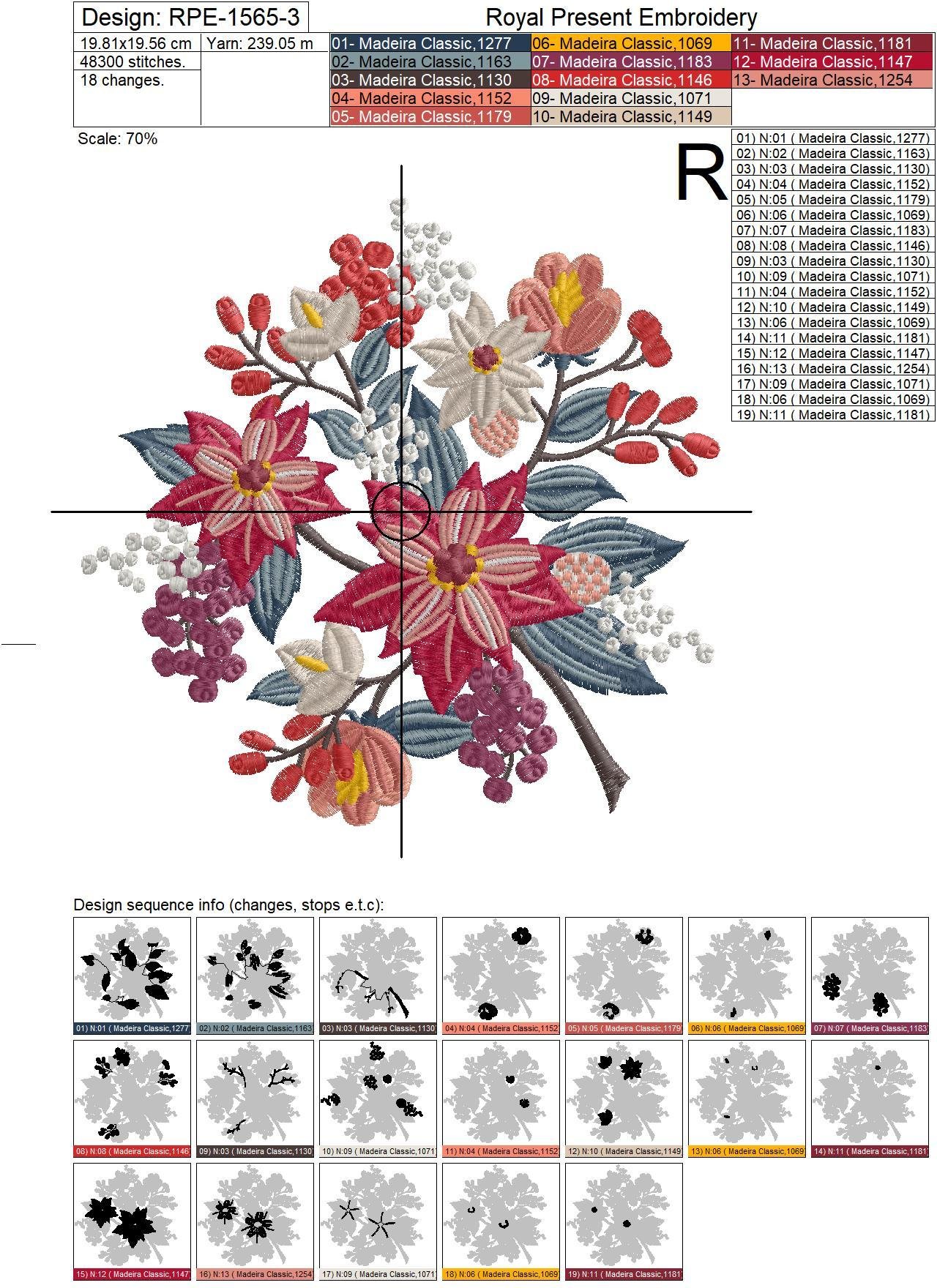
The stitched sample uses a 13-color winter palette. The thread numbers below are the primary reference; commercial color names and screen swatches can vary between regional Madeira charts. Follow the color sequence supplied with the downloaded file when stitching.
| Color |
Madeira Classic Rayon 40 |
Area in the stitched sample |
|
|
1277 — Blueberry Smash |
Dark blue leaf fills and deep foliage accents |
|
|
1163 — Steel Gray |
Blue-gray leaf highlights, veins and lighter foliage layers |
|
|
1123 — Parchment Beige |
Ivory poinsettia petals and pale floral fills |
|
|
1146 — Tomato Red |
Bright berries, buds and red flower details |
|
|
1130 — Chocolate Chip Brown |
Branches, stems and dark connecting details |
|
|
1152 — Peach Tea |
Peach flowers, buds and lighter petal details |
|
|
1179 — Sweet Potato |
Warm coral shadows on peach flowers and buds |
|
|
1069 — Sunshine Yellow |
Golden flower centers and small yellow accents |
|
|
1072 — Coconut Cream |
Cream berry details, pale highlights and inner petal lines |
|
|
1183 — Cranberry |
Deep cranberry berry clusters |
|
|
1147 — Christmas Red |
Main fills of the two large red poinsettias |
|
|
1254 — Dark Salmon |
Salmon petal layers, stripes and dimensional shading |
|
|
1181 — Candy Apple Red |
Dark red flower centers, shadows and final accents |
Where to Use This Poinsettia Design
| Project |
Suggested size |
Placement note |
| Christmas pillow cover |
178.1x175.9 or 198.1x195.6 mm |
Center on a 40–50 cm panel before the pillow is assembled; keep seam allowances outside the hoop |
| Table runner |
158.0x156.0 or 178.1x175.9 mm |
Place one bouquet at each end and rotate the second copy 180° for a balanced layout |
| Oversized placemat or tablecloth panel |
158.0x156.0 mm |
Arrange a full-size paper template with the plate and cutlery before marking the embroidery center |
| Large towel or apron |
158.0x156.0 mm |
Use only on a broad, flat panel; this dense bouquet is too large for a narrow towel band or napkin corner |
| Framed textile art or wall hanging |
Any supplied size |
Choose the size according to the visible opening of the frame and leave an even margin around the outermost stitches |
Fabric, Stabilizer and Needle Guide
This bouquet contains 37,648–48,355 stitches, so the fabric must support a large area of layered fill embroidery. A backing that is adequate for a small motif may still be insufficient here.
| Fabric |
Stabilizer |
Practical notes |
| Medium-weight linen or cotton |
One layer of medium-weight cut-away, approximately 60–80 g/m², is the safest starting point |
Hoop fabric and backing together without stretching; use a fresh 75/11 or 80/12 sharp embroidery needle |
| Firm table linen when permanent backing is undesirable |
Medium-weight tear-away; for loose weave or the largest size, test two lighter layers placed crosswise |
Remove the excess gently from the outer edge toward the embroidery; do not pull against the stitched petals |
| Canvas, denim or furnishing fabric |
Medium-weight tear-away or cut-away according to the fabric’s stability and intended laundering |
Keep the unused fabric supported at machine-bed height so its weight cannot pull the hoop |
| Velvet, terry or other raised surface |
Medium cut-away underneath plus water-soluble film on top |
The topping prevents stitches from sinking into the pile; test for hoop marks before hooping velvet |
| Knit or sweatshirt fabric |
Medium-weight cut-away; add topping if the surface is textured |
Do not stretch the knit. The large filled motif will create a firm embroidered area, so test drape and comfort first |
| Light silk, chiffon or organza |
Not recommended for this dense bouquet without specialist sampling |
A lighter open design is safer because 37,648–48,355 needle penetrations can distort or perforate delicate fabric |
Begin around 500–650 stitches per minute and test the complete selected size on the same fabric, thread and stabilizer planned for the finished project. If the fabric draws inward, do not compensate by stretching it tighter in the hoop; increase support and check upper and bobbin tension. See the machine embroidery puckering guide.
Placement Before Hooping
Print the supplied template at Actual Size or 100% scale with all Fit and Shrink options disabled. Cut around the paper bouquet and place it on the unfinished project together with any plate, pillow seam line or frame opening that will surround it. Mark the design center and both axes, keep the fabric grain straight, then align the machine needle with the marked center. Use the machine’s perimeter Trace function before stitching. For a runner with two bouquets, complete the full paper layout at both ends before embroidering the first repeat.
Matching Designs from This Collection
These companion designs use the same winter palette of red and ivory poinsettias, peach flowers, cranberry berries, brown branches and blue-gray foliage.
Browse the complete Poinsettia Machine Embroidery Designs collection.
Frequently Asked Questions
Does this poinsettia design fit a 6 × 10-inch hoop?
No. A common 6 × 10-inch embroidery field is approximately 150 × 240 mm, while the smallest file is 158.0x156.0 mm. Rotating it does not solve the problem because both dimensions are greater than 150 mm. You need a usable field of at least 158.0 × 156.0 mm for the smallest size.
Will the largest size fit my 8 × 8-inch or 200 × 200 mm hoop?
Only if your machine’s actual permitted embroidery field is at least 198.1 × 195.6 mm. The file is very close to the limits of a nominal 200 × 200 mm hoop, and some machines reserve a safety margin or provide a smaller stitchable area. Check the machine manual, load the file and run Trace before hooping the final item.
Which stabilizer should I use for this dense floral design?
For medium-weight linen or cotton, one layer of medium cut-away around 60–80 g/m² is the safest starting point. If a permanent backing is undesirable on firm table linen, test a medium tear-away; use two lighter crosswise layers for loose weave or the largest size. Add water-soluble topping on velvet, terry or another raised surface.
Can I shrink the design to fit a 5 × 7 or 6 × 10 hoop?
Do not simply scale the PES, DST, JEF or another stitch file down to force it into a smaller hoop. Compressing 37,648–48,355 stitches can create excessive density, stiffness, thread breaks and needle damage. Use one of the three tested sizes or request a technically suitable version through the professional design resizing service; not every reduction is technically possible.
Is this an appliqué or an ITH embroidery design?
No. It is a standard filled machine embroidery motif stitched directly onto the project fabric in one hooping. There are no appliqué placement lines, fabric-cutting steps, freestanding lace construction or ITH assembly instructions.
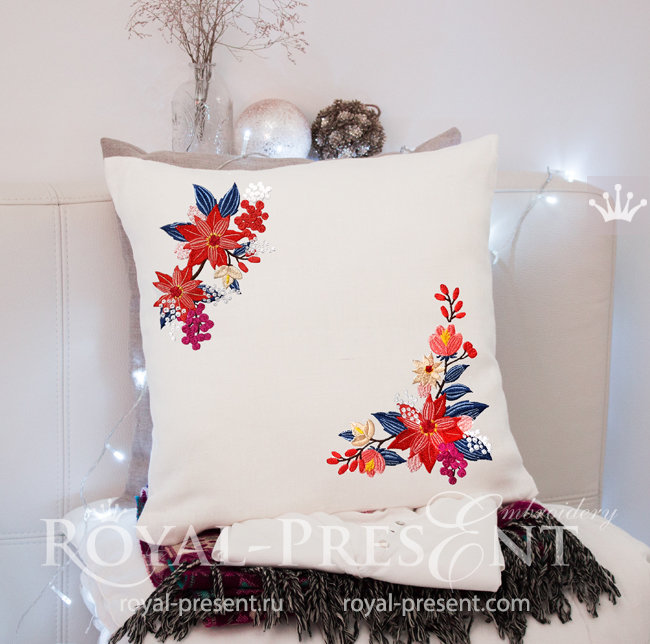 Winter Poinsettia Corners Machine Embroidery Set – 3 Sizes
 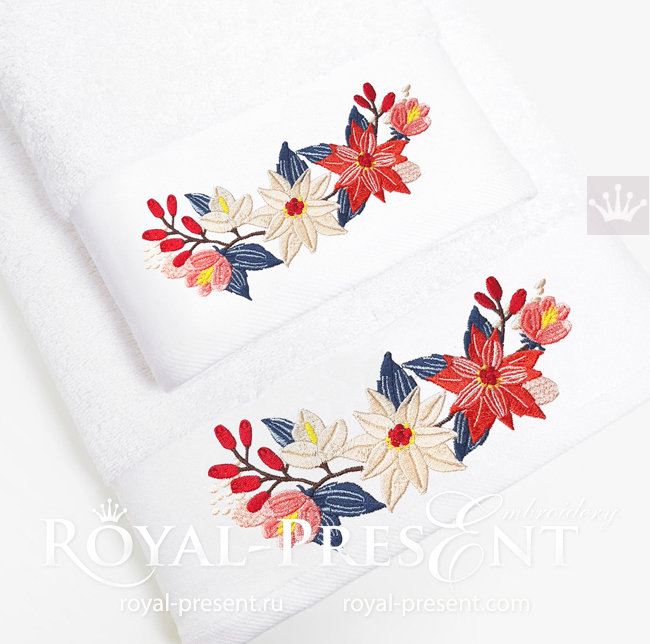 Winter Poinsettia Border Machine Embroidery Design – 2 Sizes
 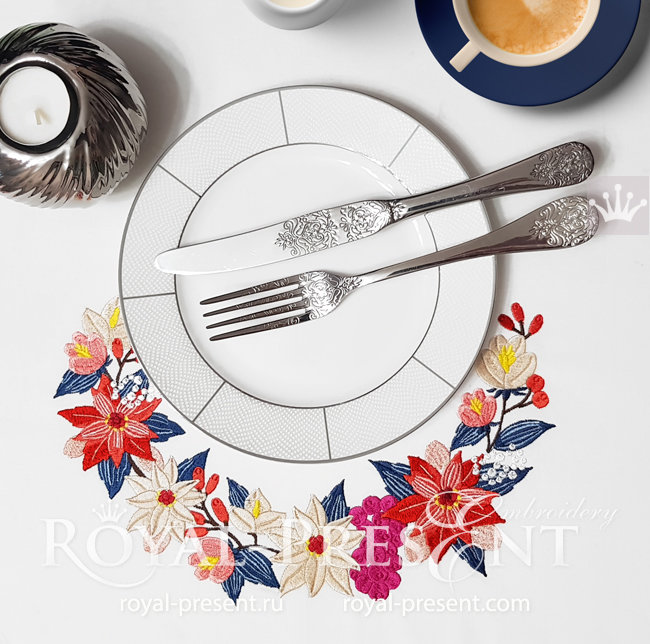 Poinsettia Border Machine Embroidery Design – 2 Sizes
 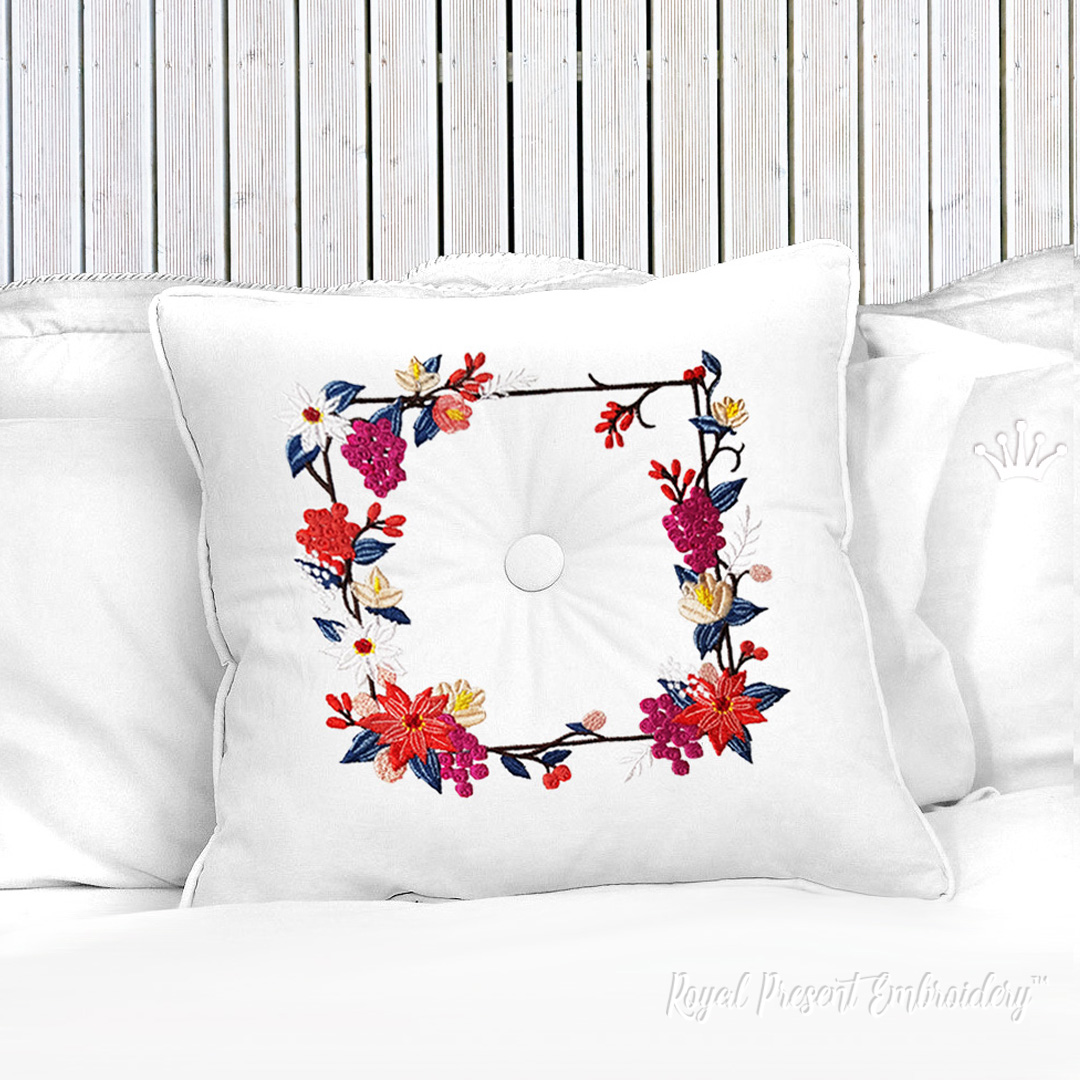 Winter Square Poinsettia Border Machine Embroidery Design – 5 Sizes

 Get Sign-In Link
 Login with Google
 Login with Facebook
 Login with Amazon
 Login with Paypal