Small Scared Pumpkin Machine Embroidery Design - 4 Sizes
By knowing the speed of your embroidery machine, you can find out how long it will take to embroider a design.
To use the embroidery calculator, click on the number of stitches in the product description.
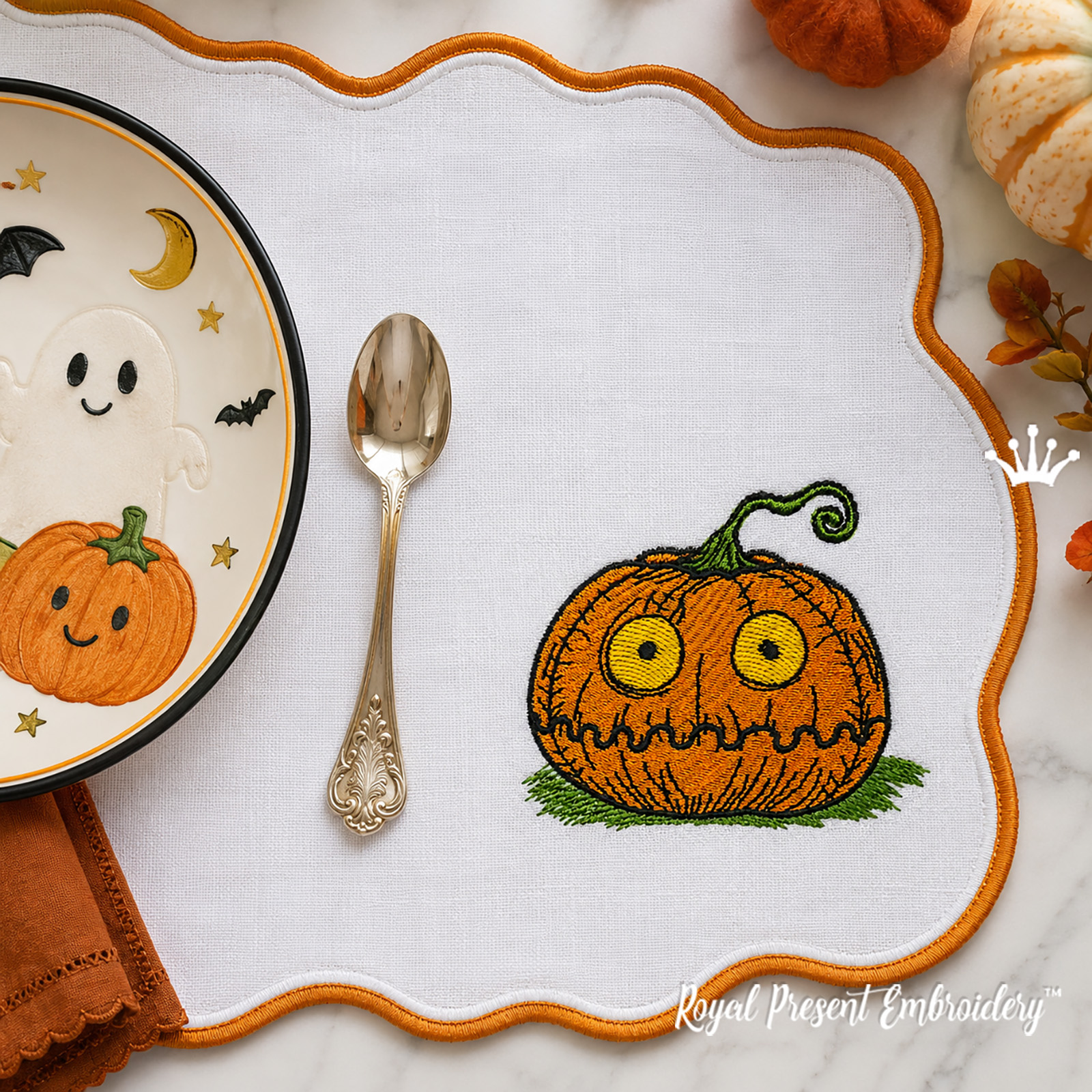
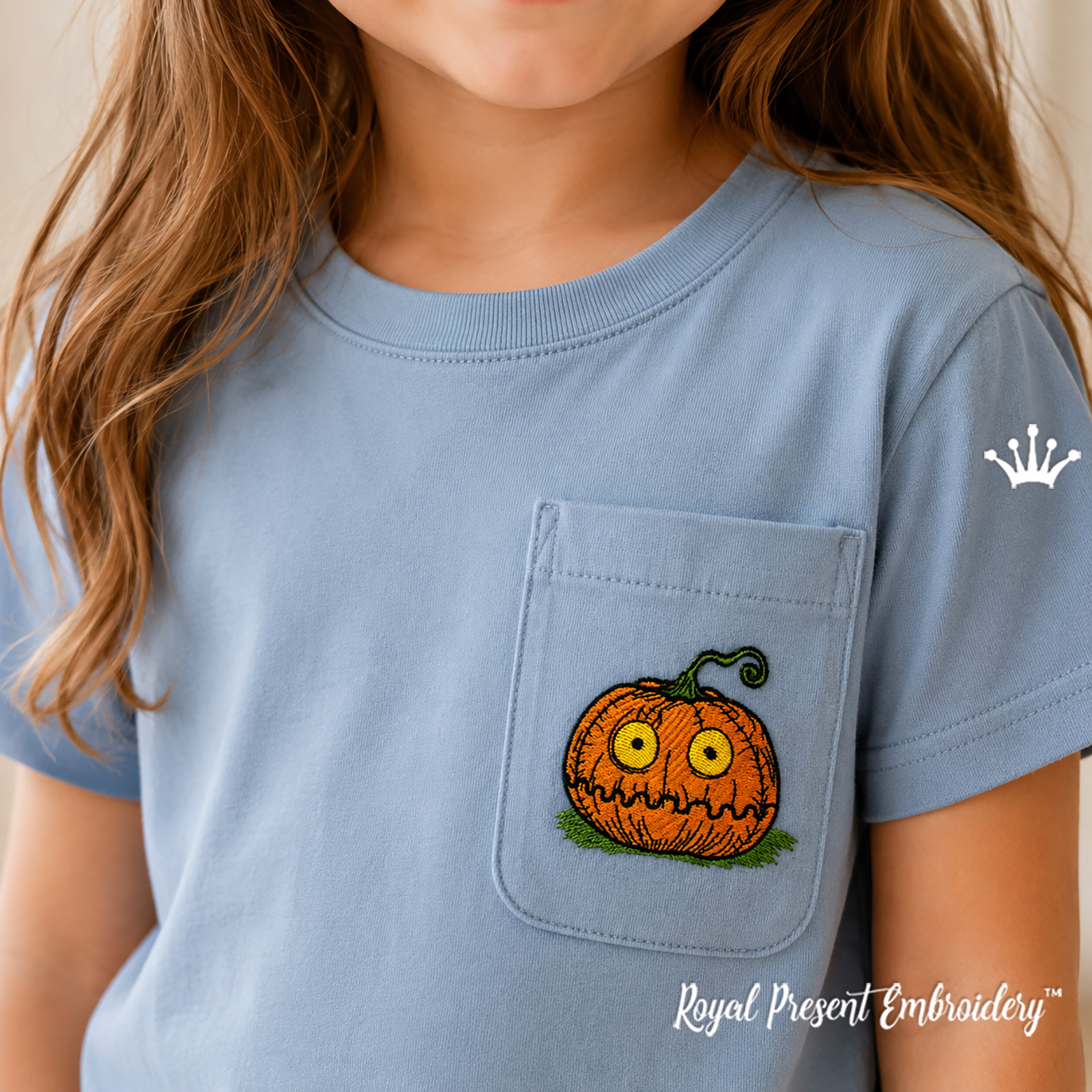
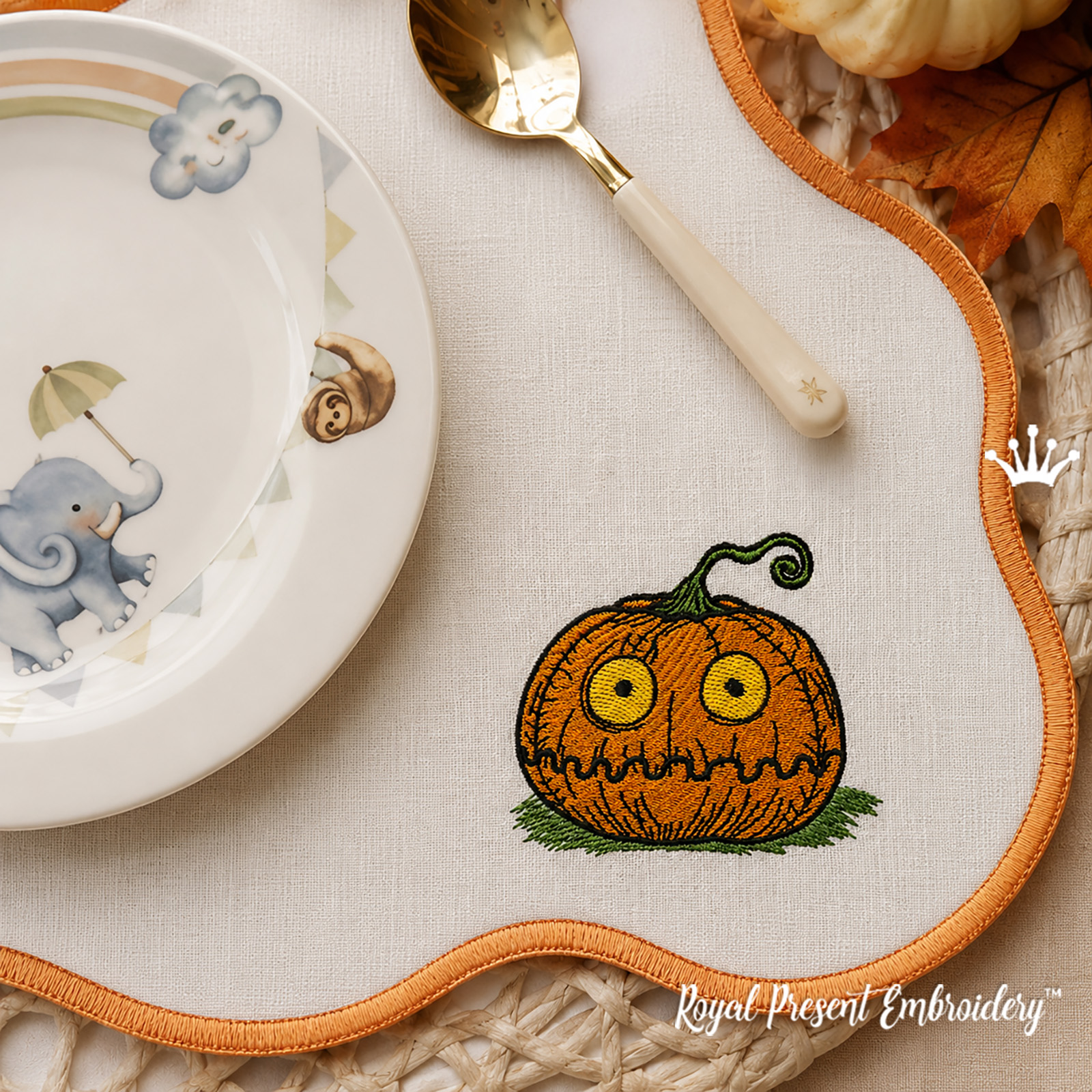
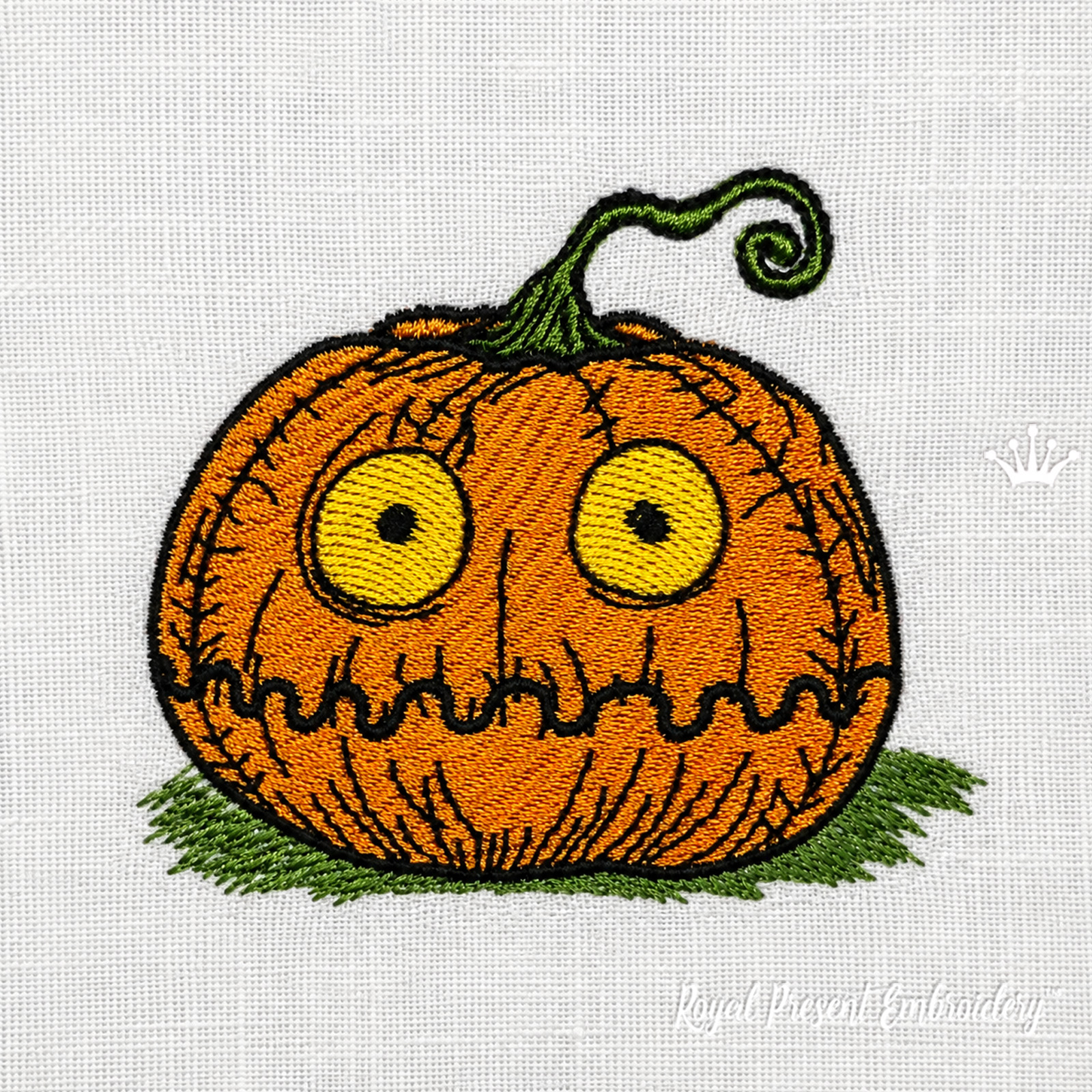
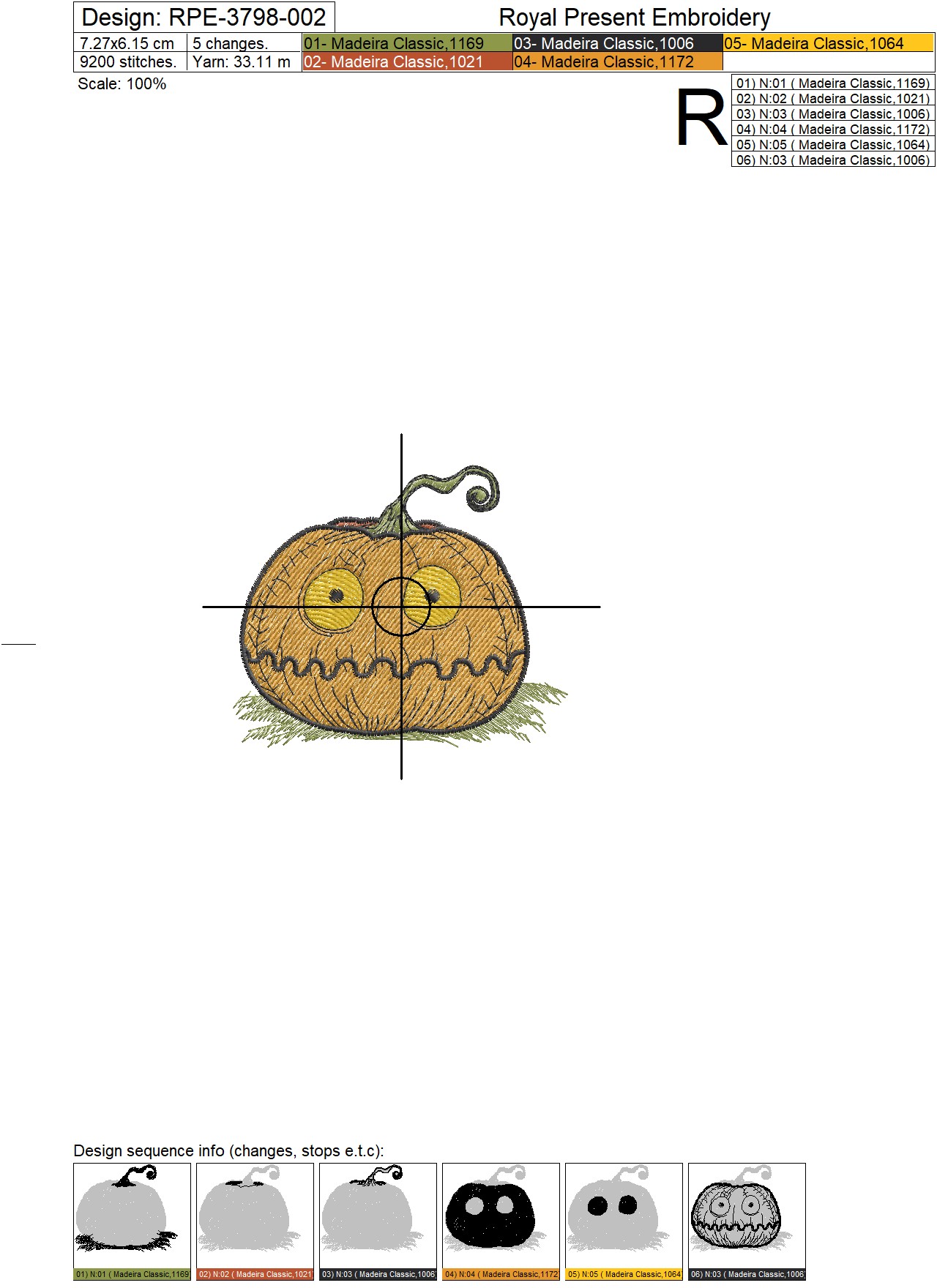
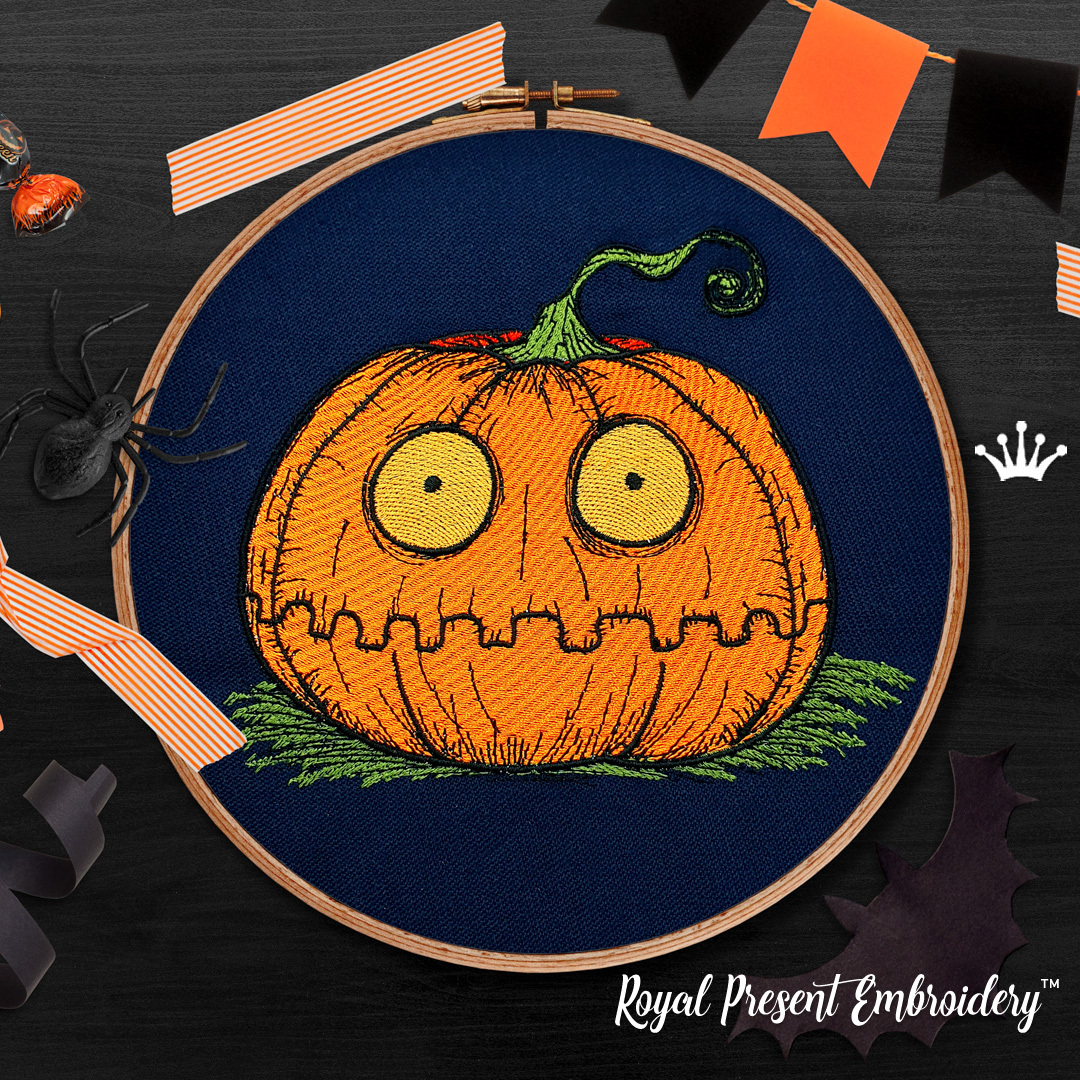
Small Scared Pumpkin is a downloadable machine embroidery design, not a finished item. It depicts an orange pumpkin with large yellow eyes, a wavy frightened mouth, dark sketch-style outlines and a curled green stem. The compact design is digitized for small hoops, while the expressive face remains clearly visible even in the smallest version.
Size: 72.7x61.5 mm (2.86x2.42"), Stitches: 9200
Size: 80.1x67.8 mm (3.15x2.67"), Stitches: 10400
Size: 88.1x74.4 mm (3.47x2.93"), Stitches: 11500
Size: 96.1x81.7 mm (3.78x3.22"), Stitches: 12800
Formats: .dst, .jef, .pec, .vip, .hus, .pes, .exp, .sew, .dat, .vp3, .xxx
After purchase, you will receive a ZIP archive containing machine embroidery files. The embroidered item, fabric, thread and stabilizer are not included. Unzip the archive before transferring a file to your embroidery machine, then select the correct format and size.
Minimum Hoop Sizes
For the 72.7x61.5 mm (2.86x2.42") file: use an 80x80 mm (3.15x3.15") hoop.
For the 80.1x67.8 mm (3.15x2.67"), 88.1x74.4 mm (3.47x2.93") and 96.1x81.7 mm (3.78x3.22") files: use a 100x100 mm (4x4") hoop.
Madeira Classic Color Chart
The design uses 5 thread colors and 5 color changes; dark Madeira Classic 1006 is stitched twice. The swatches are approximate, so match thread by the Madeira number and a physical manufacturer color chart.
| Color | Madeira Classic | Stitched Area | |
|---|---|---|---|
|
|
1169 | stem and grass | |
|
|
1021 | warm pumpkin shading | |
|
|
1006 | outline, pupils, mouth and sketch lines | |
|
|
1172 | main orange fill | |
|
|
1064 | yellow eye fill |
Stabilizing for Clean Outlines
The design contains 9,200–12,800 stitches and a noticeable filled area. For stable cotton, linen, gabardine and placemat fabric, use a medium-weight tear-away stabilizer of approximately 50–70 gsm. Suitable options include Madeira Cotton Soft, Gunold Tear Away and Sulky Tear-Easy.
For T-shirts, sweatshirt fleece, knit fabric and other stretchy materials, use a soft cut-away stabilizer of approximately 60–80 gsm, such as Madeira Weblon No Show, Gunold Cut Away or Sulky Soft ’n Sheer. Hoop the fabric without stretching it; otherwise it can spring back and pucker after the hoop is removed.
On terry cloth or other high-pile fabric, add a thin water-soluble topping such as Madeira Avalon Film, Gunold Solvy Film or Sulky Solvy. The topping keeps the small facial lines and outline above the loops but does not replace the stabilizer underneath.
For the test stitch-out, start with 40 wt machine embroidery thread, a 75/11 embroidery needle and a speed of 600–700 stitches per minute. If the dark outline begins to shift away from the orange fill, reduce the speed and reinforce the stabilization.
How to Preserve the Small Facial Details
- Hoop the fabric and stabilizer together without stretching or distorting them.
- Use a basting box if your embroidery machine or software provides one.
- Do not pull or readjust the fabric after the hoop has been tightened.
- Add water-soluble topping when stitching on loose, textured or high-pile fabric.
- Run the complete design on matching test fabric before embroidering the finished item.
Halloween Color Tip
For a playful rather than gloomy pumpkin, replace the dark outline with deep chocolate brown or dark purple while keeping the bright yellow eyes. Madeira 1064 may also be replaced with glow-in-the-dark thread. Test specialty thread first, use the needle recommended by its manufacturer and reduce the machine speed to approximately 450–550 stitches per minute.
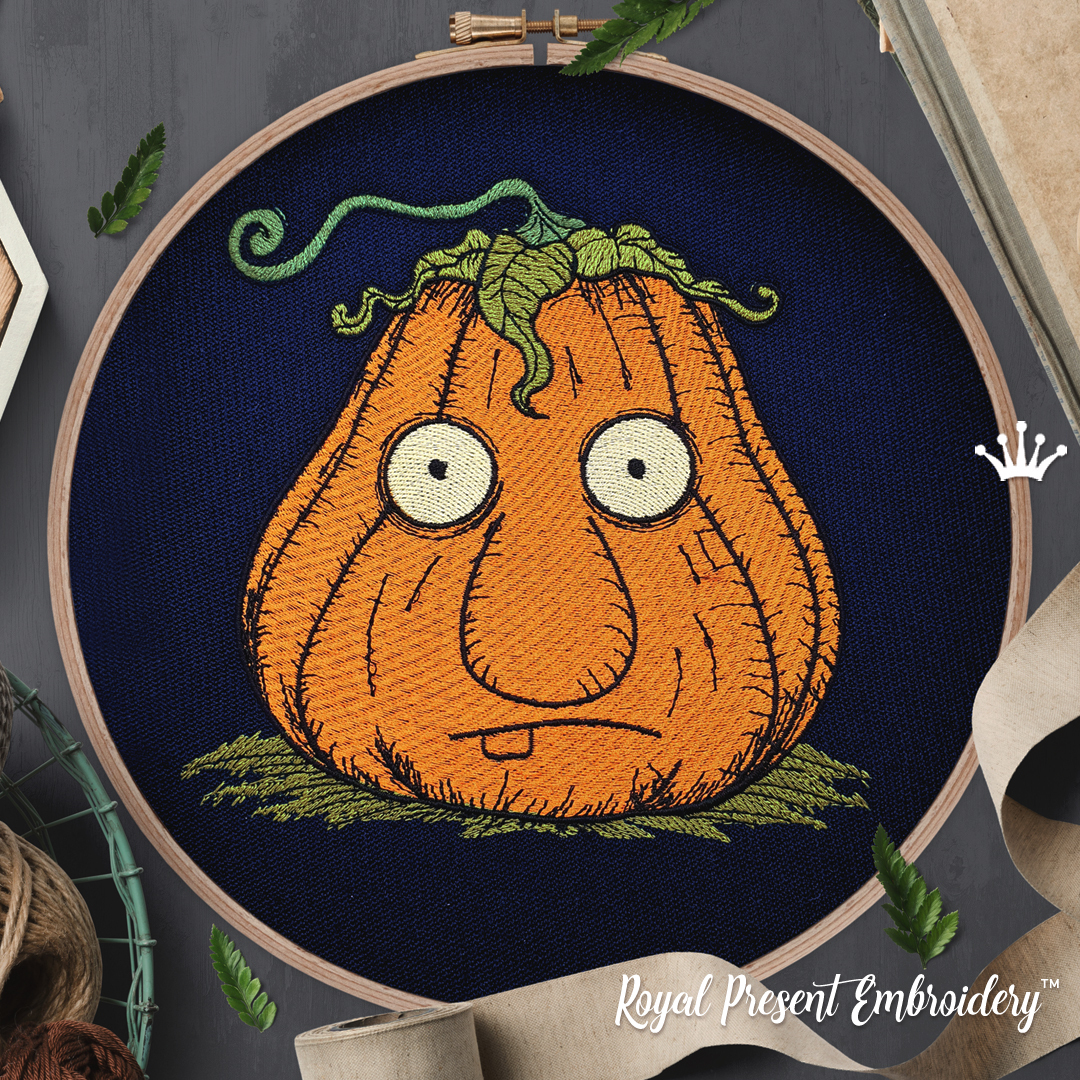
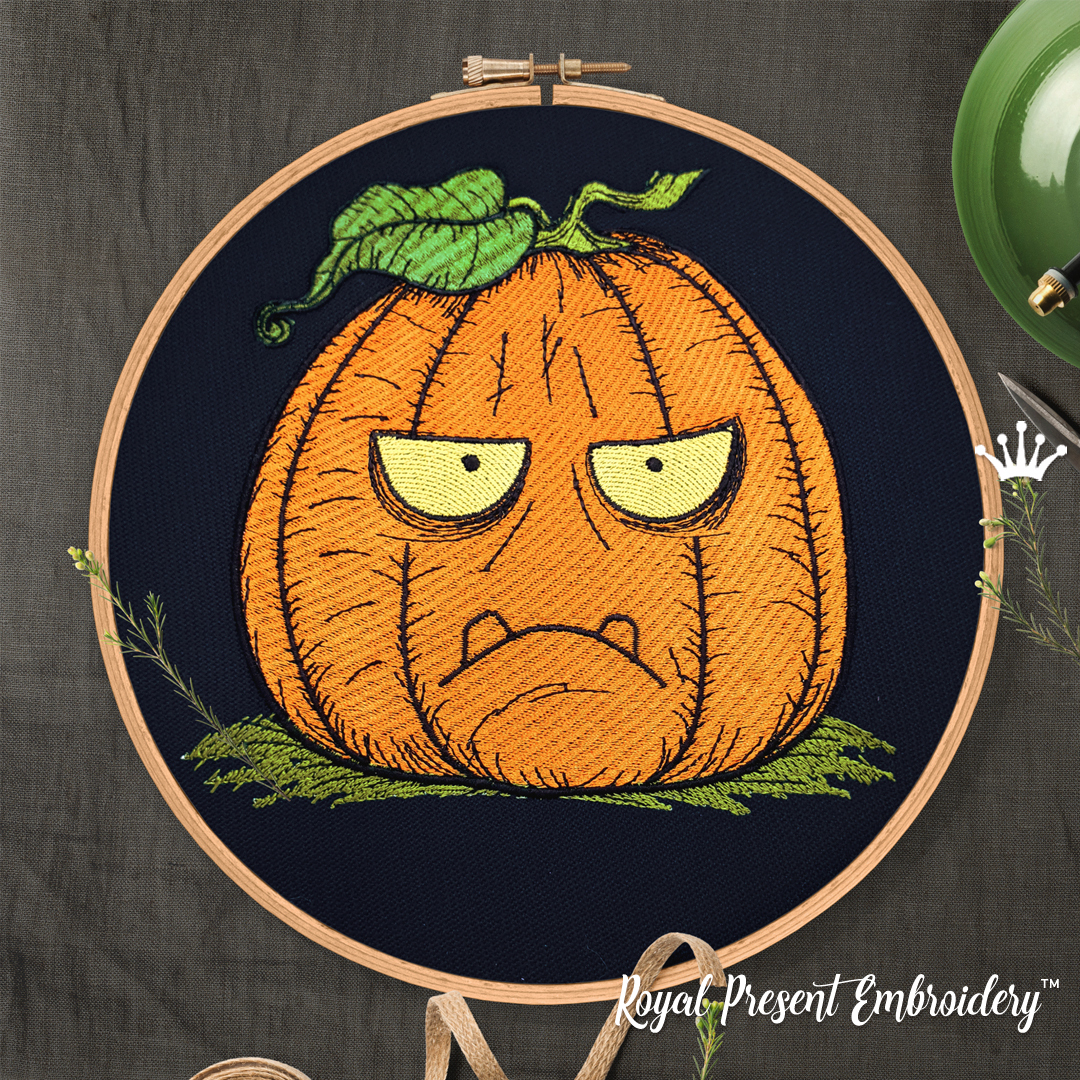
More Pumpkins with Expressive Faces
|
|
|
|
Technical Questions
What hoop is required for the smallest file?
The 72.7x61.5 mm (2.86x2.42") file fits an 80x80 mm (3.15x3.15") hoop. The other three sizes require a 100x100 mm (4x4") hoop.
What should I check if the dark outline shifts away from the fill?
Check that the hoop is tight, the hoop attachment has no play and the stabilizer is firm enough. Add a basting box, use a second stabilizer layer when needed and reduce the machine speed. If the shift repeats in the same place on stable test fabric, inspect the hoop connection and carriage movement.
How should I embroider the small pumpkin on a knit shirt?
Use a soft cut-away stabilizer of approximately 60–80 gsm and hoop the knit without stretching it. After embroidery, trim the stabilizer carefully, leaving about 5–8 mm (0.20–0.31") around the design. If the back will touch skin, cover it with a soft protective layer such as Gunold Cover the Back.
Why do the facial lines disappear on terry cloth?
Terry loops can cover small stitches. Use a suitable cut-away or tear-away stabilizer underneath and a thin water-soluble film on top. The topping holds the pile down while stitching so the wavy mouth, eyes and sketch lines remain visible.

 Get Sign-In Link
 Login with Google
 Login with Facebook
 Login with Amazon
 Login with Paypal