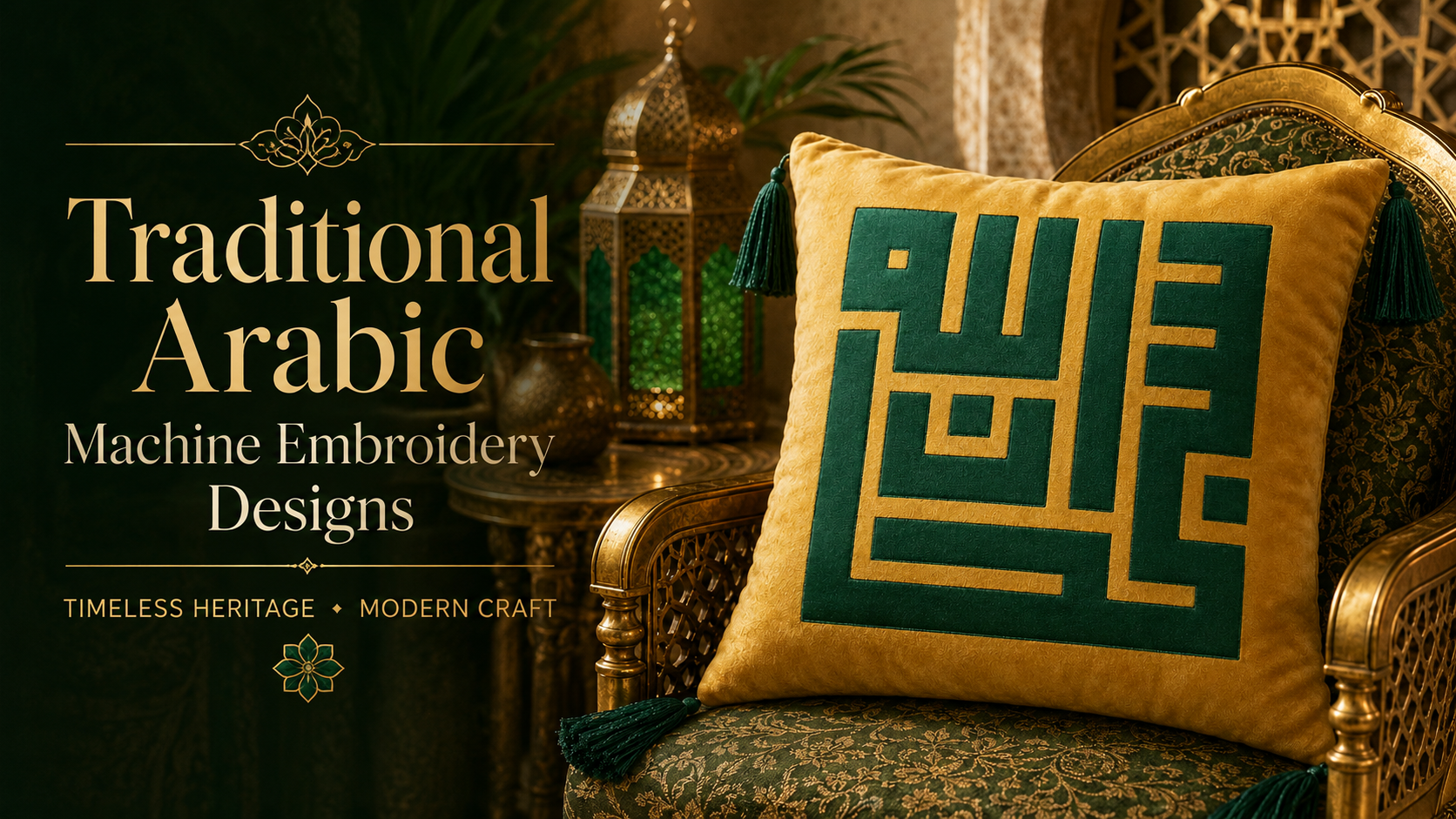
Motifs de broderie arabe | Marocains et islamiques
Traditional Arabic machine embroidery designs include several distinct visual languages: Arabic calligraphy, Islamic religious motifs, Moroccan arabesques, Moorish and Andalusian geometry...
By knowing the speed of your embroidery machine, you can find out how long it will take to embroider a design.
To use the embroidery calculator, click on the number of stitches in the product description.
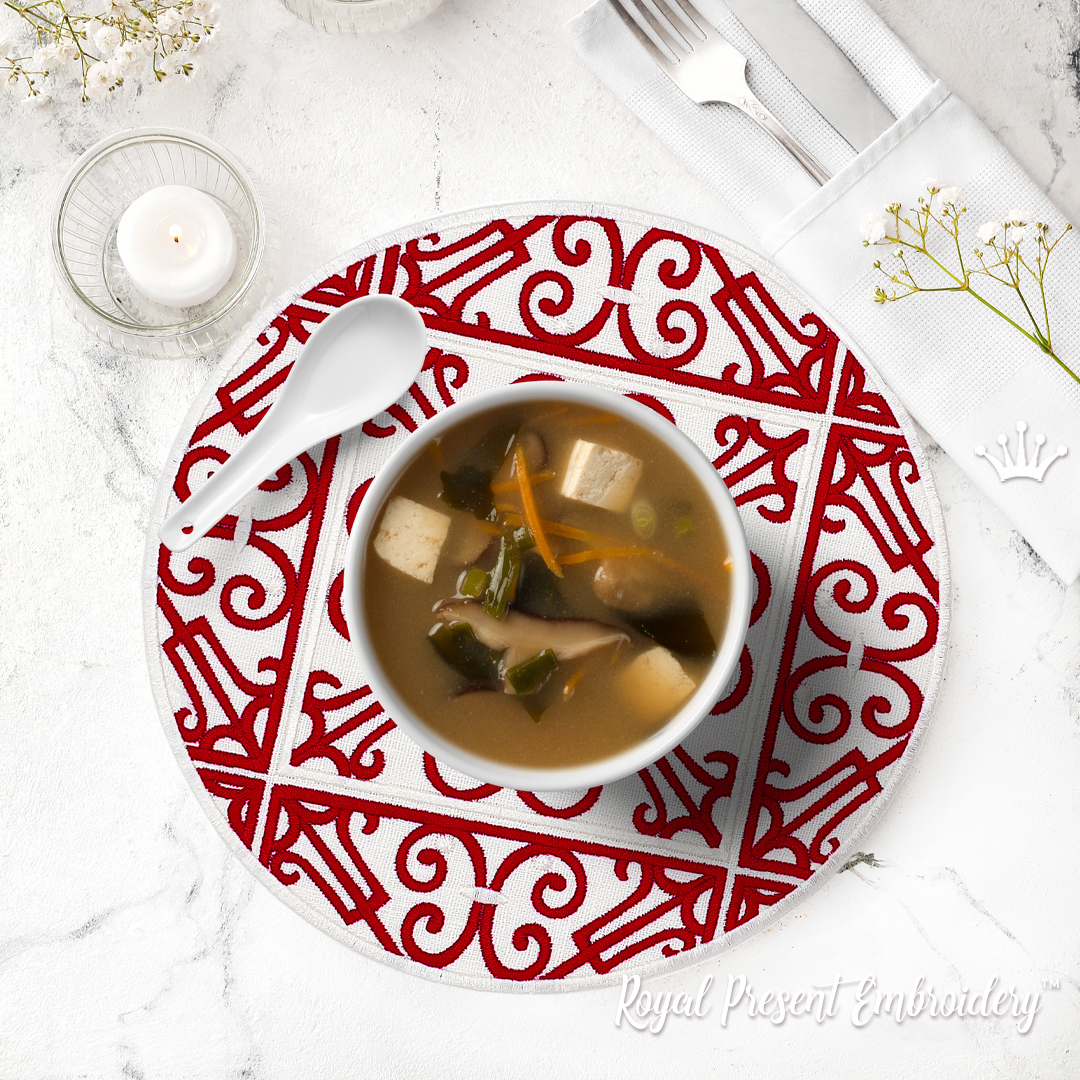
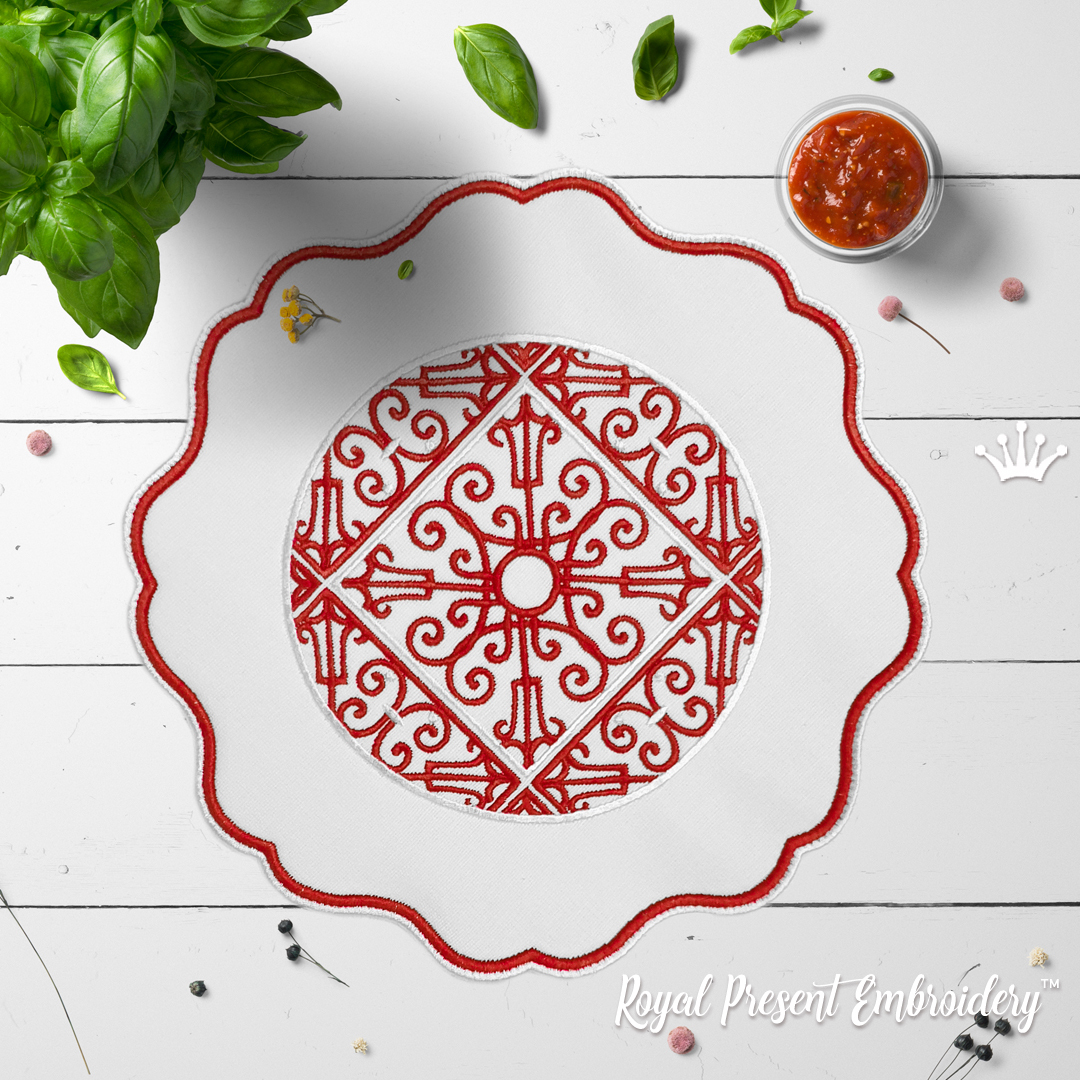
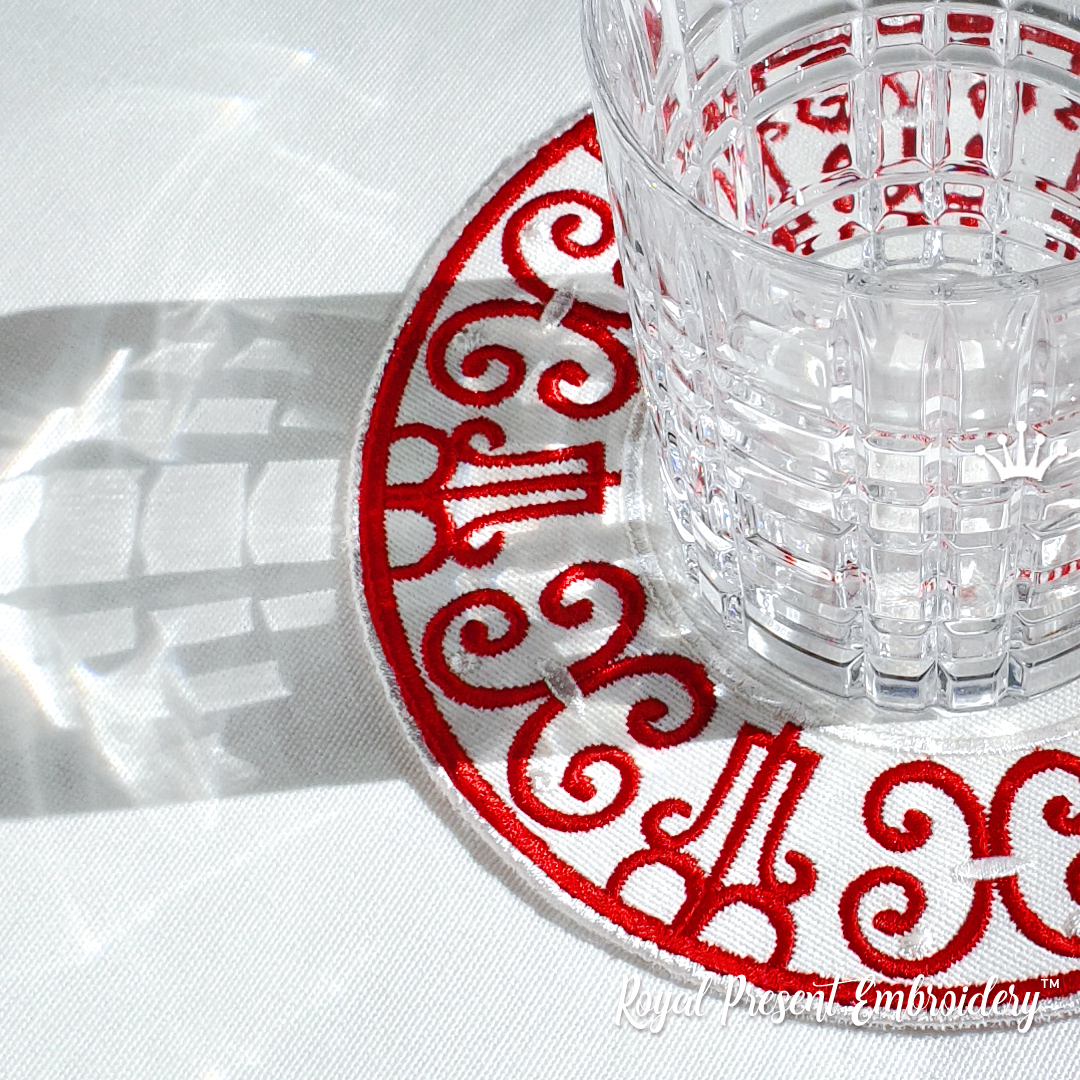
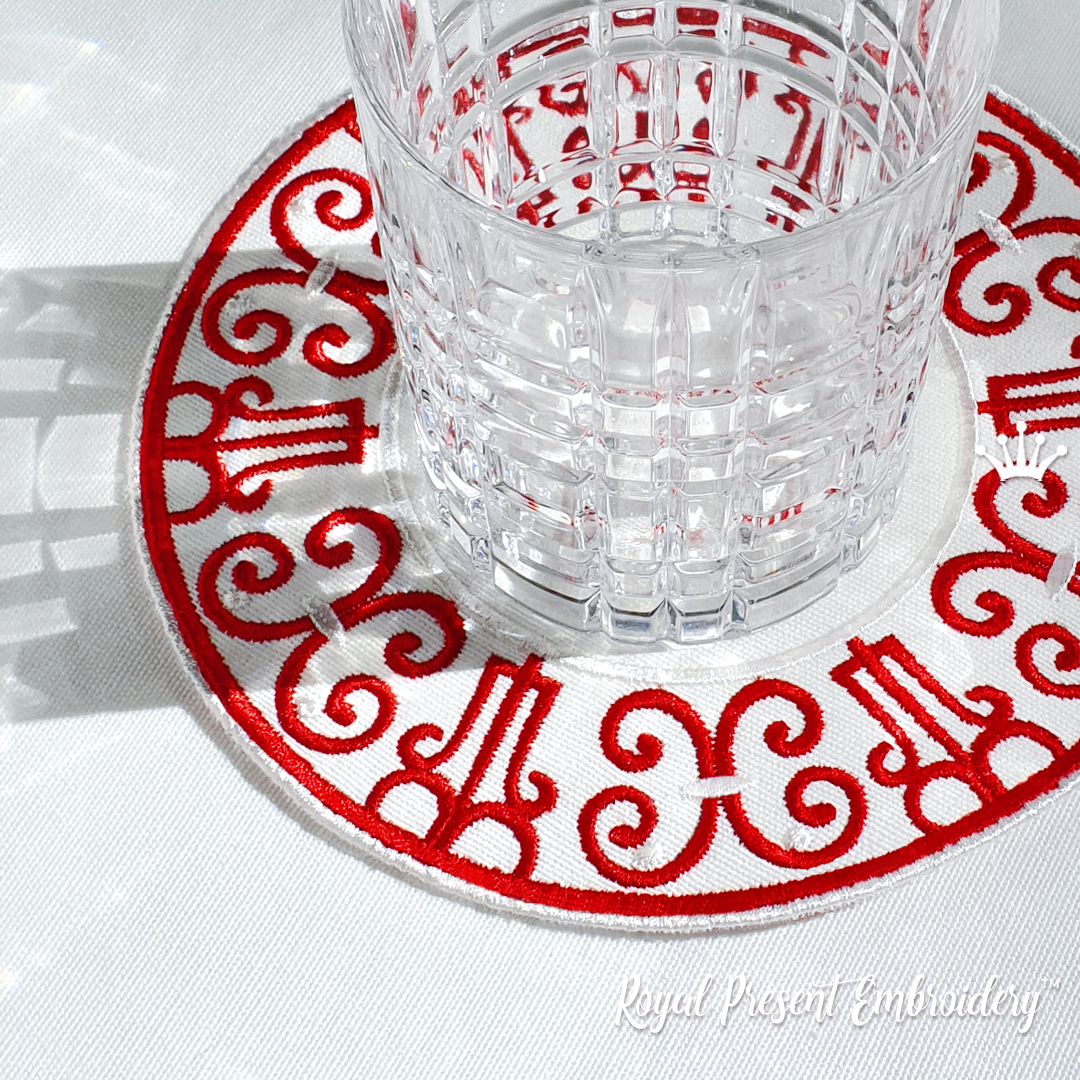
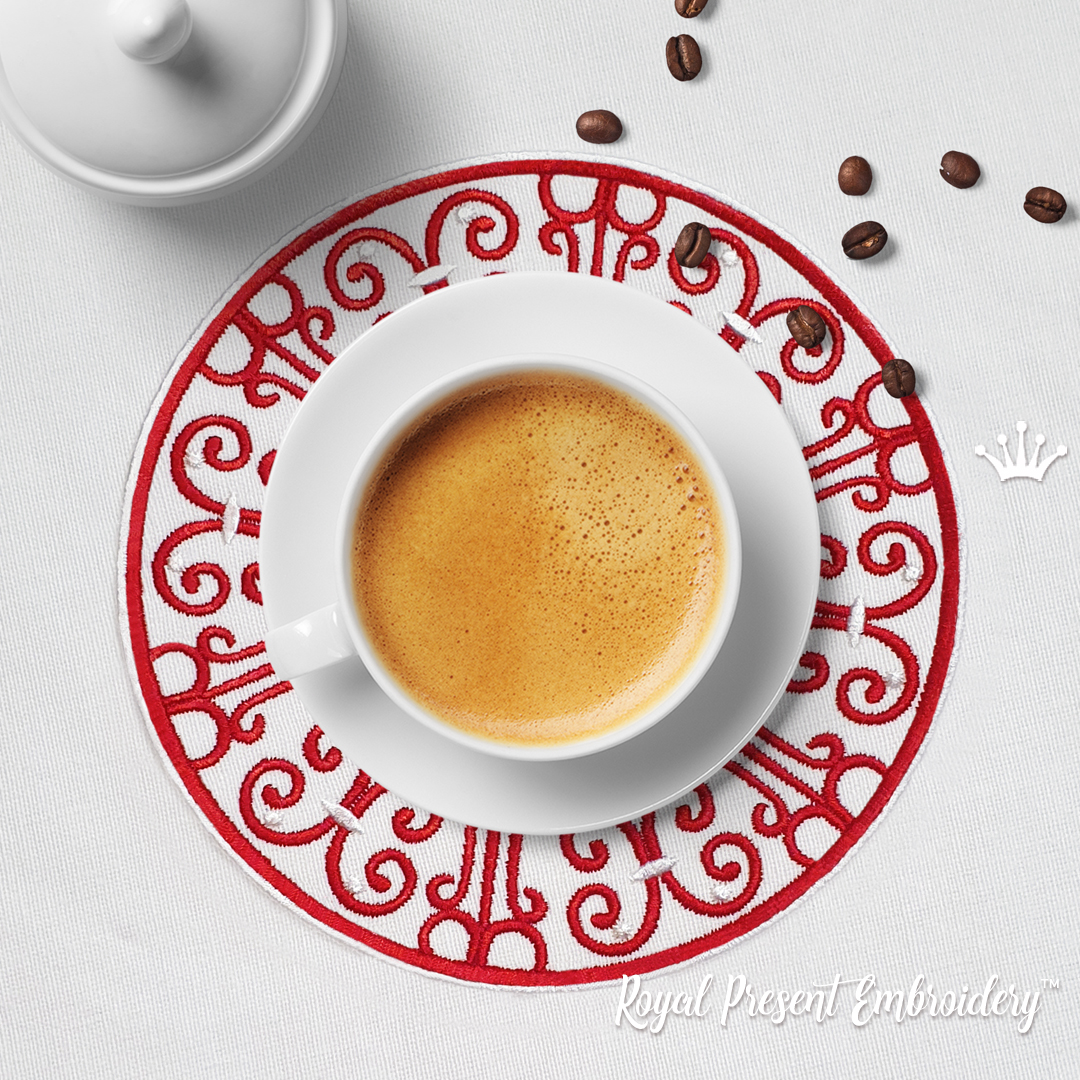
This digital ITH placemat embroidery design creates a finished round Andalusian table mat in one hooping. The download contains one rosette design in 7 exact sizes, 11 machine formats and a step-by-step PDF tutorial; the finished item, linen, stabilizer, thread and tableware are not included.
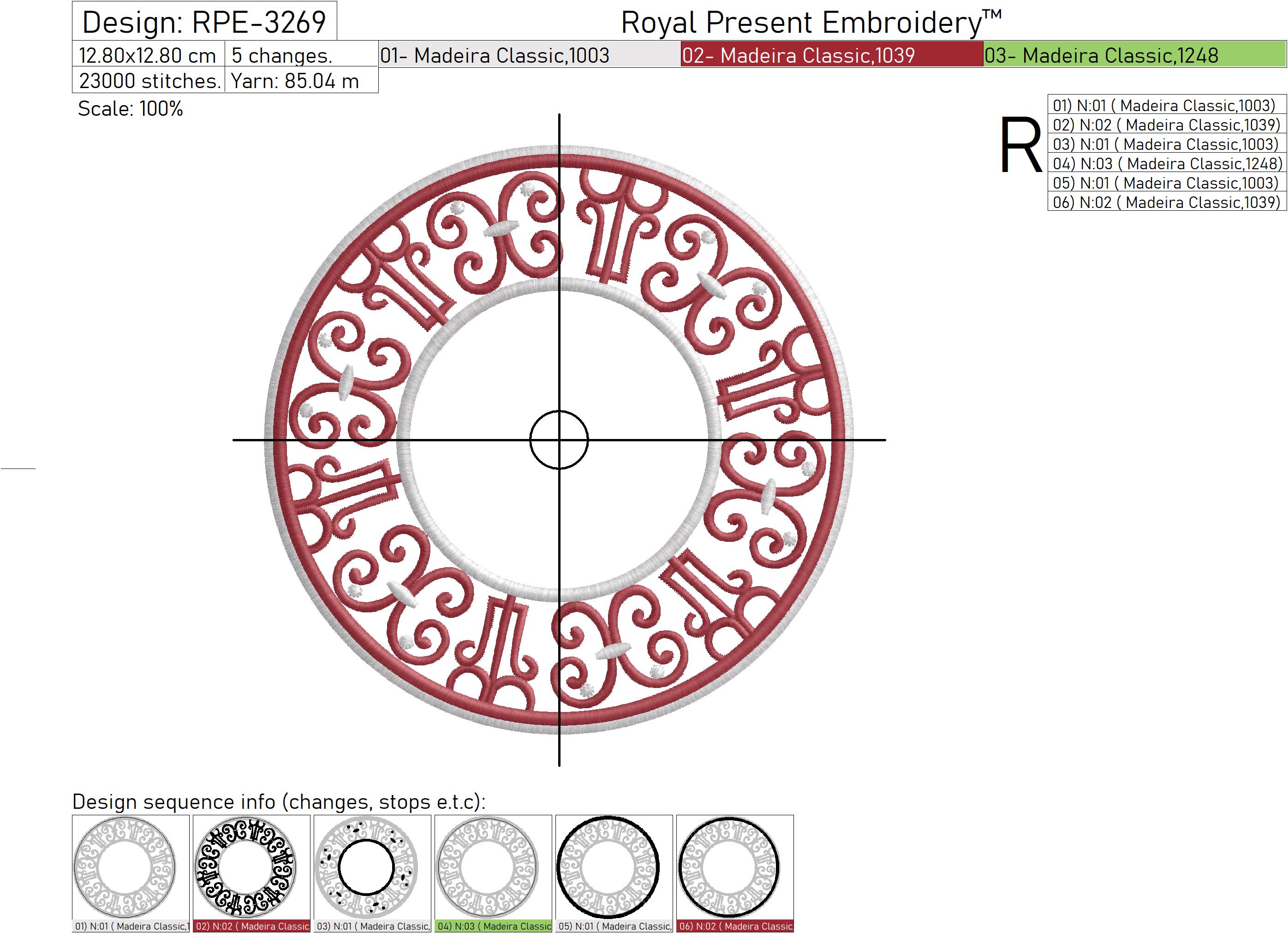
Sizes, stitches and embroidery formats
Size: 128.0x128.0 mm (5.04x5.04 "), Stitches: 22721
Size: 138.0x138.0 mm (5.43x5.43"), Stitches: 27745
Size: 148.0x148.0 mm (5.83x5.83"), Stitches: 29662
Size: 158.0x158.0 mm (6.22x6.22"), Stitches: 31519
Size: 168.0x168.0 mm (6.61x6.61 "), Stitches: 33772
Size: 177.4x177.3mm (6.98x6.98"), Stitches: 35301
Size: 198.0x197.9 mm (7.80x7.79 "), Stitches: 39485
Formats: .dst, .pec, .vip, .hus, .pes, .exp, dat, jef, vp3, .sew, xxx
| Specification | Product data |
|---|---|
| Product type | Digital in-the-hoop machine embroidery design |
| Included | One round rosette in 7 sizes plus a PDF tutorial |
| Finished uses | Cup mat, glass coaster, tea-pair mat, bread-plate or dessert-plate mat |
| Construction | Front, backing and finished contour are joined in the hoop |
| Design language | Andalusian ironwork, Moorish arabesque and radial symmetry |
Some table-linen projects begin with the fabric; others begin with a porcelain collection already in the cupboard. This design is for the second approach. It answers searches such as placemat embroidery to match Hermès tableware, embroidery inspired by dinnerware and red and white embroidered table linens with a textile design that has its own structure and scale.
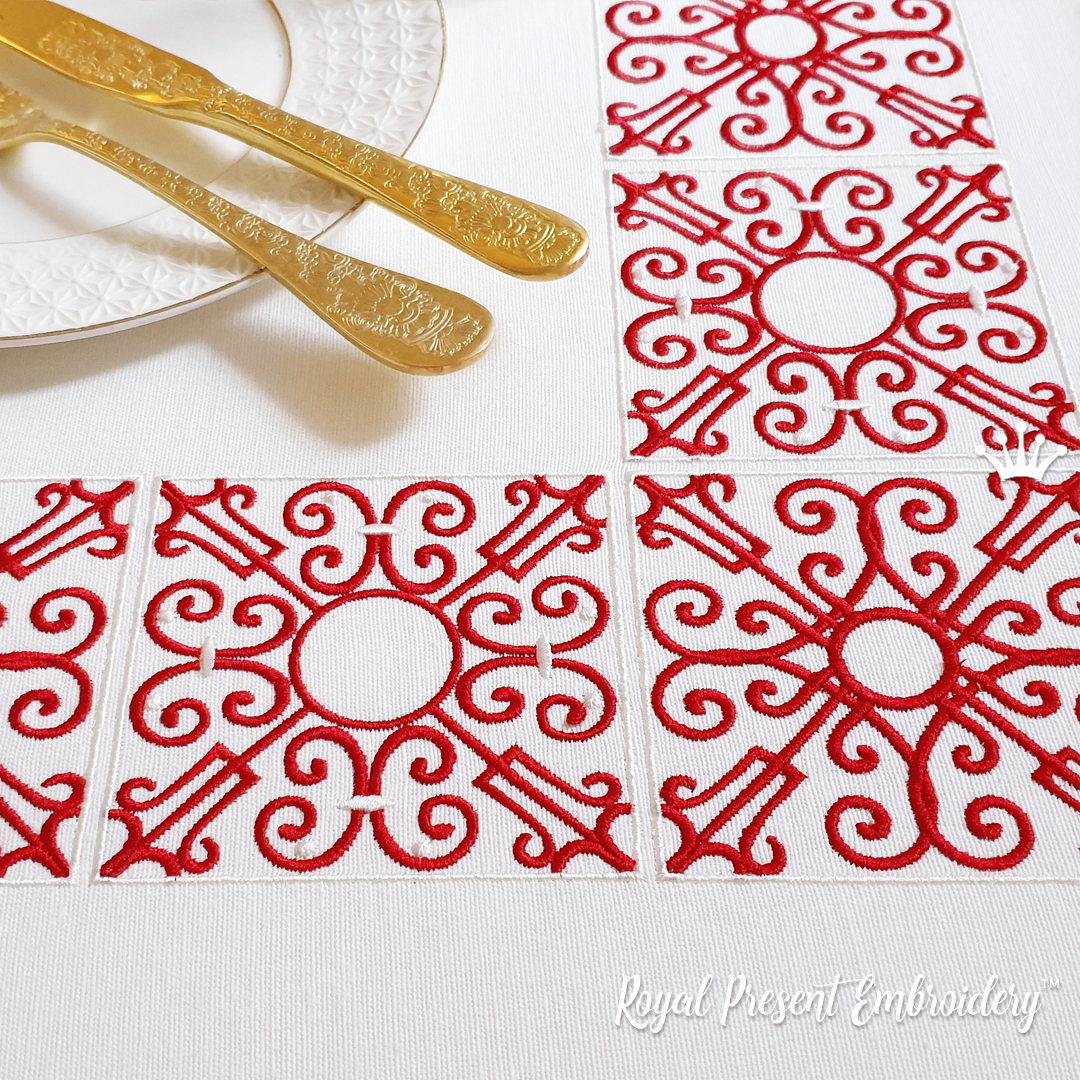
Hermès Balcon du Guadalquivir tableware and the Royal Present Andalusian series look toward the same cultural source: the wrought-iron balconies and ornamental geometry of southern Spain. Here, four mirrored sections meet around a central rosette, while scrolling forms create the open rhythm of ironwork. The embroidery does not trace the porcelain decoration. It translates Andalusian architectural ornament into a separate stitch composition made for linen.
Work the motif in a clear lacquer red on warm white linen for the closest visual dialogue with Balcon du Guadalquivir. A wine-red thread on natural flax gives the same geometry a quieter, older look; ivory thread on white linen turns it into subtle relief. This is an independent Royal Present Embroidery design, not a Hermès product, licensed file, collaboration or reproduction of a dinnerware print.
A practical starting point is prewashed table linen or a stable linen-cotton blend around 180–240 g/m² (5.3–7.1 oz/yd²). Choose an even, close weave with little slub and no stretch. The cloth must be firm enough to support the repeated curves, yet thin enough for two fabric layers to be trimmed neatly before the closing contour is stitched.
Judge the fabric against a window or light box. Widely spaced threads, transparent tracks and thick knots will remain visible around the satin-finished edge. Very loose rustic linen can pull away from the securing line; heavy upholstery linen makes a bulky cut edge. For white projects, select a cloth with enough opacity to hide the stabilizer shadow while still allowing precise appliqué-scissor trimming.
Prewash the front and backing fabrics using the same care routine planned for the finished set, then dry and press them before embroidery. Use materials with similar shrinkage and comparable weight on both sides. A smooth cotton backing is suitable, but knit, stretch linen and loosely woven gauze are poor choices for this construction.
The supplied tutorial shows every stop, the backing placement and the trimming stage with photographs. Its sequence uses two layers of tear-away stabilizer and a well-pressed top fabric.
Download the Step-by-Step PDF Tutorial
Finish-quality detail: use the same top-thread color in the bobbin for the securing and final contour whenever the reverse side will be visible. This avoids a pale bobbin line around the back and makes a set of table mats look intentionally finished from both sides.
The smaller versions work as generous coasters for cups, stemware and water glasses. Mid-range sizes leave more of the red rosette visible around a tea cup and saucer. The 177.4x177.3mm (6.98x6.98") and 198.0x197.9 mm (7.80x7.79 ") versions suit bread plates, small dessert plates or a decorative mat beneath a carafe. These are compact round table mats, not conventional full-size placemats for large dinner plates.
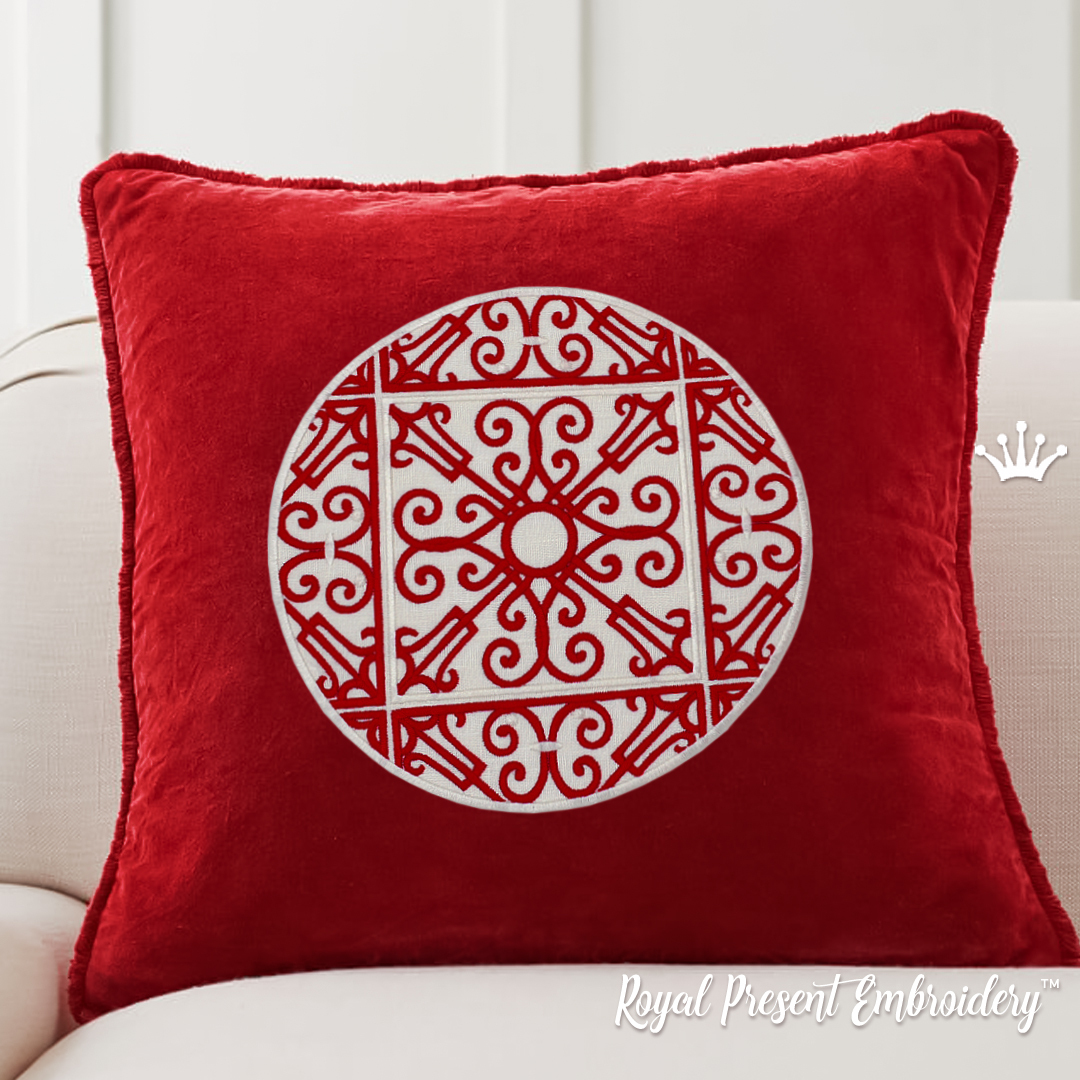
For a coordinated table, repeat one size at every place and use the larger version beneath a central vessel. The same stitch file can look formal in red viscose on white linen, more durable in polyester on a washable linen blend, or architectural in a single tone.
Wash at up to 30 °C / 86 °F on a delicate cycle without chlorine bleach. Reshape while damp and dry flat. Press from the reverse through a cotton cloth so the iron does not flatten or polish the embroidered surface. If the selected linen or thread requires a stricter care limit, follow that limit.
Explore more in-the-hoop placemat embroidery designs and arabesque machine embroidery designs.
No. The seven files measure from 5 to 8 inches and are intended for cups, glasses, tea pairs, bread plates, small dessert plates and decorative table accents.
No. The backing is attached, both fabric layers are trimmed and the contour is finished before the project leaves the embroidery hoop.
Use prewashed, non-stretch table linen or a stable linen-cotton blend with a close, even weave. Around 180–240 g/m² is a useful starting range; avoid open weave, heavy slubs and upholstery-weight cloth.
Yes. A red-on-white version shares the collection's Andalusian ironwork mood and works naturally in the same table setting. The embroidery is an independent Royal Present design and does not reproduce the porcelain decoration.
Yes. A linen front and smooth woven cotton back work well when their weights and shrinkage are similar. Do not use a stretch backing because it can distort the round edge during stitching and washing.
Traditional Arabic machine embroidery designs include several distinct visual languages: Arabic calligraphy, Islamic religious motifs, Moroccan arabesques, Moorish and Andalusian geometry...
Metallic thread can turn a machine-embroidered snowflake into a true point of light. Silver resembles frost and ice, pale gold adds warmth to Christmas linens, and a flat holographic ribbon...

 Get Sign-In Link
 Login with Google
 Login with Facebook
 Login with Amazon
 Login with Paypal