Leonardo Ninja Turtle Sleep Mask ITH Machine Embroidery Design

By knowing the speed of your embroidery machine, you can find out how long it will take to embroider a design.
To use the embroidery calculator, click on the number of stitches in the product description.
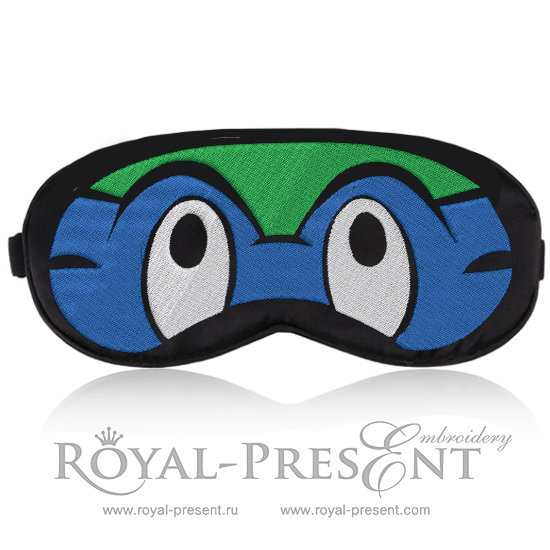
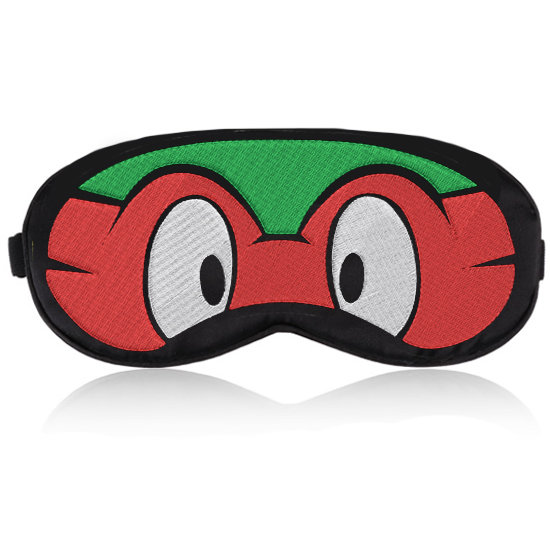
Leonardo Ninja Turtle Sleep Mask ITH Machine Embroidery Design is a digital in-the-hoop file for making a lined sleep mask with a green turtle face, bright blue eye band and oversized white eyes. The programmed sequence creates the decorative front, secures the side ties or elastic and stitches the final joining contour in one hooping. Use black fabric because its open areas form part of the character. The download includes 1 design in 1 ready-made size; no finished mask or physical product is shipped.
Design Specifications
|
Product Type
|
Digital machine embroidery design
|
|---|---|
|
Theme
|
Leonardo-inspired ninja turtle face with a blue mask
|
|
Technique
|
In the hoop (ITH); embroidery and main mask assembly are completed in one hooping
|
|
Minimum Hoop
|
At least 130x180 mm (5x7")
|
|
Number of Designs
|
1
|
|
Number of Sizes
|
1
|
|
Construction
|
Embroidered front, side ties or elastic, backing layer and final joining contour
|
|
Base Fabric
|
Black fabric, as specified in the original product data
|
|
Delivery
|
Instant digital download in one ZIP archive
|
Sizes & Hoop Compatibility
|
Exact Design Size and Stitch Count
|
Minimum Compatible Hoop
|
|---|---|
|
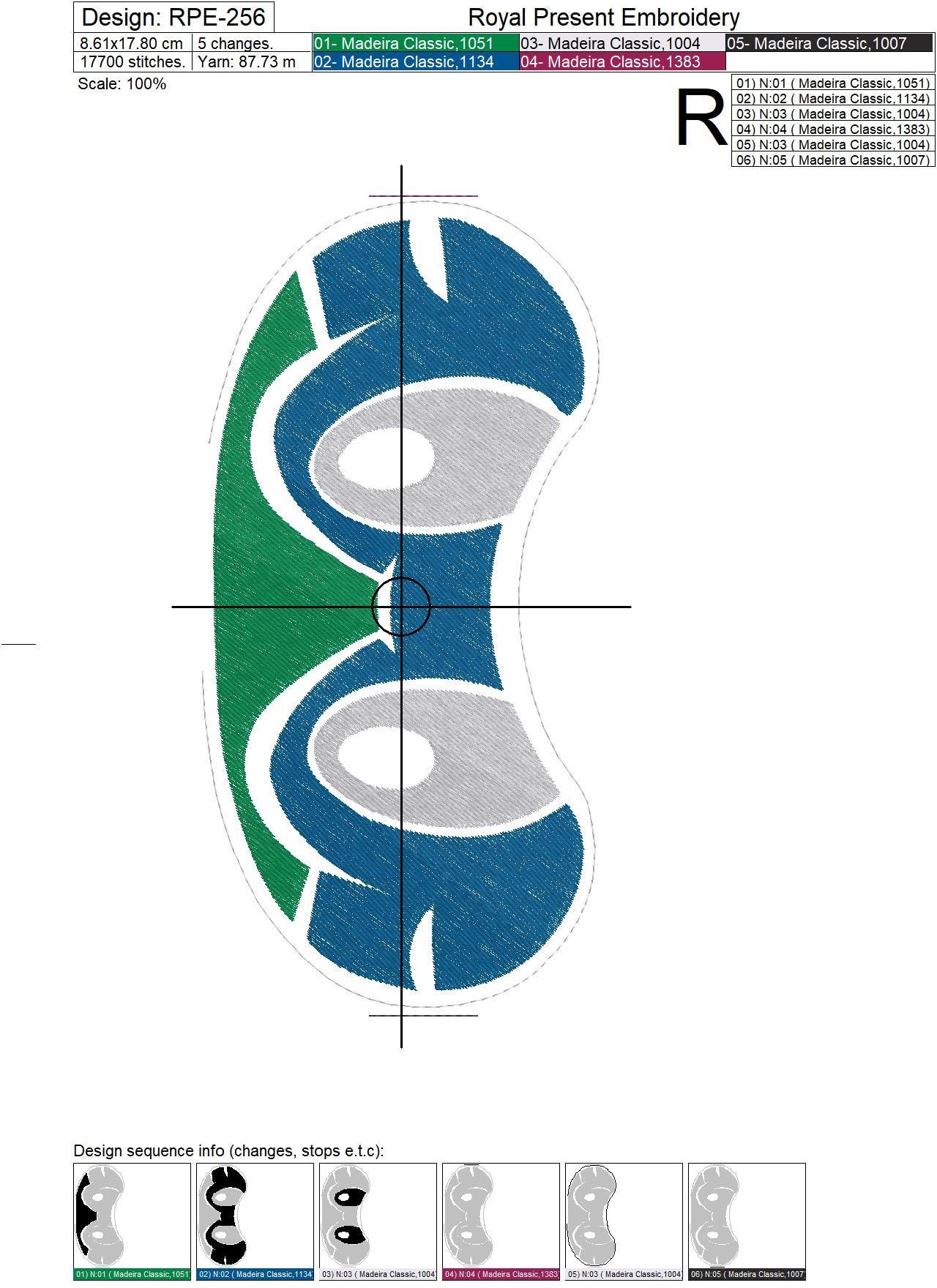
Size: 88.1x179.0 mm (3.47x7.05"). Stitches: 18472
|
130x180 mm (5x7")
|
Formats: .dst, .jef, .pec, .vip, .hus, .pes, .exp, .sew, .dat, xxx, vp3
Leonardo Sleep Mask Project Ideas
This blue-masked turtle character works well for pajama parties, travel kits, costume accessories and gifts for ninja-hero fans. For a coordinated party or family set, stitch companion masks from the same In The Hoop Sleep Masks collection.
Print the supplied template at 100% scale before stitching and hold it against the wearer’s face to check the total width, nose bridge and side attachment positions. This product supplies one programmed size, so do not resize the ITH file: scaling changes the seam allowance, tie placement and final construction contour.
How to Assemble the ITH Sleep Mask
- Unzip the archive and select the machine format listed for your embroidery machine.
- Hoop black front fabric with a soft cut-away stabilizer and stitch the decorative face in the programmed color-block order.
- Stop before the final joining contour. Position the ties or soft elastic at the side marks and keep the loose lengths inside the mask, away from the stitch path.
- Place the backing fabric over the embroidered front with right sides together, then stitch the final contour.
- Remove the project from the hoop, trim the seam allowance, turn the mask right side out and close the opening with a ladder stitch.
Madeira Classic 40 Thread Chart
The original chart for this design uses four Madeira Classic 40 colors. Each number below is connected to the part of the mask it stitches.
|
Color
|
Madeira Classic 40
|
Use in This Design
|
|---|---|---|
|
1367 — Black Pearl
dark blue-black |
Dark outlines and the final construction contour around the mask
|
|
|
1051 — Bell Pepper
green |
Green areas of the turtle face
|
|
|
1166 — Hanukkah Blue
strong blue |
Leonardo’s blue eye band
|
|
|
1004 — Natural White
natural white |
White areas of the eyes
|
For Sulky, Isacord, Brother and other thread brands, enter these Madeira numbers into the Royal Present thread converter. Conversion gives the nearest available shade, not a guaranteed exact match. Compare thread with a physical chart and test it on black fabric before stitching the final mask.
Companion ITH Sleep Mask Designs
These designs come from the same ITH sleep-mask section and can be combined into themed party, travel or gift sets.
Stabilizer and Material Recommendations
Front fabric. Use tightly woven black cotton, cotton poplin or a stable lightweight twill around 120–180 g/m² (3.5–5.3 oz/yd²). Avoid loose weave and stretch fabrics because the eye and mask details need a stable surface.
Stabilizer. Use a soft cut-away stabilizer around 40–60 g/m² (1.2–1.8 oz/yd²). It supports the decorative stitching and remains enclosed inside the completed mask. A heavy stiff stabilizer can make the finished mask uncomfortable.
Backing against the face. Choose smooth cotton batiste, cotton poplin or washable satin around 80–120 g/m² (2.4–3.5 oz/yd²). Prewash cotton if the finished mask will be laundered.
Strap or ties. Use soft flat elastic 6–10 mm (1/4–3/8") wide or fabric ties. Secure every loose length inside the center of the mask before the final contour so it cannot enter the needle path.
Needle and thread. Use a fresh Embroidery 75/11 needle for poplin or an 80/12 needle for heavier twill with standard 40-weight polyester embroidery thread. Keep ordinary polyester thread in the final joining contour because it withstands turning and repeated use.
Frequently Asked Questions and Practical Tips
Why does this design specify black fabric?
The open areas of the black cloth form part of the character and mask background. Pale fabric changes the intended contrast and remains visible between stitched areas. Use tightly woven black fabric rather than trying to cover it with extra fill stitches.
How do I choose a comfortable elastic length?
Measure from one temple around the back of the head to the other temple. Before cutting the final elastic, pin that length to two scraps positioned like the mask sides and try it on. Elastic recovery varies by brand, so this quick fitting test is more reliable than subtracting a fixed percentage.
How can I prevent puckering around the face details?
Pair stable black fabric around 120–180 g/m² (3.5–5.3 oz/yd²) with soft cut-away around 40–60 g/m² (1.2–1.8 oz/yd²). Apply only a light mist of temporary adhesive to the stabilizer, smooth the fabric without stretching it and reduce machine speed if outlines begin to shift.
How do I keep the elastic out of the final seam?
Coil the elastic in the center of the mask and secure it with small pieces of low-tack painter’s tape. Keep every piece of tape at least 15 mm (5/8") away from the final contour. Turn the handwheel through the first few joining stitches to confirm that the presser foot clears the elastic.
How do I obtain a smooth edge after turning the mask?
Trim the seam allowance to approximately 3–4 mm (1/8"), clip the concave curves without cutting the seam and use a blunt turning tool. Press from the lining side through a pressing cloth so the embroidery is not flattened.
Can I use metallic or glow-in-the-dark thread?
Use specialty thread only in a decorative color block, never for the final joining contour. For metallic thread, fit a Metallic 90/14 needle, lower the speed to about 450–550 stitches per minute and test the blue band on black fabric. Keep regular polyester 40-weight thread in every construction seam.
Can this one-size ITH file be resized for another wearer?
Do not resize the embroidery file. The seam allowance, strap attachment points, turning opening and final joining contour are construction elements. Print the supplied template at 100% scale and check the fit before stitching.
Comfort tip
Keep the cut-away stabilizer inside the front layer and cover it completely with a smooth lining. Before closing the turning opening, run a fingertip around the inside edge and remove any stiff stabilizer corners or trapped thread tails that could rub against the face.

Leonardo Ninja Turtle Sleep Mask ITH Machine Embroidery Design
This stitched up nicely and my husband loves it!

Leonardo Ninja Turtle Sleep Mask ITH Machine Embroidery Design
My son is happy with it 😊
Leonardo Ninja Turtle Sleep Mask ITH Machine Embroidery Design
As my first purchase I found that it did not quite line up correctly - missing stitches.

 Get Sign-In Link
 Login with Google
 Login with Facebook
 Login with Amazon
 Login with Paypal